
Teroka Projek Arduino
Ratusan projek dari pemula hingga mahir: gambar rajah litar, kod dan video. Mulakan di tahap mana pun kamu berada.
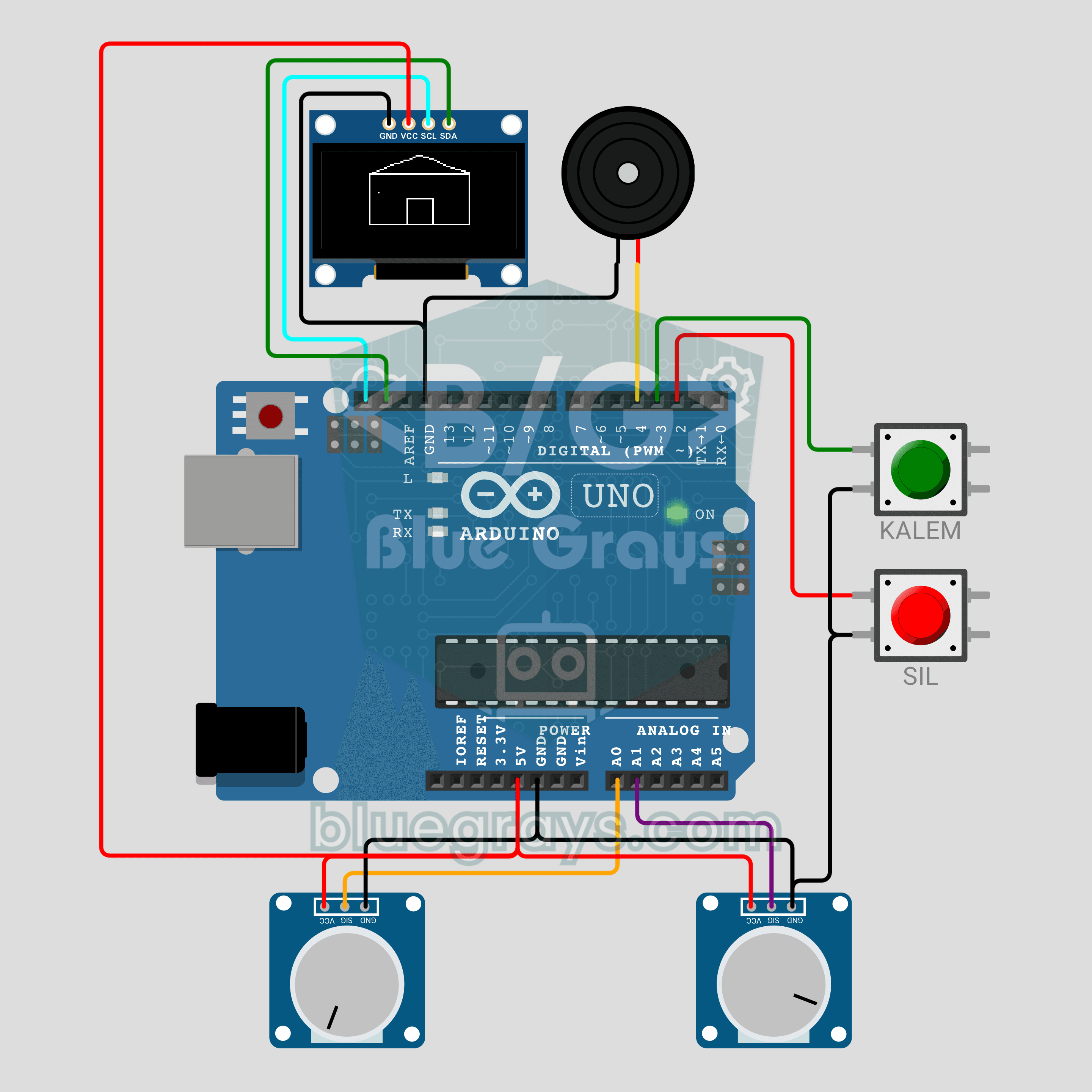
Arduino Magic Drawing Tablet (2 Potentiometers + OLED Display)
We are rebuilding the classic magic drawing tablet with an Arduino! The left potentiometer moves the pen horizontally, the right one vertically, and the 0.96 inch OLED keeps a continuous line. The PEN button lifts and lowers the pen, while the CLEAR button wipes the screen with an eraser animation and a buzzer sound. A fun beginner project about analog input, jitter filtering and drawing on a display.
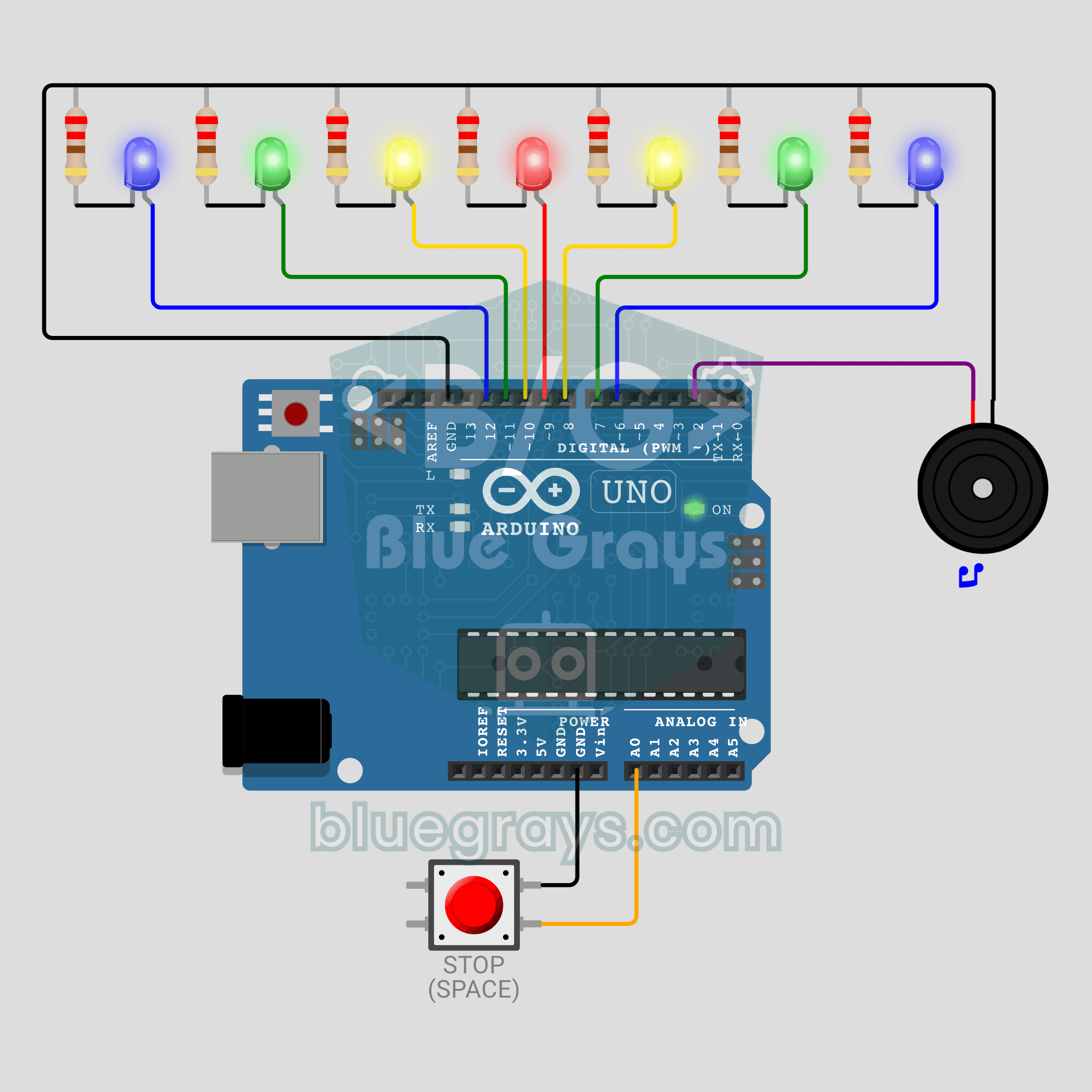
Arduino Cyclone Game: Stop the Light in the Middle (7 LEDs + Button + Buzzer)
Can you stop it on the red LED? A desktop version of the arcade Cyclone game: a light bounces across 7 LEDs and you score by pressing the button while the red centre LED is lit. Every hit reduces the time per LED by about 15%, down to a minimum of 45 ms, and the buzzer plays a tune. A wrong press costs a life, and the game ends after 3. The best score is kept in EEPROM, so it survives a power cut.
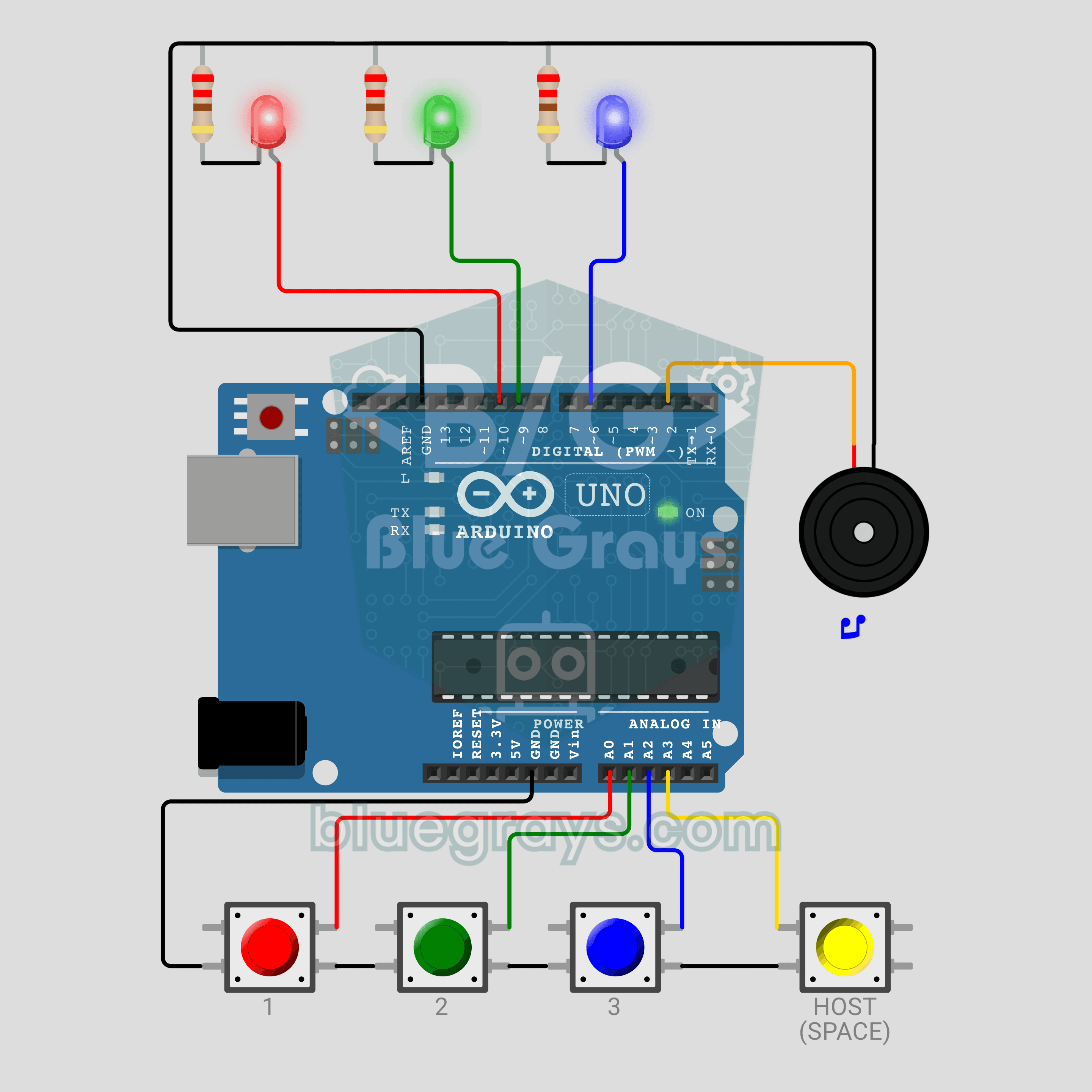
Arduino Quiz Buzzer for 3 Players (4 Buttons + 3 LEDs + Buzzer)
Who buzzed first? The Arduino decides down to the millisecond! The first to buzz answers system from TV quiz shows, for 3 players and a host button. The fastest player's LED lights up bright with its own sound, and the other buttons lock. Buzzing before the host says ready is a foul. Hold the host button for 1 s and the scoreboard plays on the LEDs. Ready for real use in class or at home.
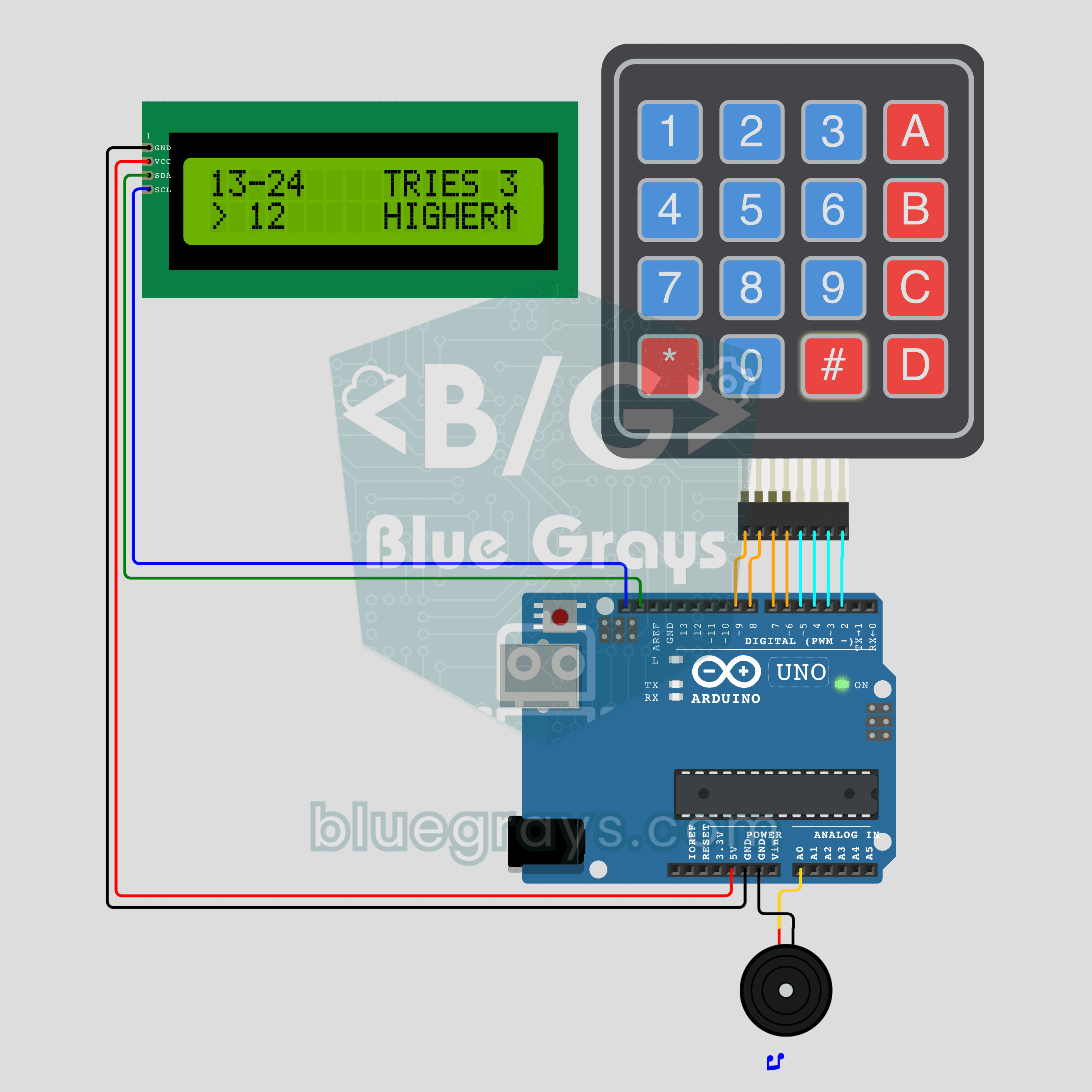
Arduino Number Guessing Game (4x4 Keypad + I2C LCD + Buzzer)
I'm thinking of a number from 1 to 100. Can you find it in 7 guesses or fewer? The Arduino picks a secret number, you type your guess on a 4x4 keypad and send it with #. The I2C LCD says HIGHER or LOWER and shows the range left and your tries, while a passive buzzer gives each hint its own sound. The fewest-tries record is kept in EEPROM. A fun first game that uses a keypad and an LCD together.
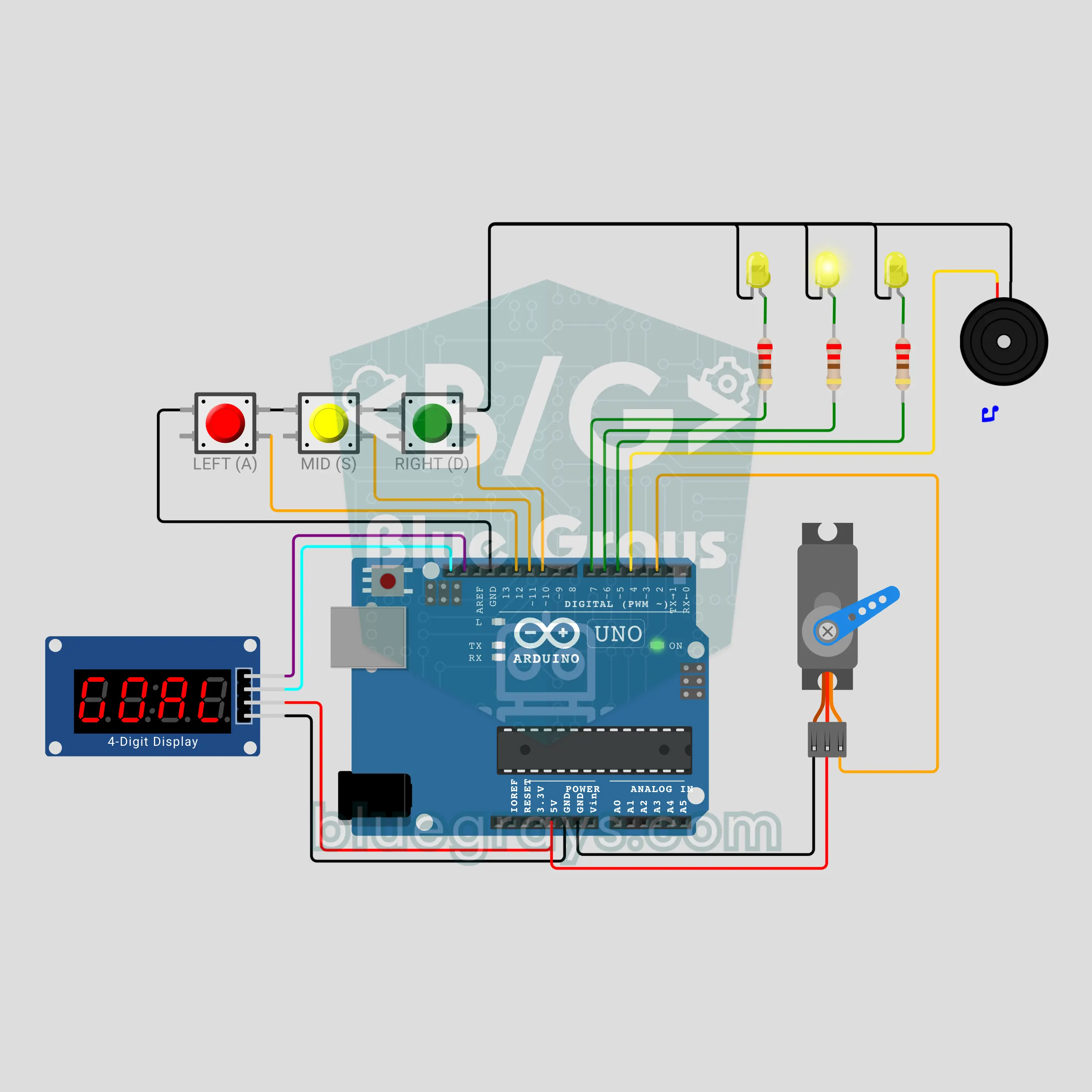
Arduino Penalty Shootout Game (Servo Goalkeeper + TM1637 Display)
A 5-shot penalty shootout on your desk! After a 3-2-1 beep and a whistle you shoot with the left, middle or right button, and the SG90 servo keeper dives to a corner at the same moment. The keeper learns: keep shooting at the same corner and it starts diving there more often. The score is on the TM1637 display, the ball's corner on the LEDs, and the goal tune comes from a passive buzzer. Randomness, weighted odds and servo control in one game.
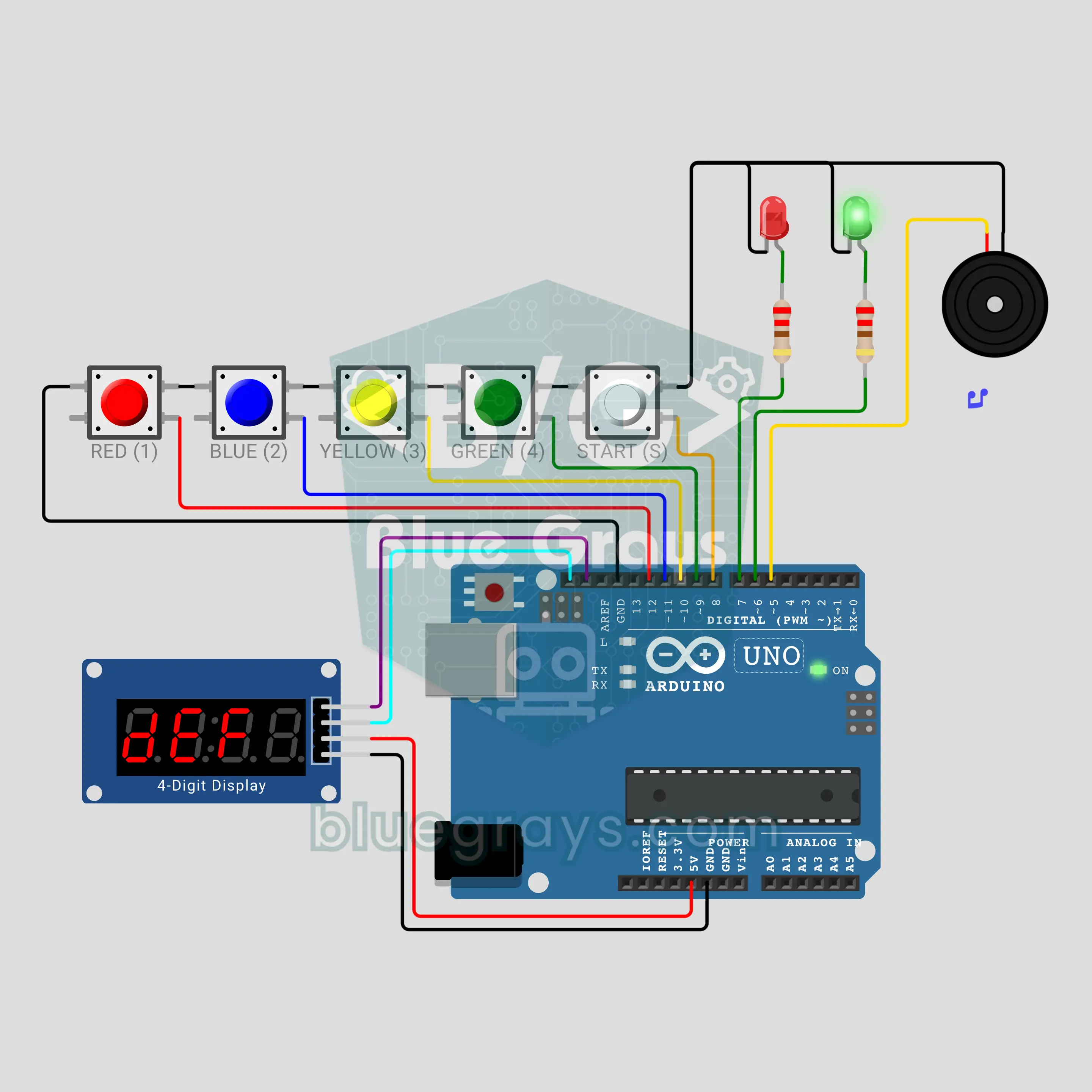
Arduino Bomb Defusal Game: Cut the Right Wire (TM1637 + 4 Wires + Buzzer)
The "red or blue?" movie scene on your desk! Press START and seconds and hundredths race across the TM1637, while the passive buzzer beeps a little faster and higher each time. One of four wires defuses the bomb, one sets it off, one halves the time left and one does nothing, and the roles are shuffled every round. Randomness, non-blocking timing with millis() and an EEPROM defuse counter in one game.
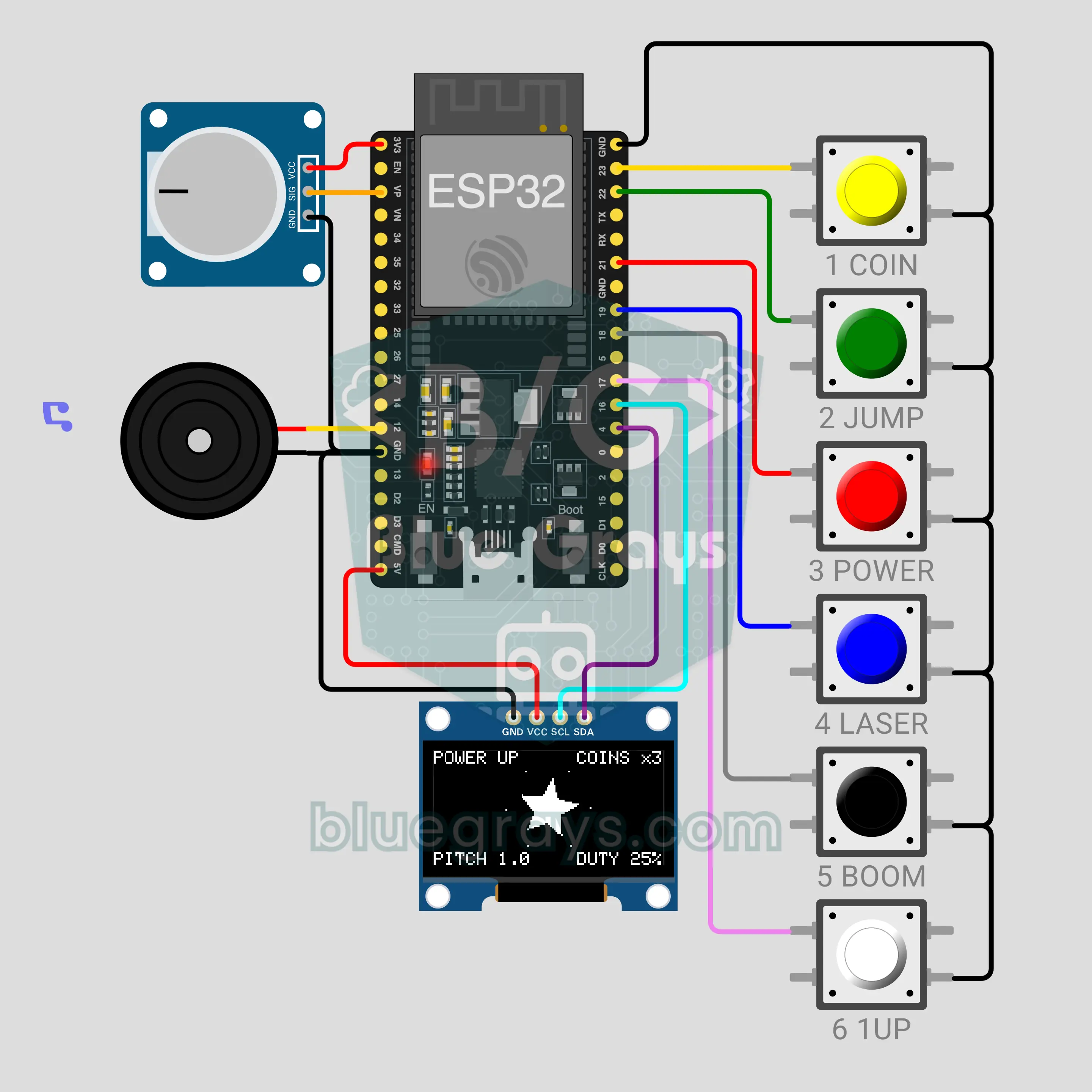
ESP32 8-Bit Sound Effects Box (6 Buttons + OLED + Buzzer + Potentiometer)
Every button is a retro game sound! The ESP32 gives six buttons a coin, jump, power-up, laser, explosion and extra-life sound; none of them is a sound file, each one is generated live on a passive buzzer with PWM duty cycle and frequency slides. The 0.96 inch OLED draws a pixel animation for every sound. A potentiometer shifts the pitch from giant to squirrel, and buttons 1 and 6 together record a short beat.
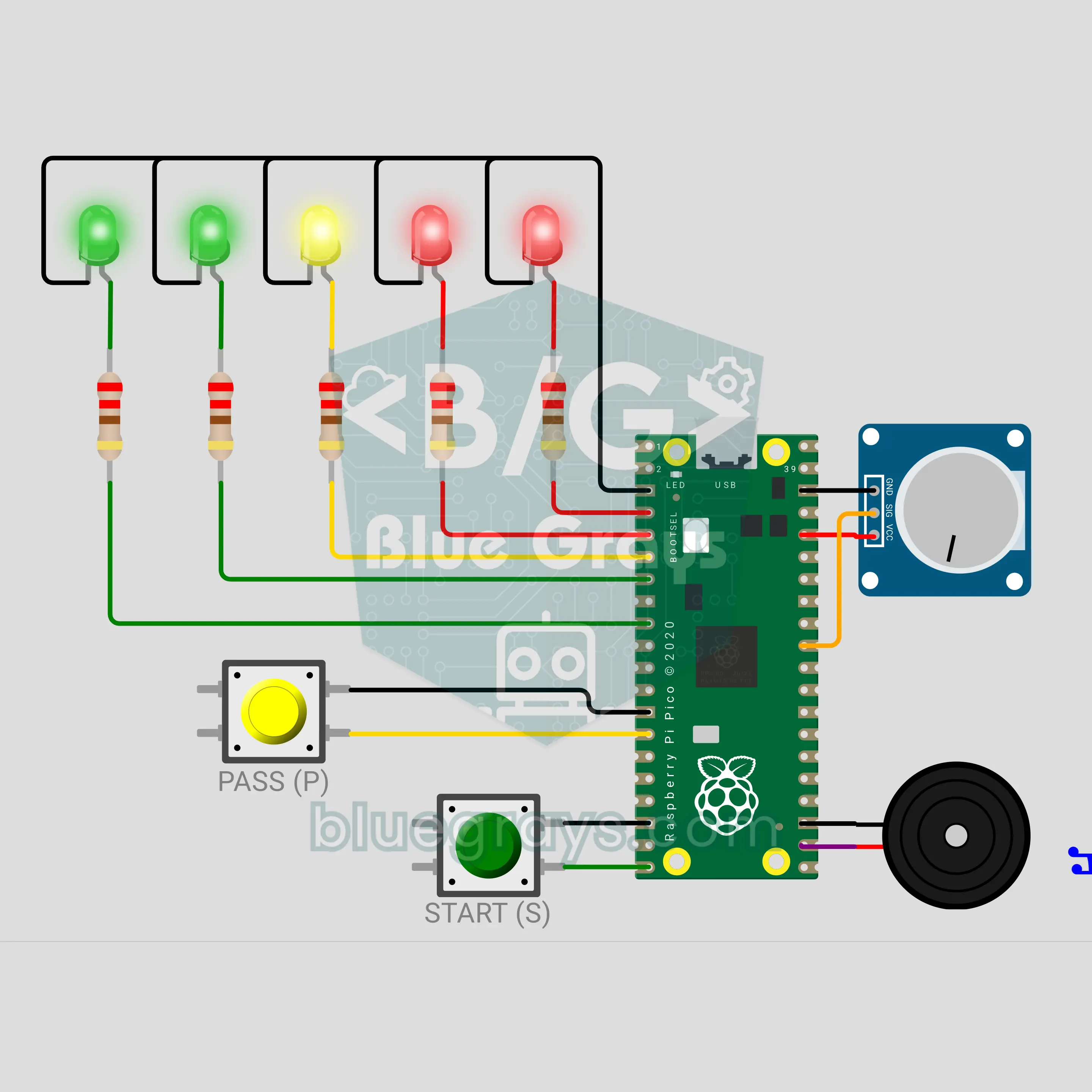
Raspberry Pi Pico Hot Potato Party Game (5 LEDs + Potentiometer + 2 Buttons + Buzzer)
A party game that goes from hand to hand: press START, a secret fuse begins and the device gets passed around to a ticking sound. The tick-tock keeps speeding up and a 5-LED heat bar fills from green to red; when time runs out the buzzer booms and whoever is holding it loses. A potentiometer picks a short, medium or long round, and the PASS button is pressed at every hand-off. Hold it longer than 6 seconds and you get a penalty: the fuse loses 2 seconds.
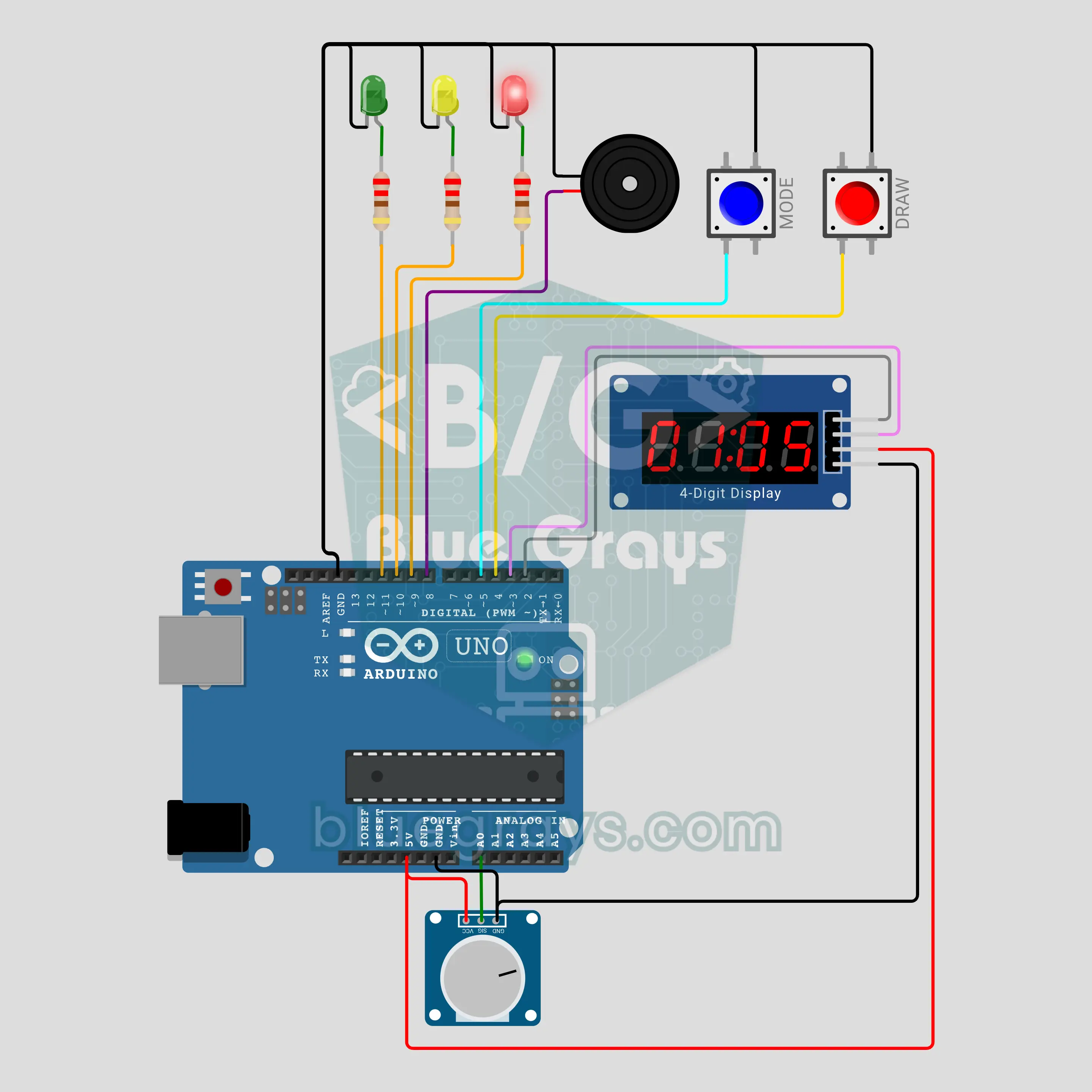
Arduino Random Draw Machine (TM1637 + Potentiometer + Buzzer)
Who stands up in class, who buys a gift for whom at the holidays? This box runs three draws on its own: in CLASS mode a number from 1..N comes up and never repeats in that round, in LOTTO mode 6 different numbers from 1–90 are drawn and sorted, and in GIFT mode a Sattolo shuffle makes sure nobody draws themselves. The digits spin like a wheel on the TM1637, slow down and stop with a buzzer fanfare. A potentiometer sets the group size.
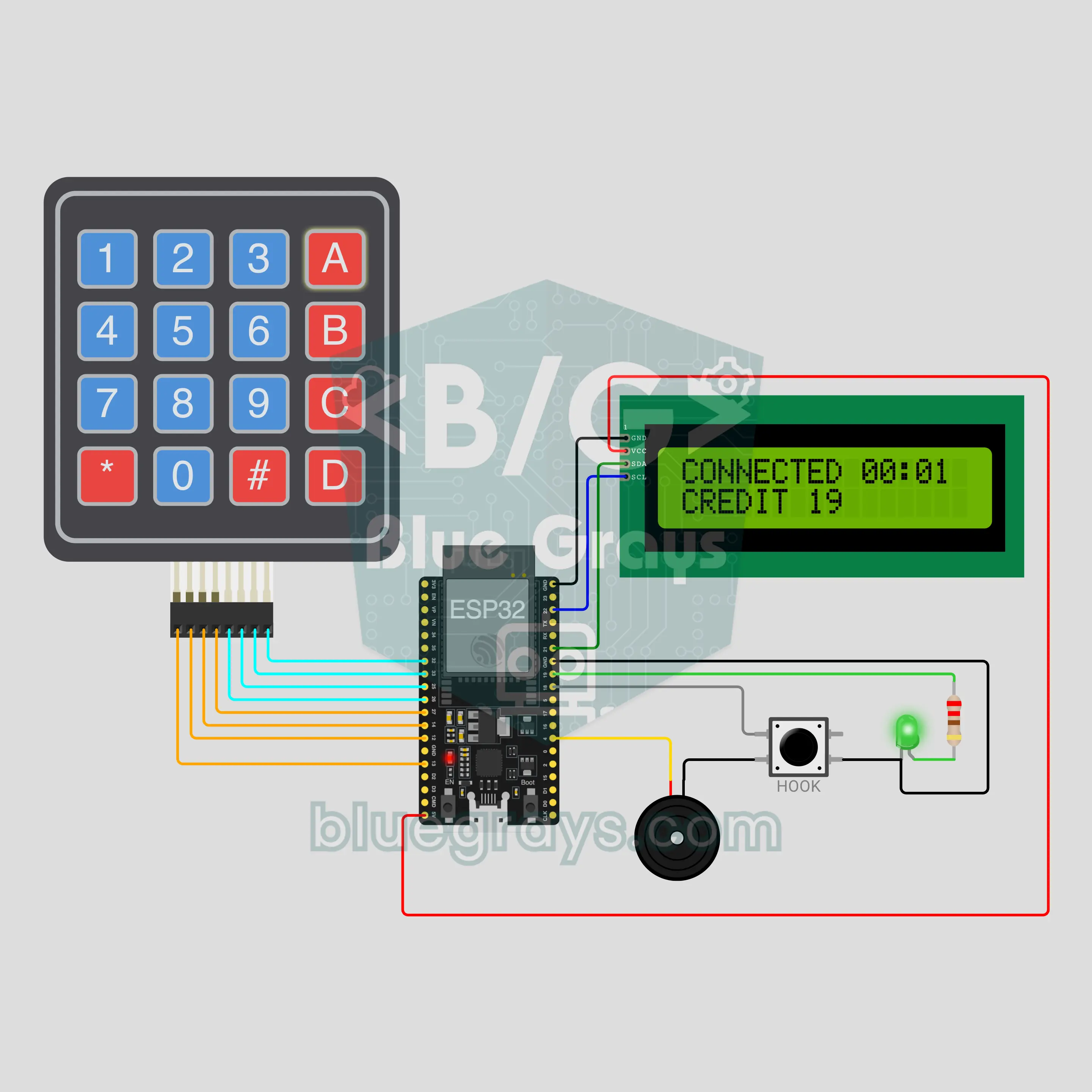
ESP32 Retro Push-Button Phone (Keypad + I2C LCD + Buzzer)
An 80s and 90s payphone on your desk! Lift the handset for a 425 Hz dial tone, dial on the 4x4 keypad, and the other end either rings and answers or gives you the busy signal. Credit runs down while you talk, and the line drops when it is gone. There is A–D speed dial, redial and a credit card too, and the I2C LCD shows every step. A fun first look at state machines and timing that never waits.
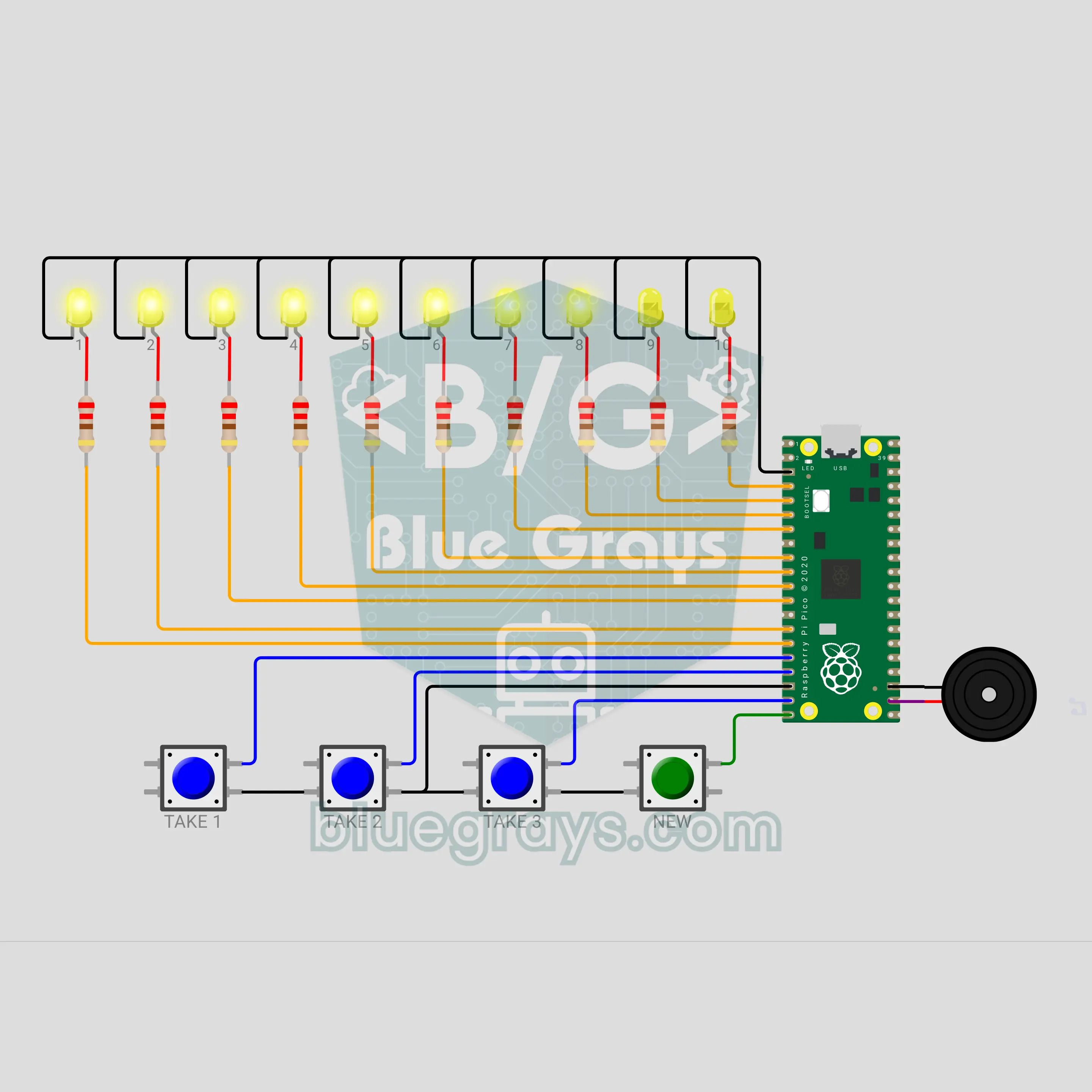
Raspberry Pi Pico Nim Game: Can You Beat the Pico? (10 LEDs + 4 Buttons + Buzzer)
Whoever takes the last stick loses: can you beat the Pico? The matchstick game Nim lights up with a Raspberry Pi Pico. 10 yellow LEDs are 10 sticks; you take turns removing 1, 2 or 3, 4 buttons pick your move and a buzzer voices every turn. The Pico uses a mod 4 trick to always leave you 1, 5 or 9 sticks: if you start, the right first move wins, but if the Pico starts it never loses.
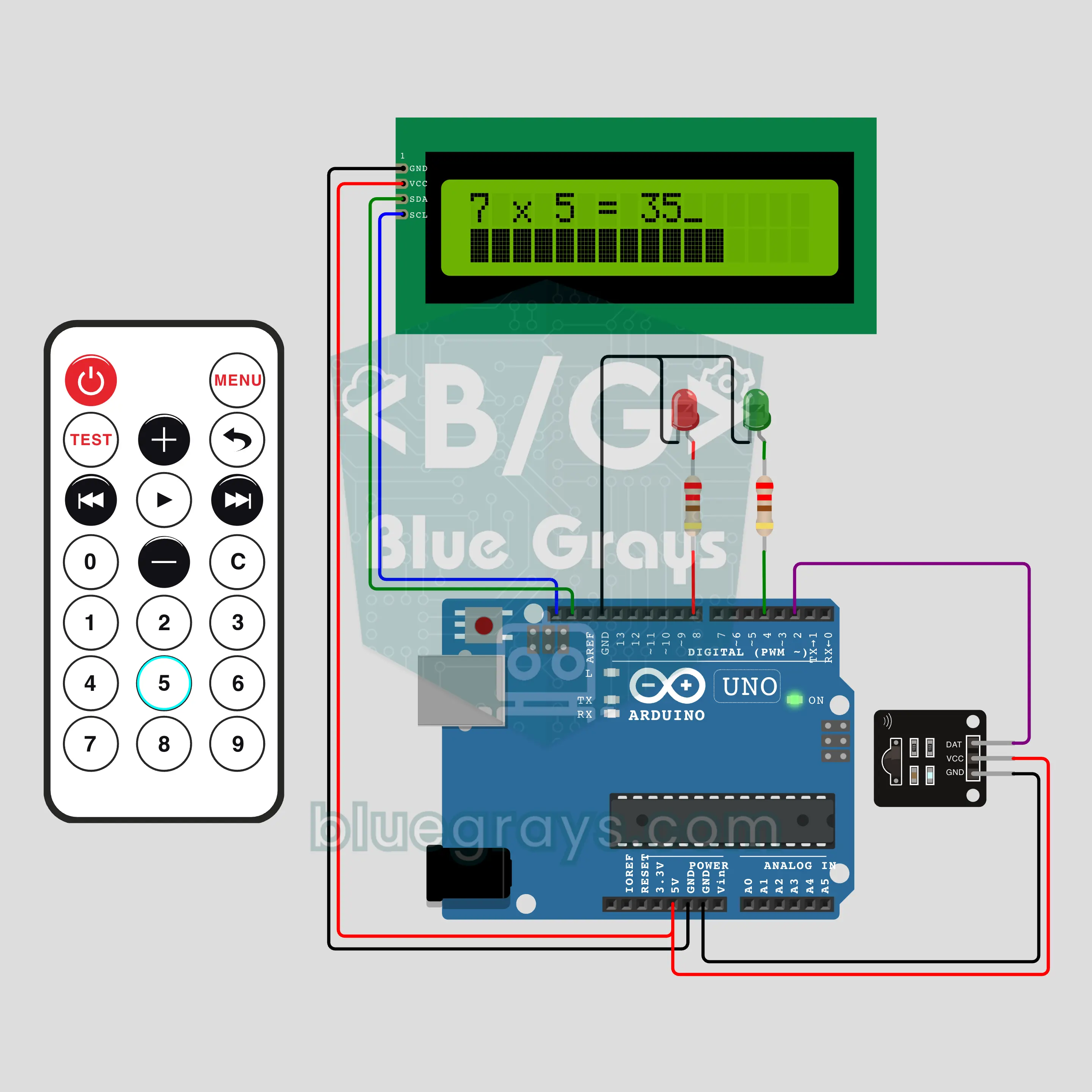
Arduino Remote Control Times Table Quiz (IR Remote + I2C LCD + 2 LEDs)
A remote control turns into a game show clicker: the I2C LCD shows "7 x 8 = ?", you type the answer with the number keys and send it with PLAY. The time bar on the bottom row melts in 10 seconds; fast right answers score more, and after 3 in a row a streak bonus kicks in. There are three levels, reverse questions, a team mode with turns and a TEST key that gives the whole class the same questions; a green or red LED shows right or wrong.