
Teroka Projek Arduino
Ratusan projek dari pemula hingga mahir: gambar rajah litar, kod dan video. Mulakan di tahap mana pun kamu berada.

Dice Project
No more lost dice during board games: every time you press the button, a random number from 1 to 6 appears on the 7-segment display.

Paddle Ball Game - SSD1306
A ball, two paddles and you: you play table tennis, one of the very first video games, on a small OLED screen.
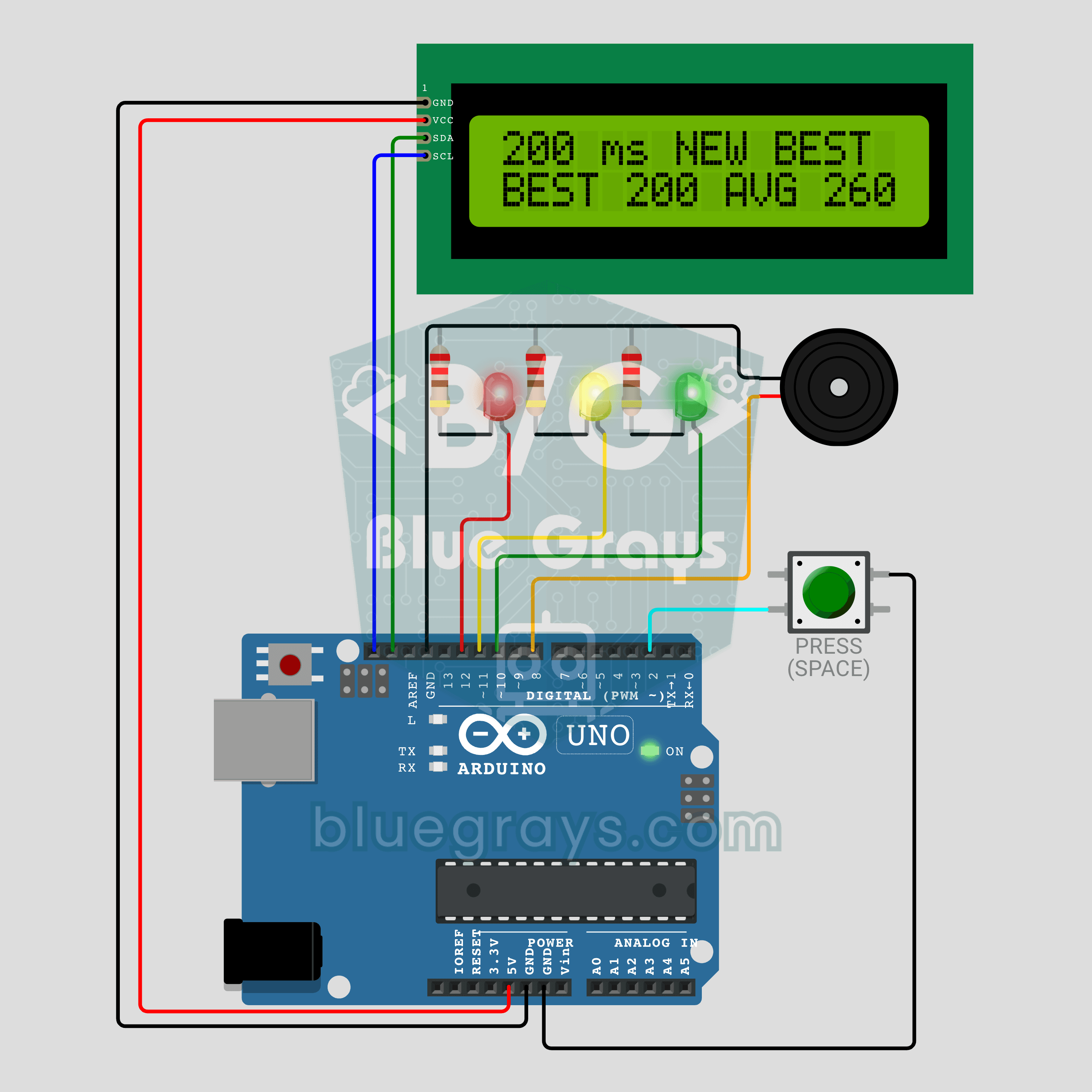
Arduino Reaction Time Test with Sound Cue: Measure Your Reflexes in Milliseconds (LCD + Buzzer + 3 LEDs)
How fast are your reflexes? Press the button: the red LED says get ready, the yellow LED says steady and a random wait of 1.5 to 3.5 seconds begins. The moment the green LED lights up and the buzzer beeps, press again; your reaction time appears on the I2C LCD in milliseconds, with your session best and average below it. Press before green and the screen shows TOO EARLY! with a losing sound. Hold the button for a new player, so everyone races the same wait order.

Arduino LCD Runner Game
Side scrolling endless runner game running on 16x2 character LCD screen. Hero runs automatically, player jumps over obstacles by pressing the button. Random obstacles appear on the top and bottom row. Passive buzzer plays opening melody, jumping sound, 50 point celebration sound and end of game melody. "BlueGrays - Arduino Projects" splash screen is shown on startup. The score is updated instantly in the upper right corner of the screen.
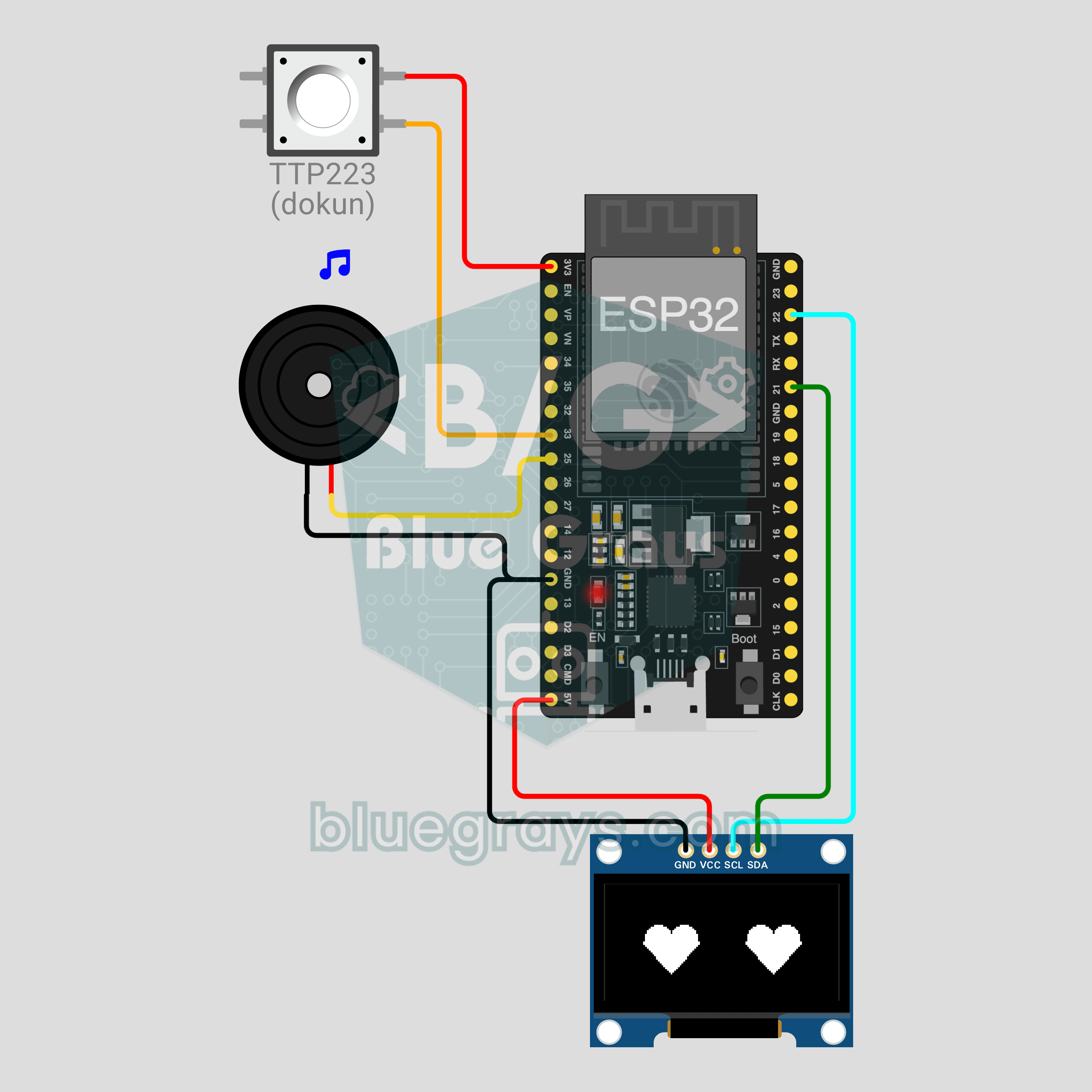
ESP32 Robot Eyes (OLED Display + TTP223 Touch Sensor)
A desk robot with feelings! The ESP32 draws two eyes on a 0.96 inch OLED that look around and blink on their own. Tap the TTP223 touch sensor and the robot gets happy, hold it and the eyes turn into hearts, poke it too often and it gets angry, ignore it for 20 seconds and it falls asleep. A passive buzzer gives every mood its own sound: a state machine, shape-based animation and non-blocking audio in one project.
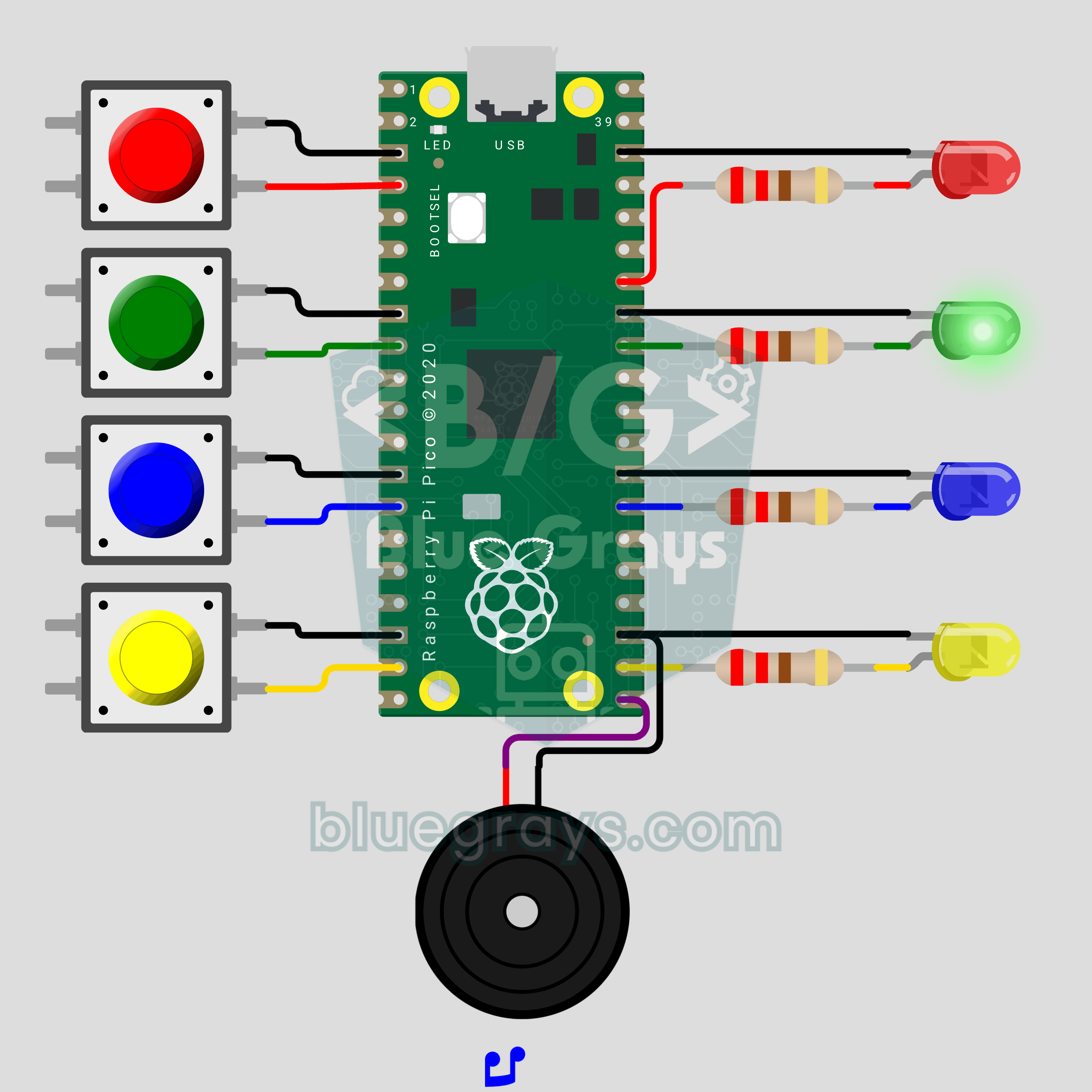
Raspberry Pi Pico Memory Game (4 LEDs + 4 Buttons + Buzzer)
How many rounds can you last? The classic color and sound memory game comes to your desk with a Raspberry Pi Pico. The Pico plays a random color sequence, each color with its own LED and its own note. Repeat it in the same order on 4 buttons and one more color joins every round. Press a wrong one and the buzzer plays a game over tune while the right color blinks. Lists, random numbers and button reading in one game.
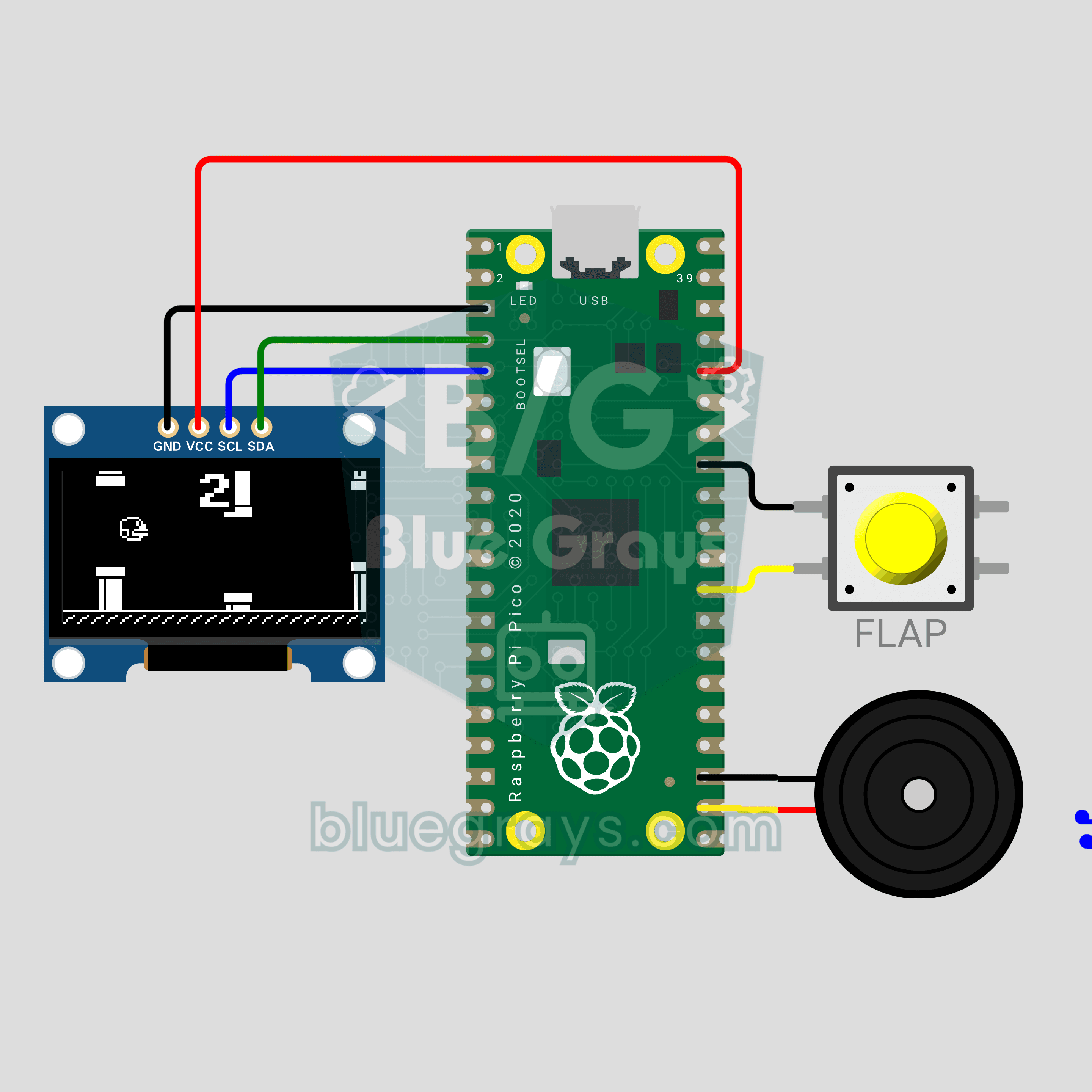
Raspberry Pi Pico Flappy Bird (OLED Display + Button + Buzzer)
That infuriating bird from your phone, now on a 0.96 inch OLED with a single button! A Flappy Bird style game on the Raspberry Pi Pico: every button press makes the bird flap, each pair of pipes you pass scores a point and the gaps get tighter. A buzzer plays the flap, point and record sounds. The high score lives in flappy_best.txt, so it survives a power cut. Physics, collisions and a 30 FPS game loop in one file.
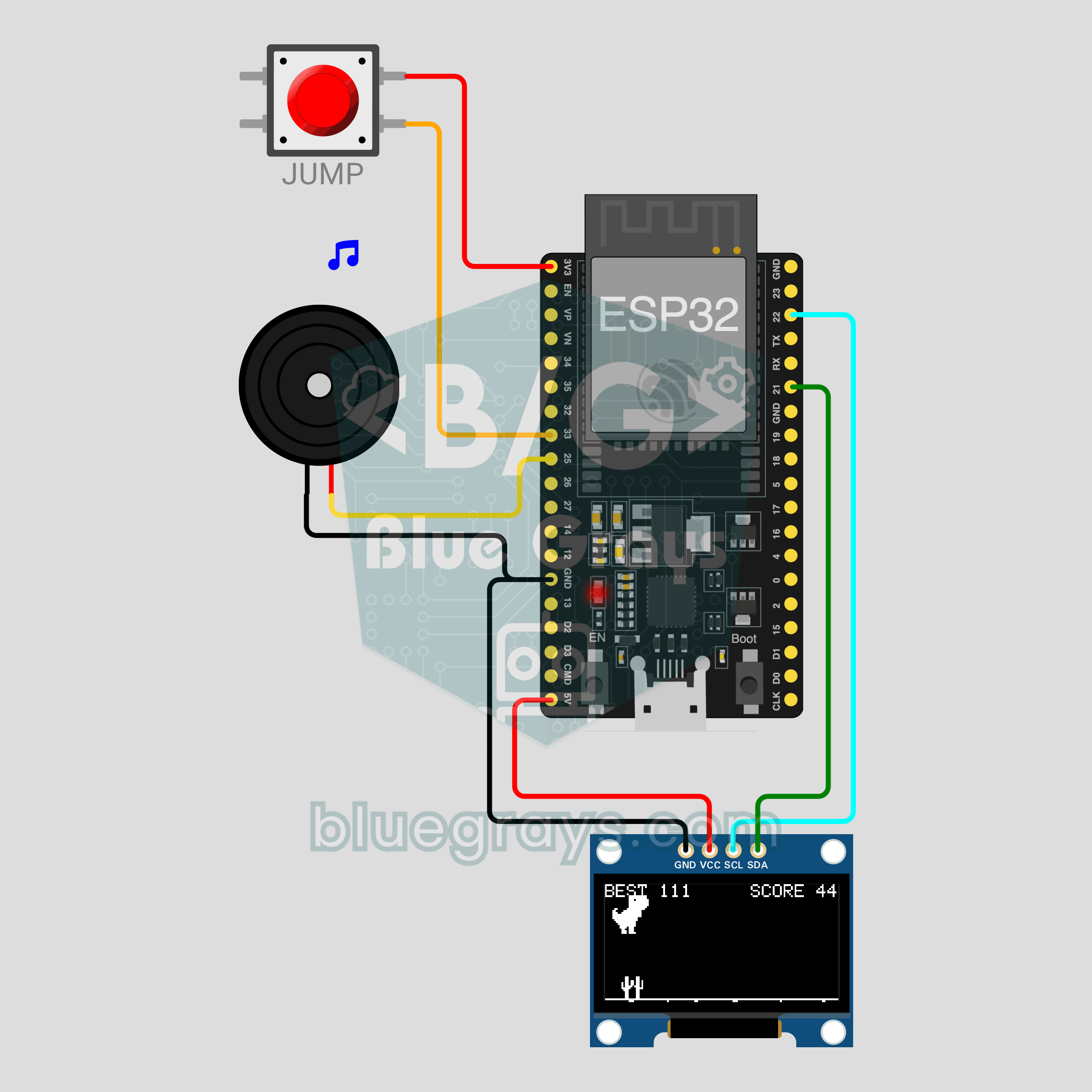
ESP32 T-Rex Run Dino Game (OLED Display + Button + Buzzer)
Chrome's "no internet" dinosaur game, now on your desk! The ESP32 draws a running dino on a 0.96 inch OLED; press the button to jump while the cacti keep speeding up. Score and best score sit on the top line, and the best score is saved to ESP32 flash with Preferences, so it survives a power cut. It is the ESP32 version of the Arduino OLED T-Rex Run project, with a passive buzzer for jump, 100-point and crash sounds.
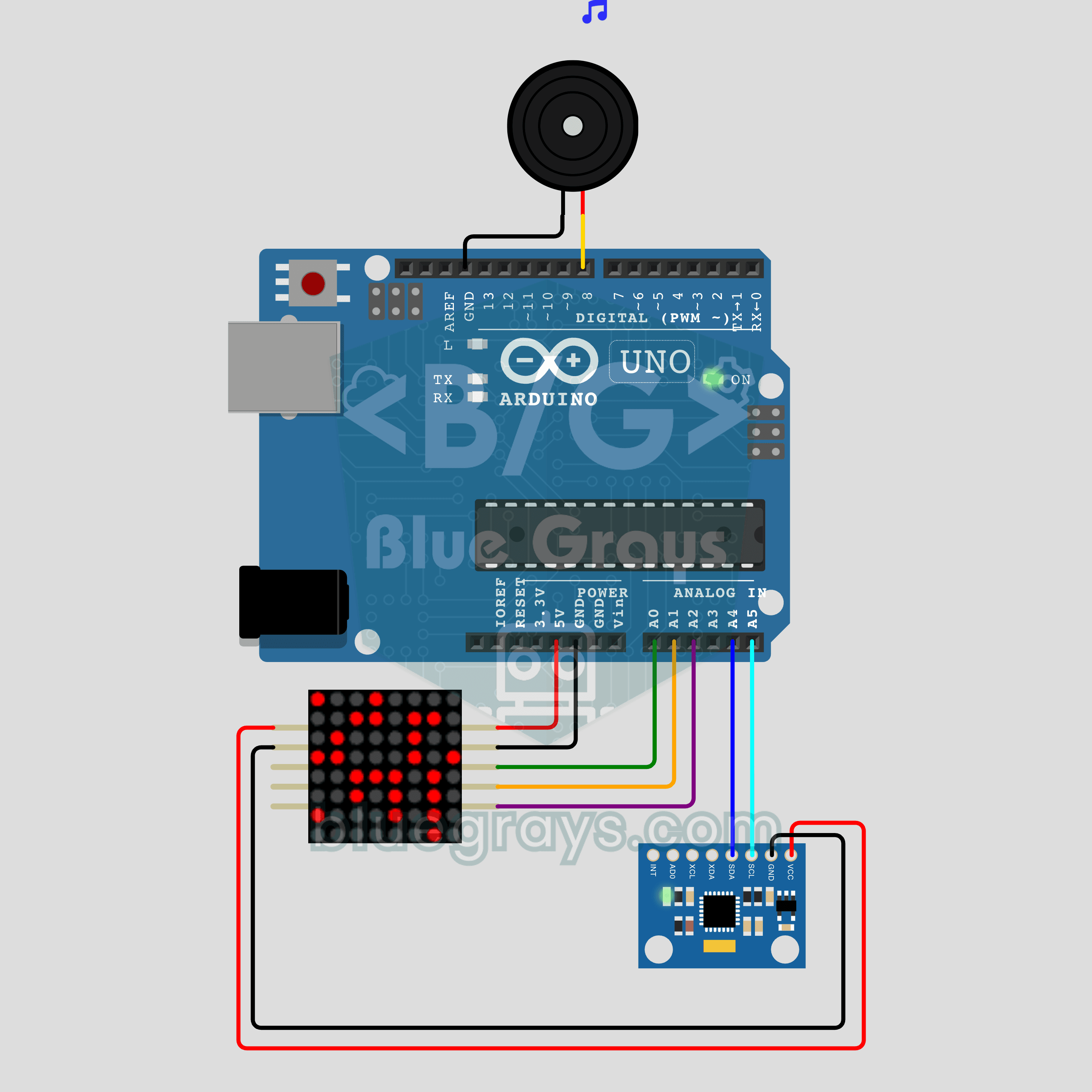
Arduino Tilt Marble Maze (MPU-6050 + MAX7219 8x8 LED Matrix)
No screen, no joystick: tilt the circuit and an LED marble rolls through a maze! The MPU-6050 accelerometer measures the tilt, and the marble on the MAX7219 8x8 LED matrix rolls that way without passing through walls. Reach the goal and a passive buzzer plays a tune as the next maze opens; finish all 3 for a smiley. Library-free sensor reading, tilt-to-speed control and mazes written as text in one project.
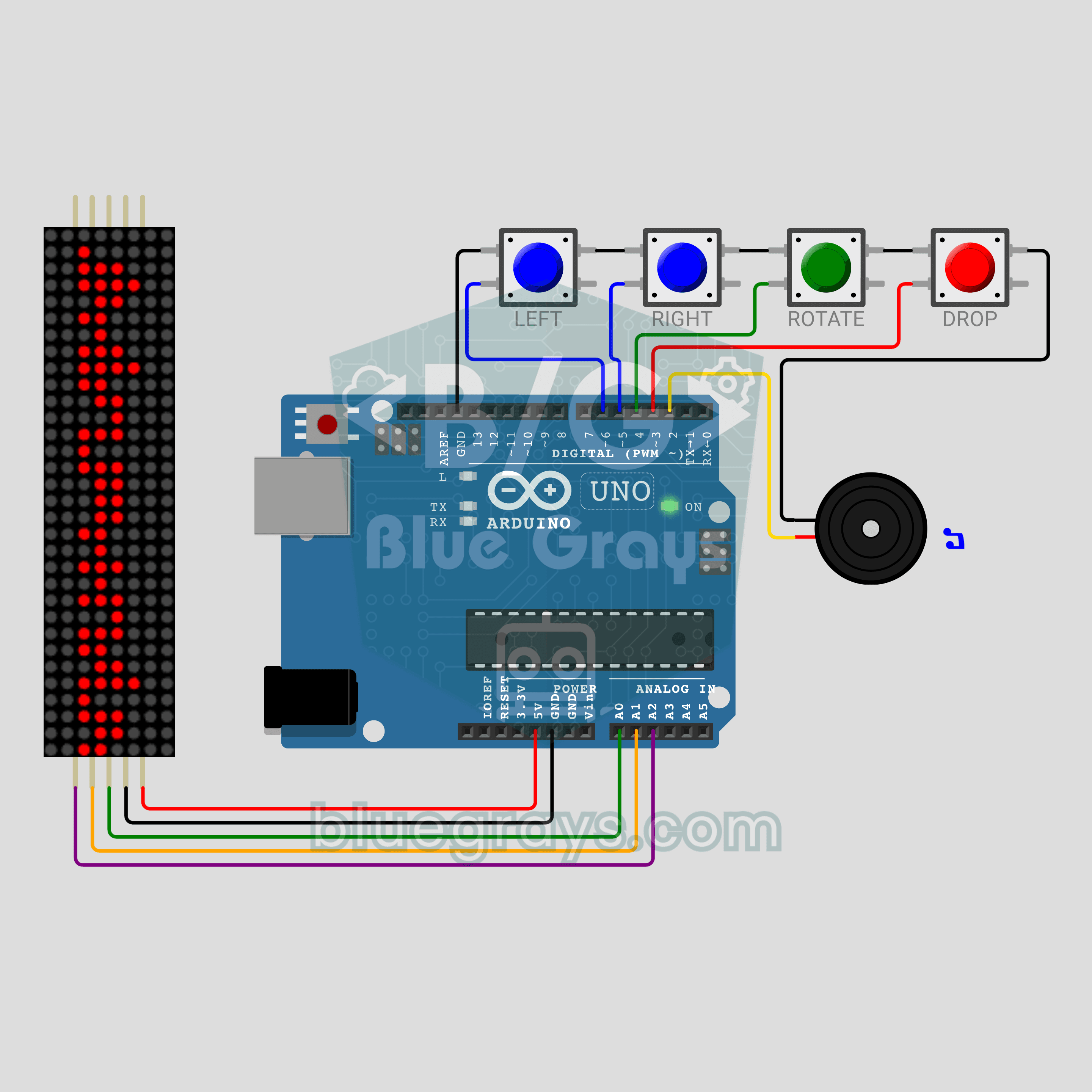
Arduino Tetris (MAX7219 8x32 LED Matrix + 4 Buttons + Buzzer)
No screen, just 256 LEDs: Tetris with music on an Arduino! A MAX7219 8x32 LED matrix standing upright becomes an 8 wide, 32 tall playfield, and 4 buttons move, rotate and drop the pieces. A passive buzzer plays the Tetris theme, full rows flash away and the game speeds up every 2 rows. The matrix is driven without a library, and the best score is kept in EEPROM.
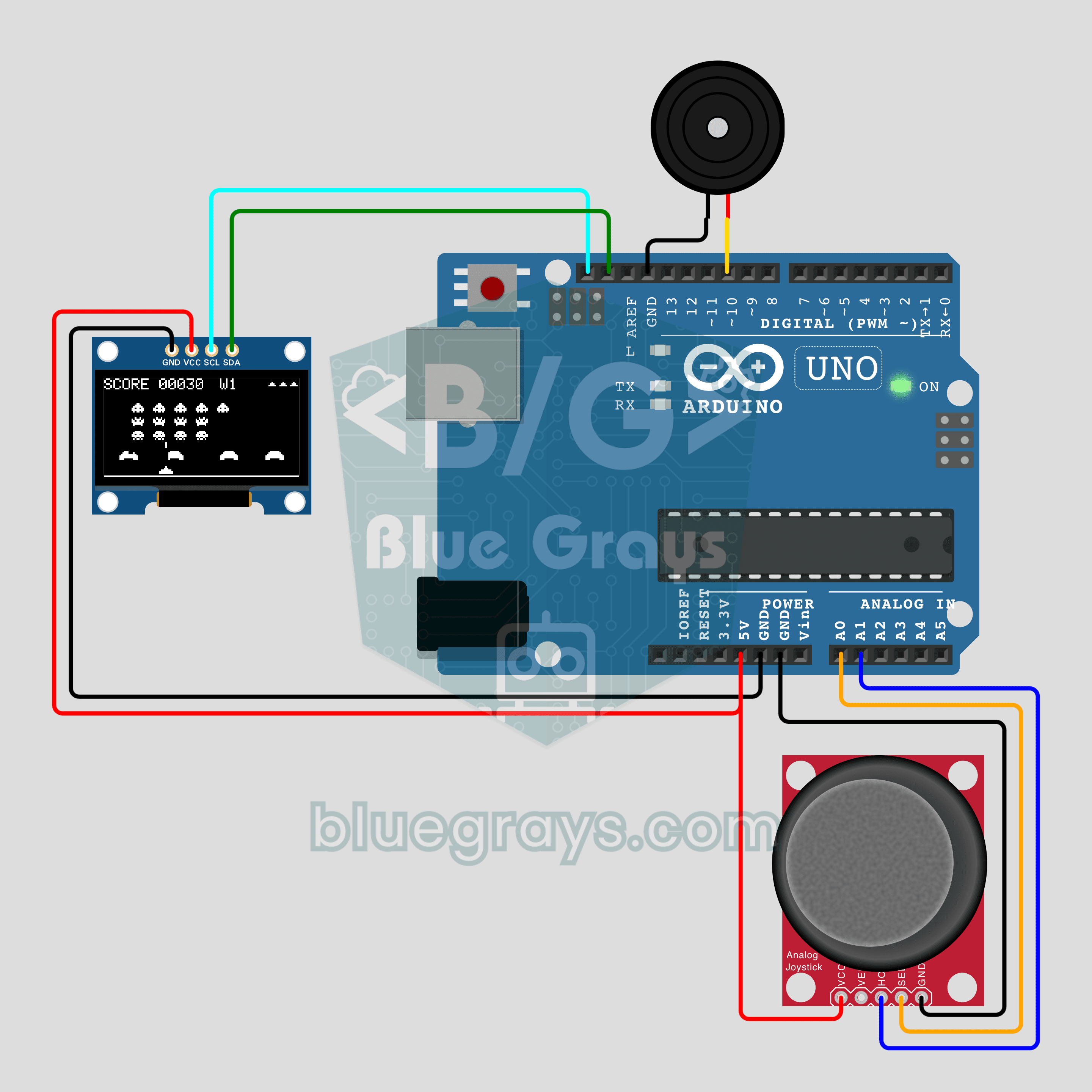
Arduino Alien Attack (0.96 inch OLED + Joystick + Buzzer)
The 1978 legend on a 0.96 inch screen! On a 128x64 OLED, an army of 15 aliens marches, steps down at every edge and speeds up as it thins out. The joystick steers the ship like a wheel and its button fires; there are 4 shields, a bonus UFO and waves that keep getting harder. A passive buzzer plays the classic march and the effects, and the best score is kept in EEPROM.
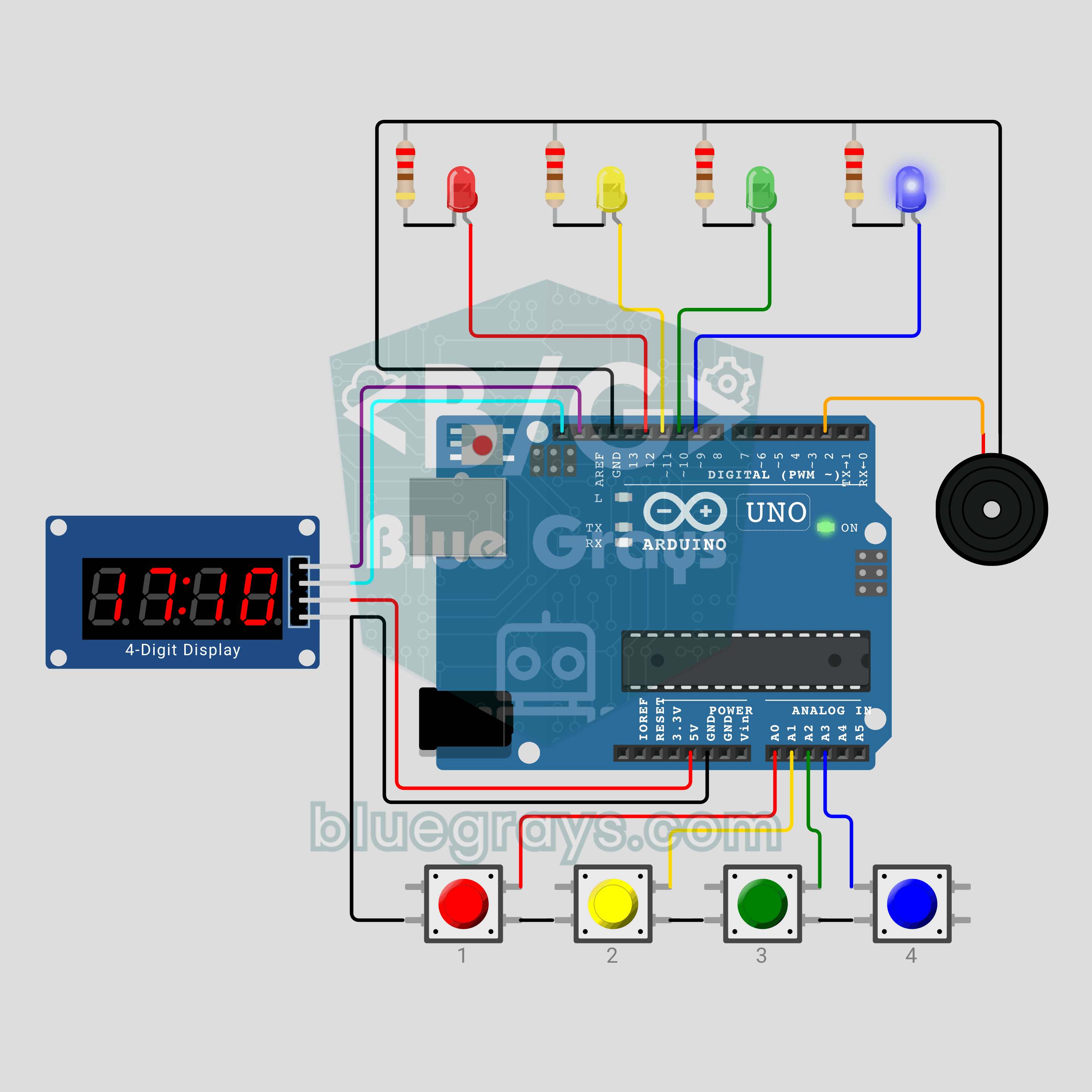
Arduino Whack-a-Mole Game (4 LEDs + 4 Buttons + TM1637 Display)
Hit it the moment it lights up! The arcade classic whack-a-mole on your desk: one of 4 LEDs lights up at random, and if you press the button of the same colour before it goes out, you score. Every 5 hits is a new level and the moles stay up for less time. A wrong button costs 1 point and 3 seconds. Time and score show on the TM1637, the record lives in EEPROM, and a passive buzzer gives each hole its own sound.