

Bu komponent ishlatiladigan loyihalar
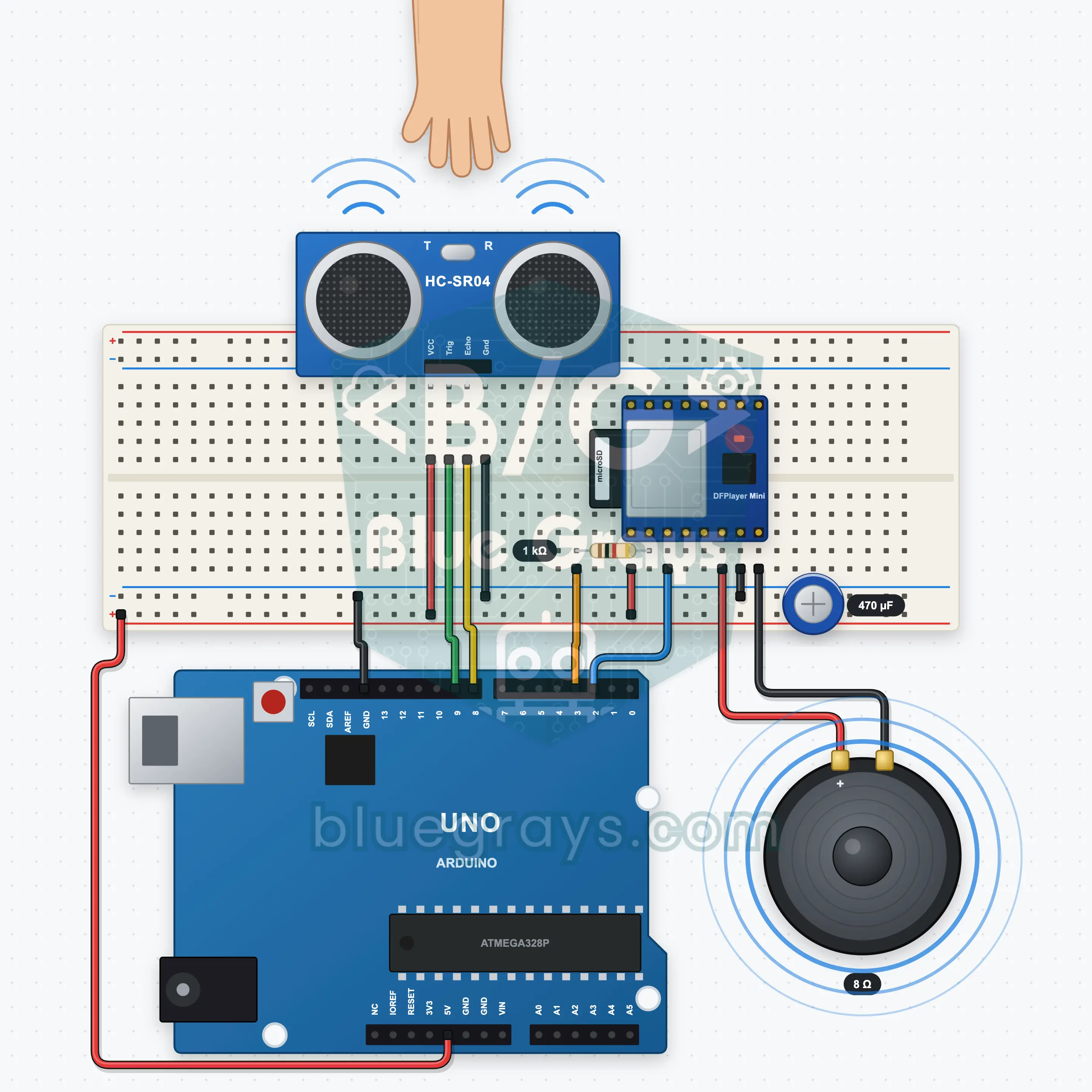
Arduino Talking Distance Robot: A Robot That Talks When You Come Closer (HC-SR04 + DFPlayer Mini + Speaker)
A robot that stays quiet while nobody is around and talks with a real voice when someone comes closer. The HC-SR04 measures the distance and the DFPlayer Mini plays MP3 files from a microSD card through a speaker: "Hello! I'm the BlueGrays robot." at 150 cm, "You're a bit close." at 60 cm, "Too close, step back!" at 20 cm and "See you!" when you leave. Each band has two sentences that take turns. A median filter and hysteresis stop it chattering at a border.
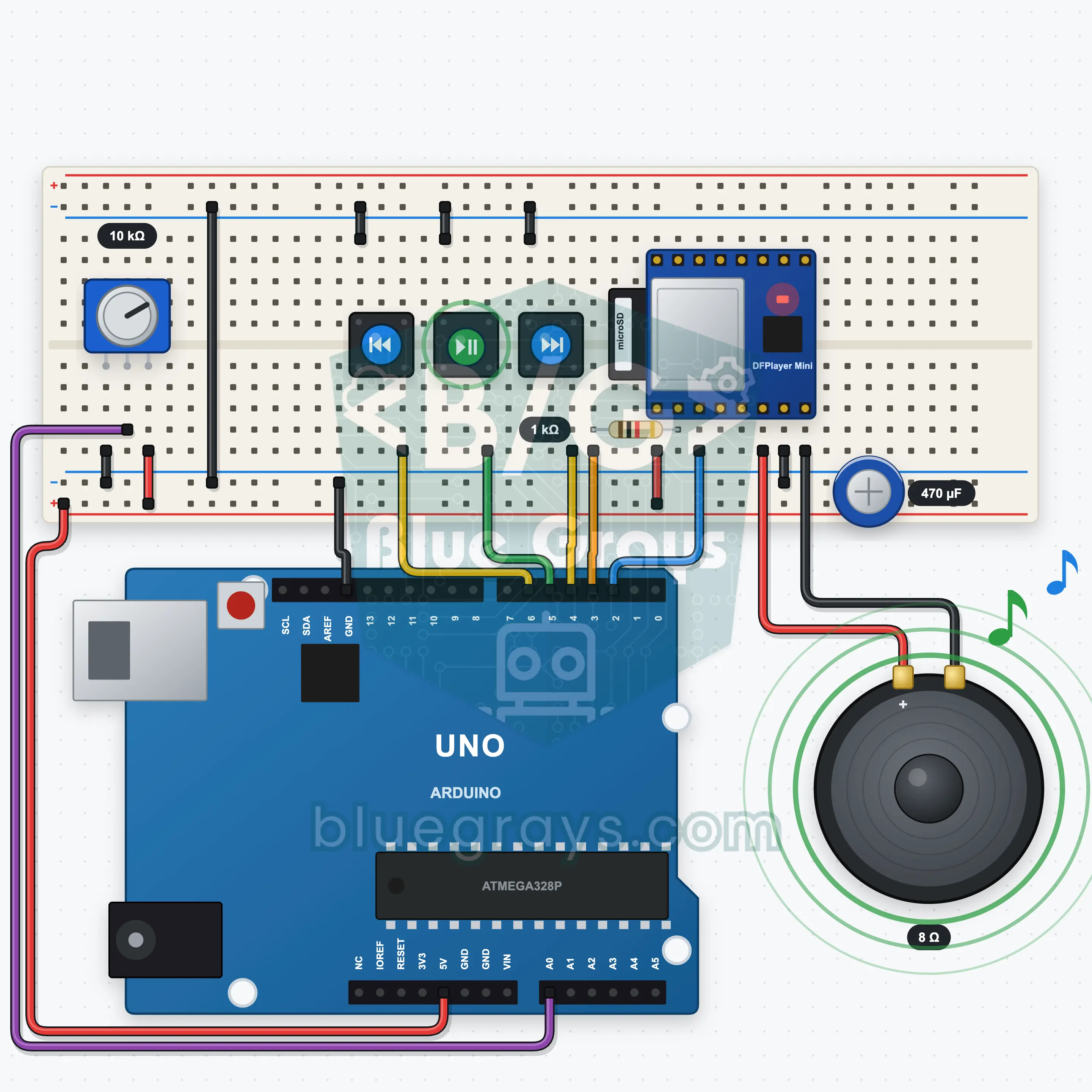
Arduino MP3 Player: A Music Player With Buttons and a Volume Knob (DFPlayer Mini + Potentiometer + Speaker)
An MP3 player for your own music with three buttons and a volume knob. The DFPlayer Mini plays MP3 files from a microSD card through a speaker. The previous, play/pause and next buttons move between tracks, and the potentiometer sets the volume from 0 to 30. When a track ends the next one starts, and after the last it goes back to the first. A long press on play turns on shuffle. The Serial Monitor shows the track and the volume.