
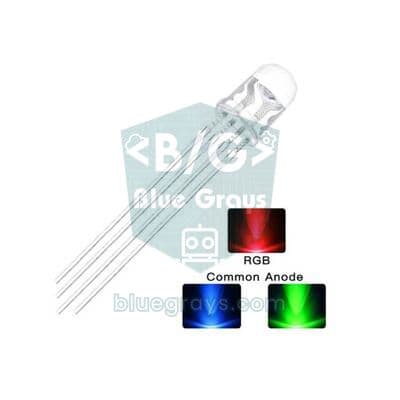
Bu komponent ishlatiladigan loyihalar
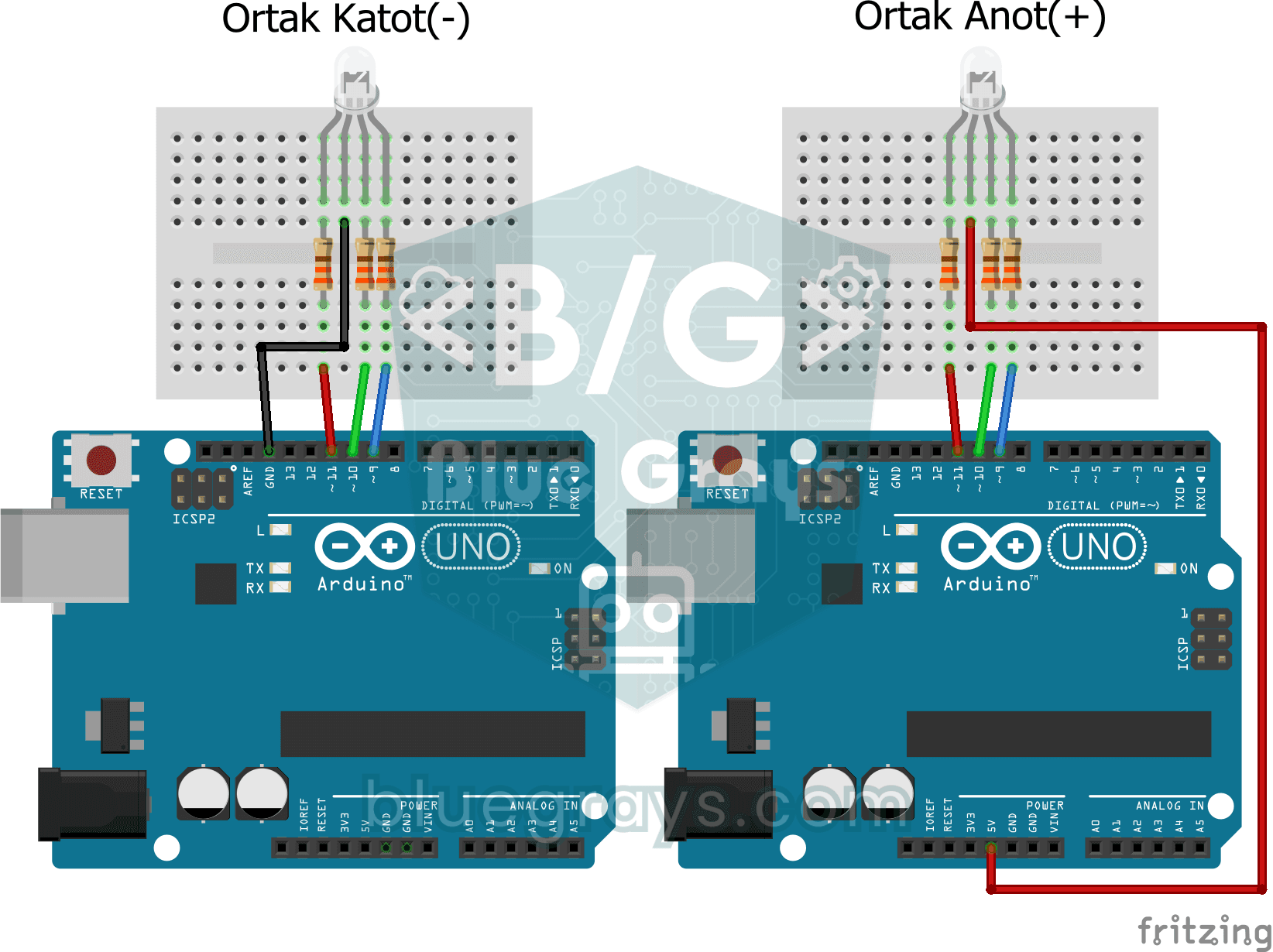
Using an RGB LED
Three colours hide inside a single LED: the RGB LED lights up red, then green, then blue, each colour on for half a second and off for half a second, before the cycle starts again.
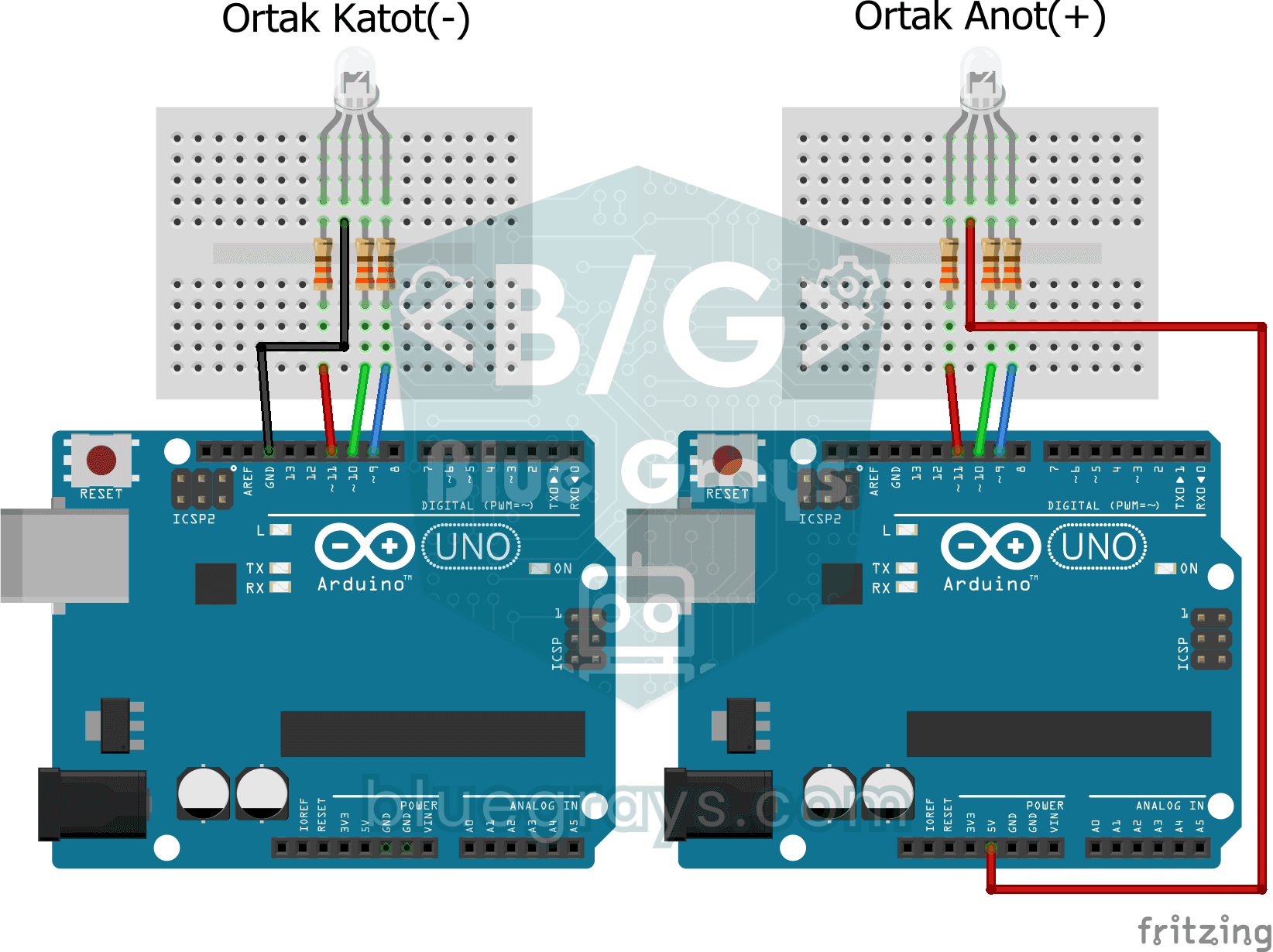
Smooth Color Transition with RGB Led
A single RGB LED drifts slowly from red to green, green to blue and back to red, looping through the rainbow without ever stopping.

ESP32 RGB LED Control
Unlimited color generation with a single RGB LED instead of 3 separate LEDs. As in Arduino, we make a rainbow transition by setting the R/G/B values with analogWrite(). Color theory (such as red+green=yellow) is seen practically.

ESP32 Color Mixer Light (3 Potentiometers + RGB LED + OLED)
A smart color-mixer lamp: turn 3 potentiometers on the ESP32 and mix any color you like! As you turn the red, green and blue potentiometers, the common-cathode RGB LED changes color instantly. The SSD1306 OLED display shows each channel's 0-255 value, fill bars and the HEX web color code (like #FF8040) live.
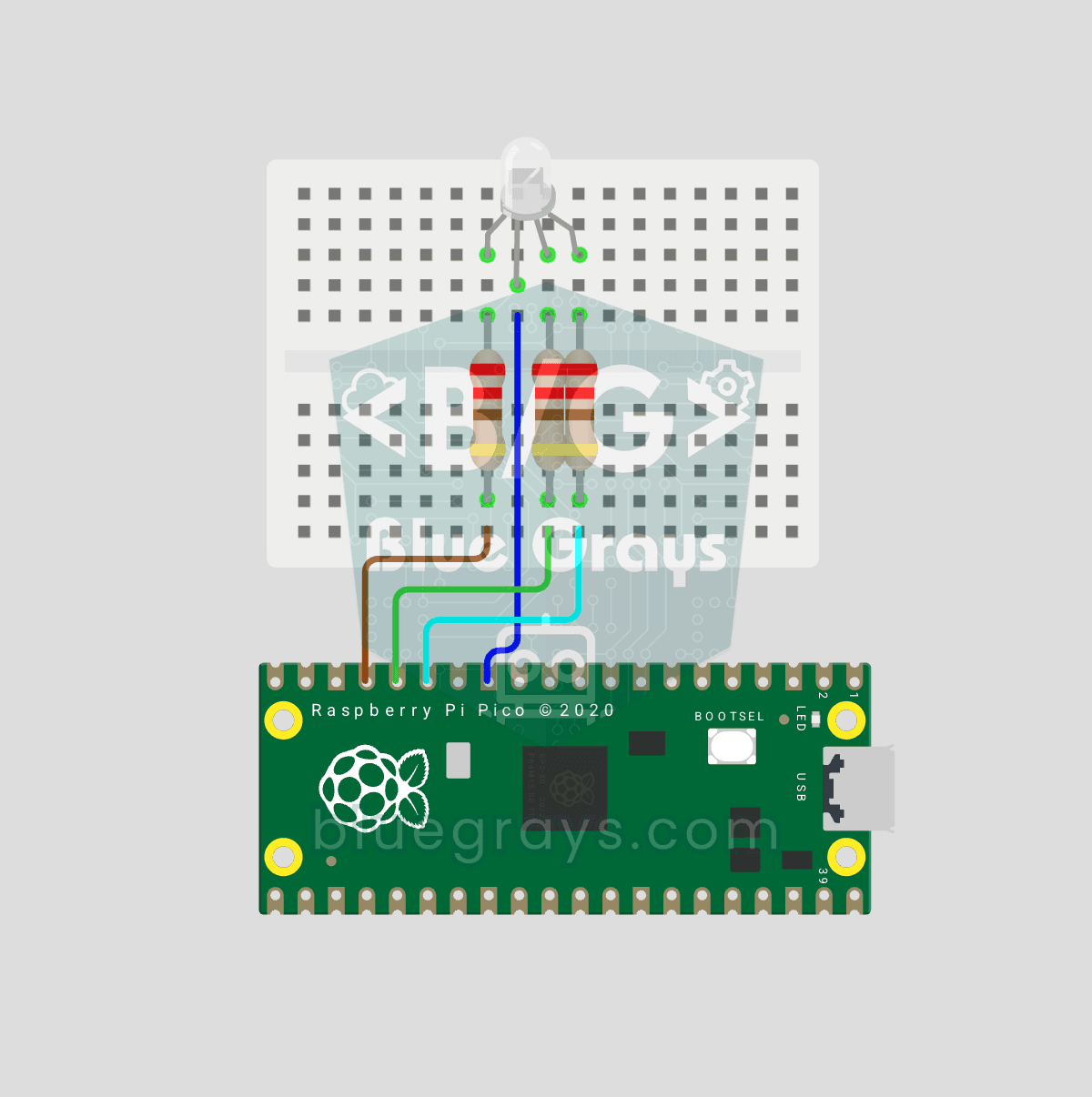
Raspberry Pi Pico RGB LED Color Cycle (3-Channel PWM)
One LED, millions of colors! An RGB LED actually holds 3 separate LEDs: red, green and blue. Set the brightness of each one separately with the Pico's 3 PWM channels and the colors mix: red + green = yellow, green + blue = cyan, all three = white. In this project the LED cycles through 8 colors.
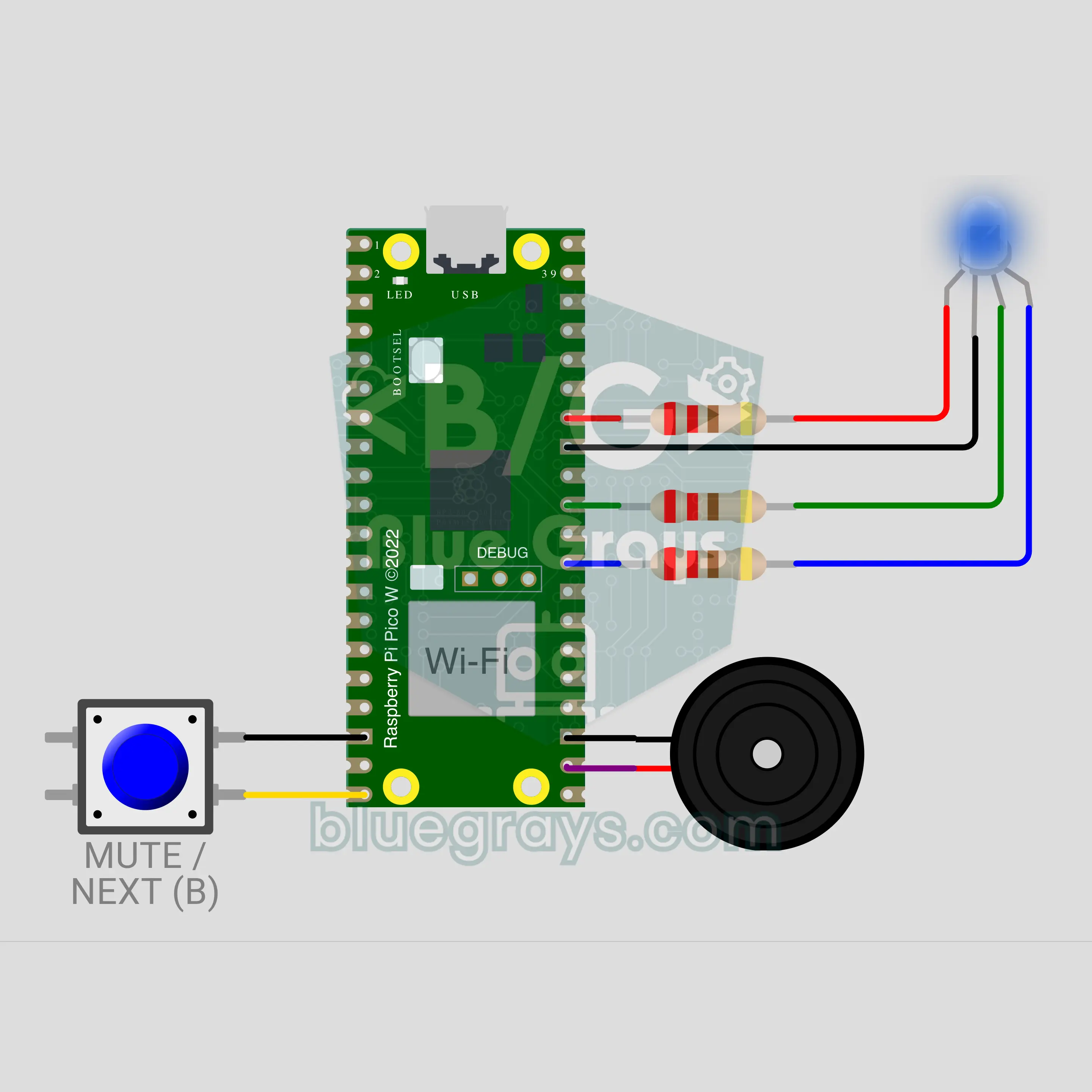
Raspberry Pi Pico W Server Status Lamp: Is the Website Down? (RGB LED + Buzzer + HTTP)
A Raspberry Pi Pico W checks your website over the internet every 30 seconds and shows the result with a single RGB LED: green means up, yellow slow, red down. If the site returns an error code or does not answer, the buzzer sounds an alarm. One button mutes the alarm, checks at once or moves to the next address in the list, and a single glitch never triggers a false alarm.
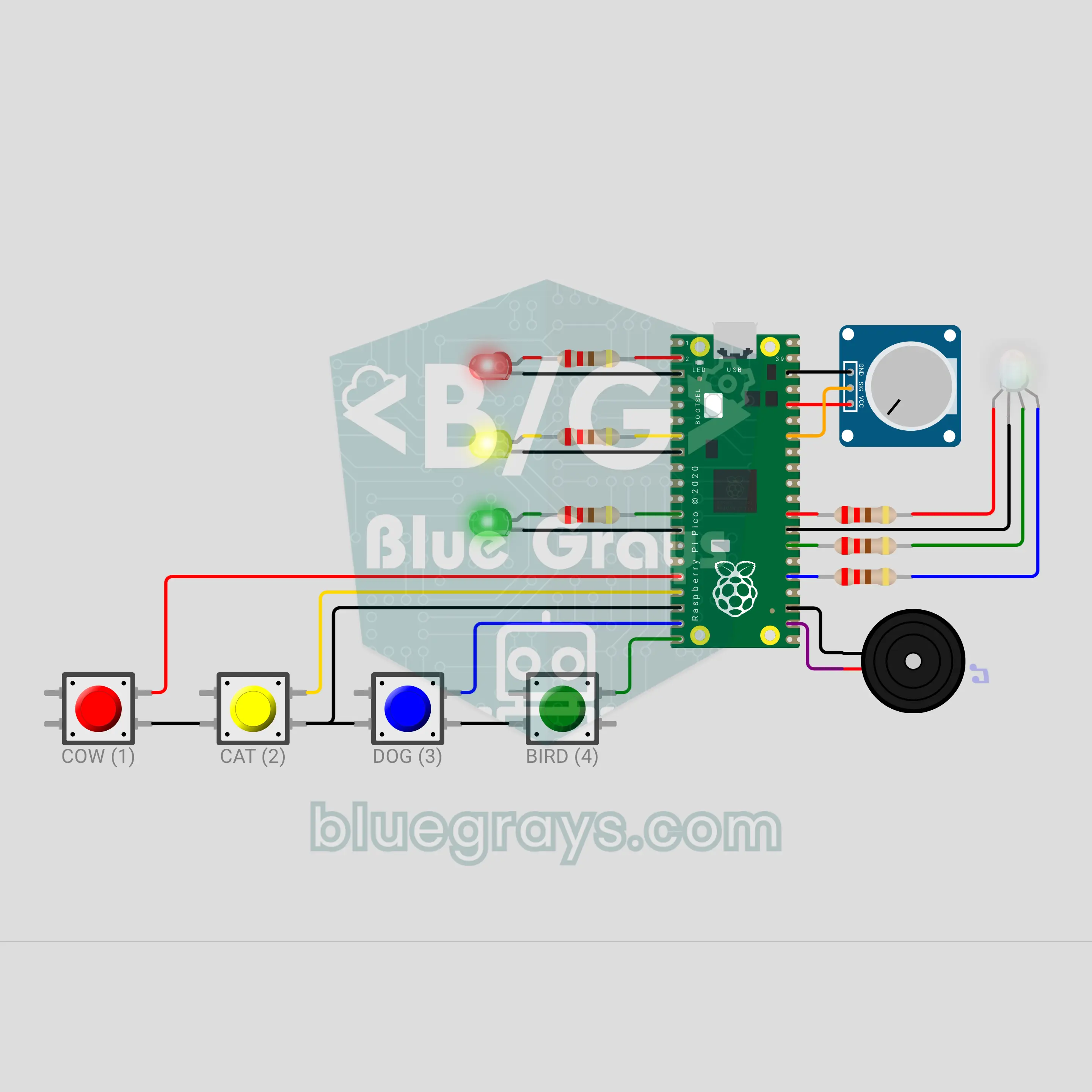
Pico Baby Busy Board: Light and Sound Toy (4 Buttons + Pot + RGB LED)
Each of the four buttons is an animal: the cow moos, the cat meows, the dog goes woof woof and the bird chirps. Every sound has its own RGB colour and its own light pattern on three LEDs. The potentiometer is a rainbow knob: turn it and six colours click past, with a surprise white and a sparkle at the end. After 10 seconds without a touch the board calls for attention with a silent light pattern. A busy board a parent builds by hand and fits into a box.