
Arduino loyihalarini kashf qil
Boshlang‘ichdan yuqori darajagacha, sxemali, kodli va videoli yuzlab loyihalar. Qaysi darajada bo‘lsang, o‘sha yerdan boshla.

Real-Time Clock from the Internet via ESP32 NTP
The ESP32 connects to Wi-Fi and fetches the real time from NTP (Network Time Protocol) servers with millisecond precision. configTzTime() applies the Turkey time zone (TRT, UTC+3) automatically, and in countries with daylight saving time the DST switch is handled by a POSIX TZ string. The time is printed both to the Serial Monitor and to an optional I2C LCD.

ESP32 WebSocket Counter (2 Buttons + LCD + Real-Time Web)
In this project, two buttons wired to the ESP32 (GPIO 5 counts up, GPIO 4 counts down) change a counter. The value updates instantly both on a 16x2 I2C LCD and, through the WebSocket support of ESPAsyncWebServer, in every connected browser without reloading the page. Instead of HTTP polling a single persistent connection is used, and the ESP32 sends the new value to everyone with ws.textAll().

ESP32 HTTPClient + Weather API (with LCD Screen)
In this project the ESP32 makes a REST API call over the internet to a weather API (wttr.in) using HTTPClient.h. The JSON response is parsed with ArduinoJson v7, and the city, temperature, humidity, weather and wind are shown on an I2C LCD. wttr.in needs no API key; just type the name of any city.

ESP32 HTTPClient + Weather API (with SSD1306 OLED Display)
In this project the ESP32 makes a REST API call over the internet to a weather API (wttr.in) using HTTPClient.h. Unlike the I2C LCD version, it uses an SSD1306 OLED (128×64) display, with large text and vector icons for a richer look. Seven weather icons (sunny, rainy, snowy and more) are drawn on the fly, with no bitmap files.

ESP32 Deep Sleep — Battery Saving (OLED + RTC RAM Counter)
The ESP32's Deep Sleep mode shuts down the CPU and most peripherals, cutting current draw to about 10µA, which is vital for battery-powered IoT devices. This project uses three wake-up sources: a timer (15 s), an external pin (EXT0, the button on GPIO 33) and a touch pin (T0/GPIO 4). Counters marked with RTC_DATA_ATTR survive deep sleep.

ESP32 Prayer Rakat Counter (HC-SR04 + SSD1306 OLED + 2 Buttons)
Do you sometimes lose track of which rakat you are on during prayer? This project is a rakat counter that sits next to your prayer mat and counts your prostrations when you bring your hand close. The HC-SR04 ultrasonic distance sensor detects your hand, the SSD1306 OLED display shows the count, and two buttons let you choose 2, 3 or 4 rakats and reset. A 2.5-second debounce and a "hand-away" check make sure no prostration is counted twice.

ESP32 Color Mixer Light (3 Potentiometers + RGB LED + OLED)
A smart color-mixer lamp: turn 3 potentiometers on the ESP32 and mix any color you like! As you turn the red, green and blue potentiometers, the common-cathode RGB LED changes color instantly. The SSD1306 OLED display shows each channel's 0-255 value, fill bars and the HEX web color code (like #FF8040) live.
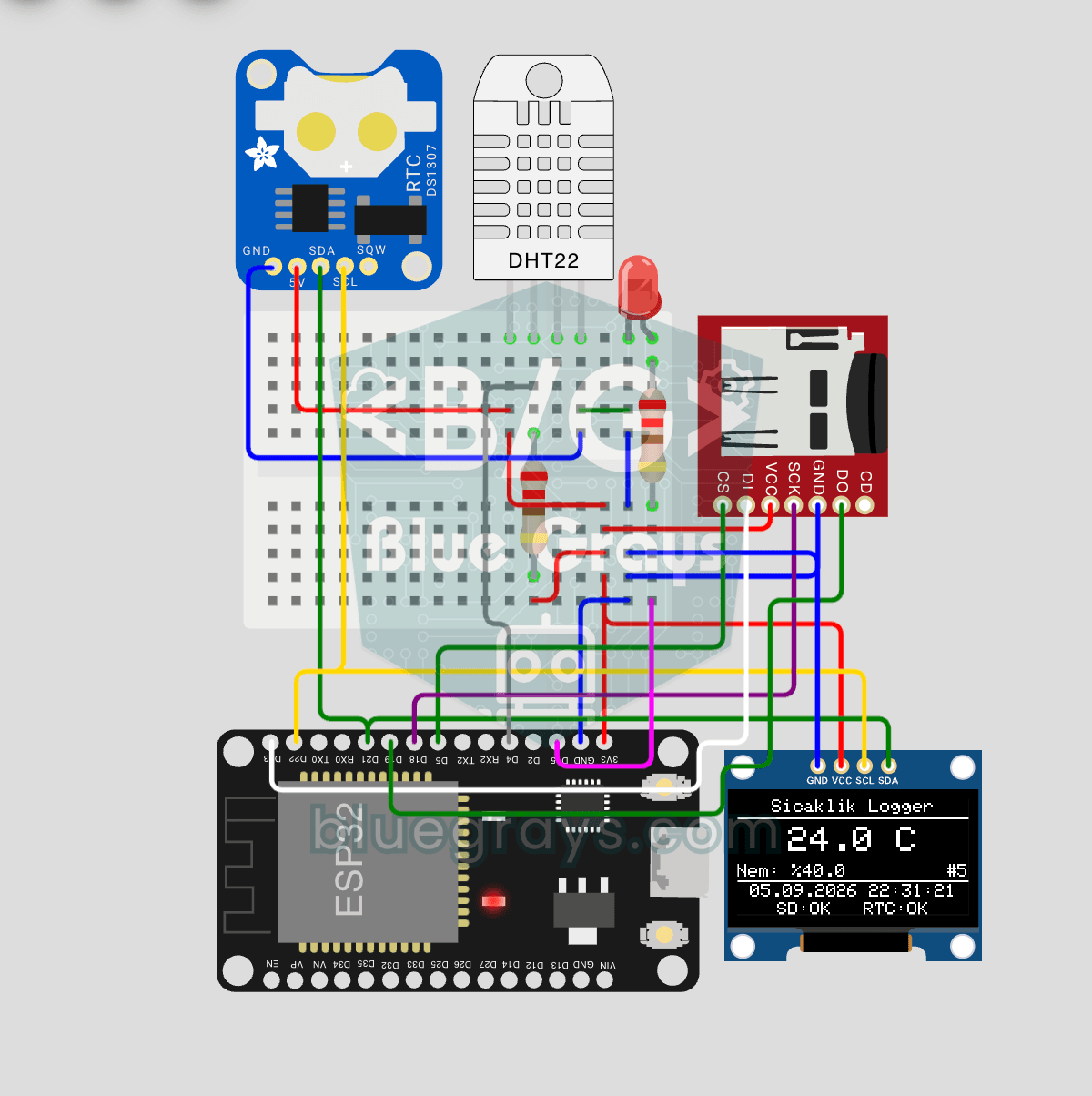
ESP32 Temperature Data Logger (DHT22 + DS1307 RTC + microSD + OLED)
Build a timed temperature and humidity logger with the ESP32! A DHT22 sensor reads temperature and humidity once a minute, and each reading is saved to a microSD card in CSV format with a real-time stamp from the DS1307 RTC module. The OLED display shows the latest temperature, humidity, timestamp and total number of records live, in large text.
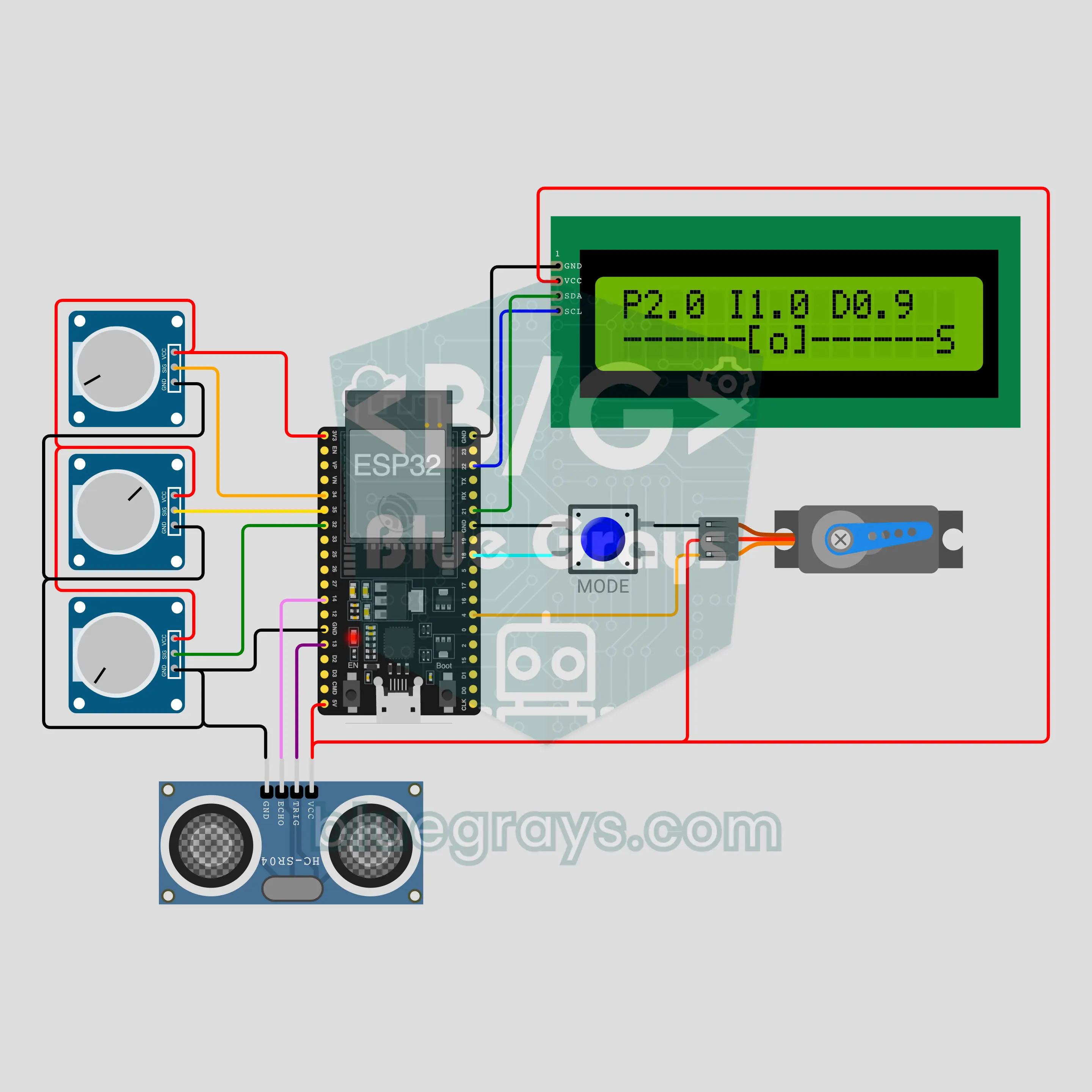
ESP32 PID Ball and Beam (HC-SR04 + Servo + I2C LCD + 3 Potentiometers)
The classic control engineering experiment on your desk: a servo tilts a beam and PID holds the ball on target. Three potentiometers change Kp, Ki and Kd live: with P alone the ball swings, D damps it and I cancels the beam's slight lean so the ball lands right on target. The I2C LCD shows the beam, ball and target, plus settling time and overshoot. In SIM mode a physics model rolls the ball; in REAL mode an HC-SR04 measures it.
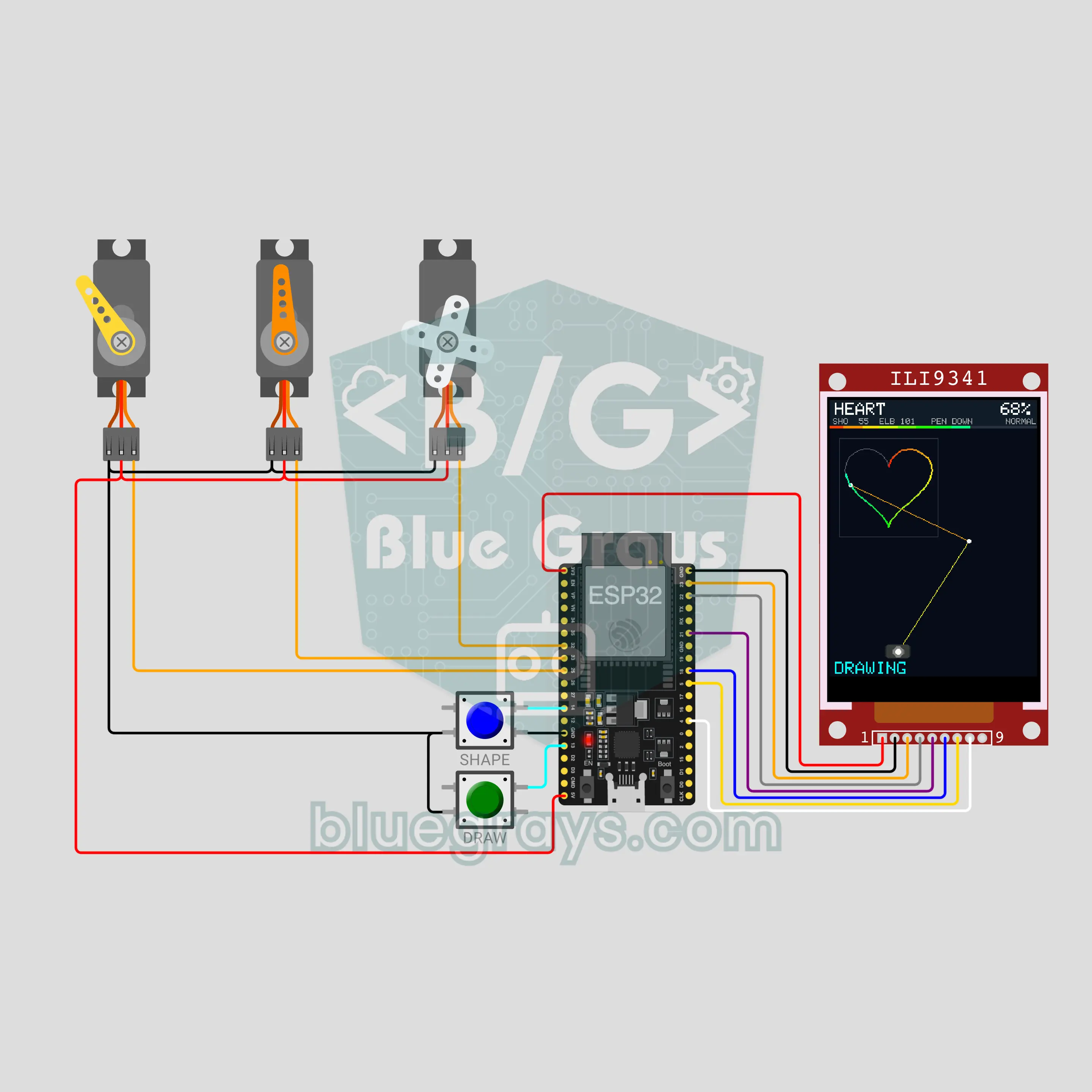
ESP32 Drawing Robot Arm (3 Servos + ILI9341 TFT Display + 2 Buttons)
A two-joint robot arm draws a heart, a star, a house, a spiral and the word MERHABA on paper, while a third servo lifts and lowers the pen. The ESP32 turns every point into shoulder and elbow angles with inverse kinematics and moves the arm in 0.5 mm steps; if a point is out of reach, it shows OUT OF REACH. The ILI9341 display shows the faint target, the arm moving live and a trace that shifts from red to blue. Two buttons: shape, pause, cancel and speed.
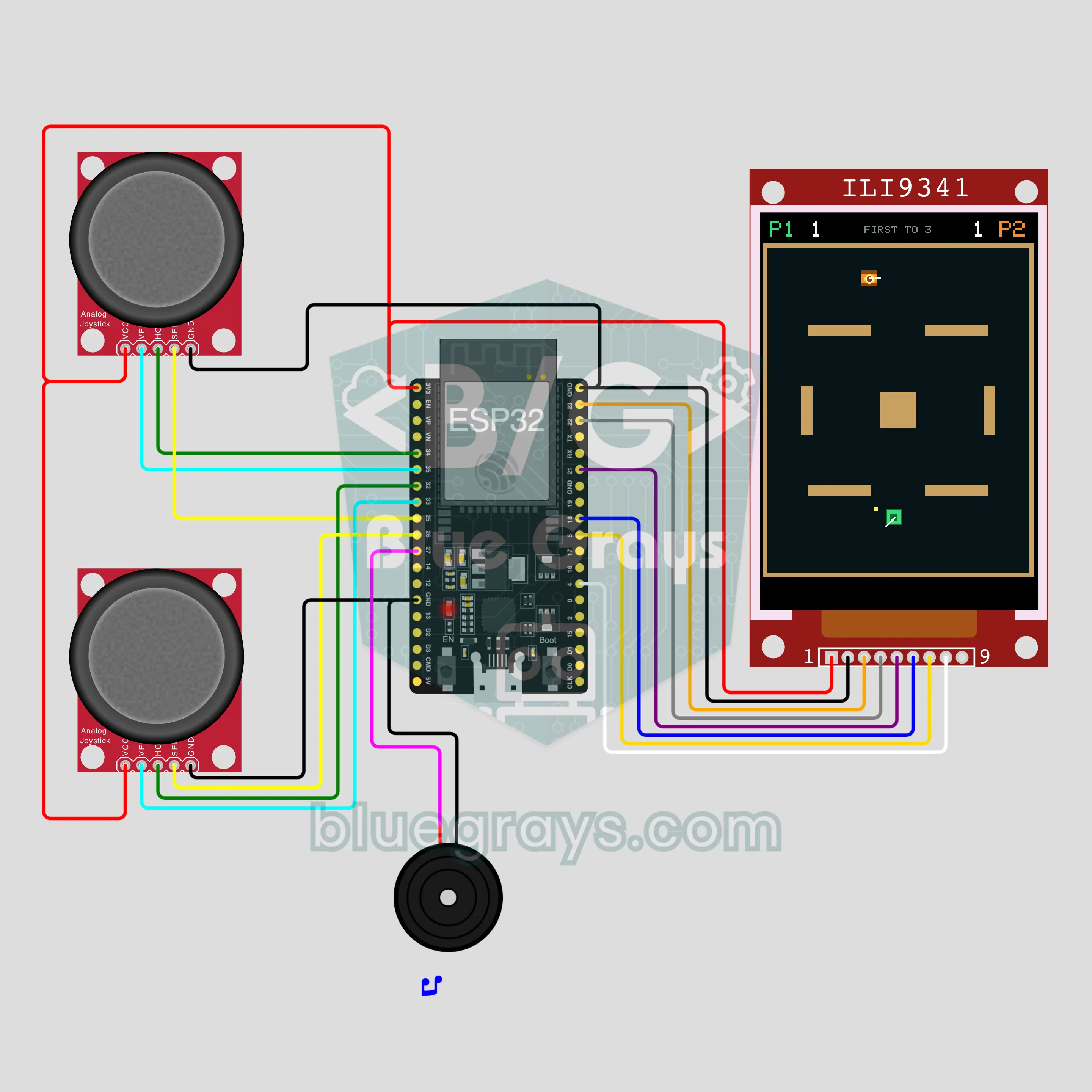
ESP32 Tank Duel: Two Player Retro Game (ILI9341 TFT + 2 Joysticks + Buzzer)
A two player tank duel on a color TFT screen, in the style of the two player tank games of the 80s. Each player drives a tank in 8 directions with a joystick and fires by pressing the stick down. Bullets bounce 3 times off the walls: you can hit a rival hiding behind a corner with a bank shot, but your own bullet can come back and hit you too. A tank that is hit explodes and the rival scores 1 point; first to 5 points wins. Score at the top, sounds from the buzzer.