
Arduino loyihalarini kashf qil
Boshlang‘ichdan yuqori darajagacha, sxemali, kodli va videoli yuzlab loyihalar. Qaysi darajada bo‘lsang, o‘sha yerdan boshla.
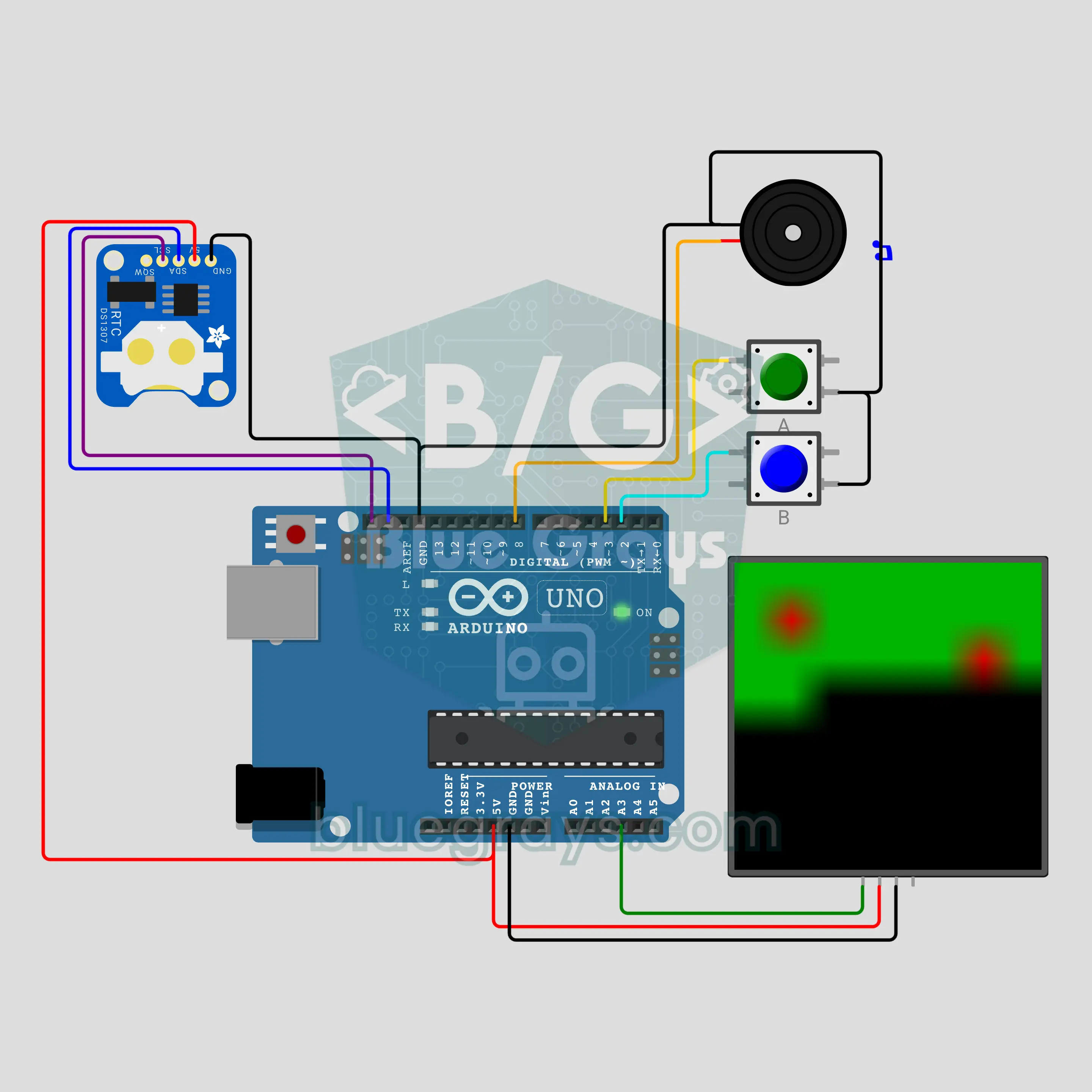
Habit Chain: Don't Drop Your 2027 Resolution (Arduino + DS1307 + 8x8 NeoPixel + 2 Buttons)
The don't break the chain method on your desk: press button A every day, that day's square on the 8x8 matrix lights green and the 64-day chain grows by one link. A day without a press stays red. Button B shows how many days in a row you have kept going. The DS1307 clock counts the days and the chain lives in its battery-backed memory, so it survives unplugging. Counting days from a real-time clock, keeping a record in bits, telling short from long presses.
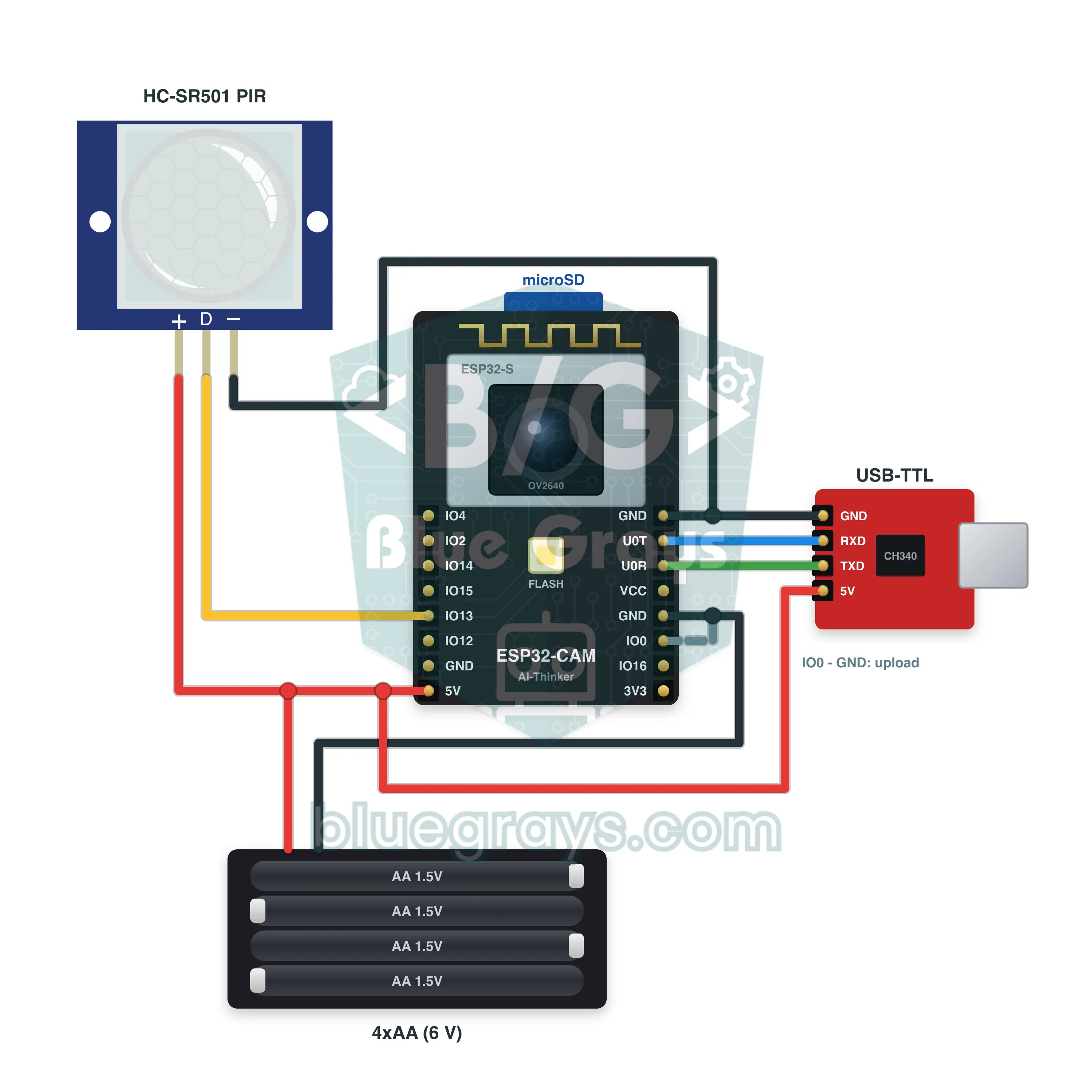
ESP32-CAM Camera That Takes Photos When It Sees Motion (PIR + microSD)
A battery-powered motion camera for a bird box or the front door. When the HC-SR501 PIR sees motion, the ESP32-CAM wakes from deep sleep, takes three photos and saves them in order on the board's own microSD slot as foto_0001.jpg, foto_0002.jpg. The photo number lives in EEPROM, so the order survives a battery change. When the motion is over the board goes back to sleep; no Wi-Fi or app needed.
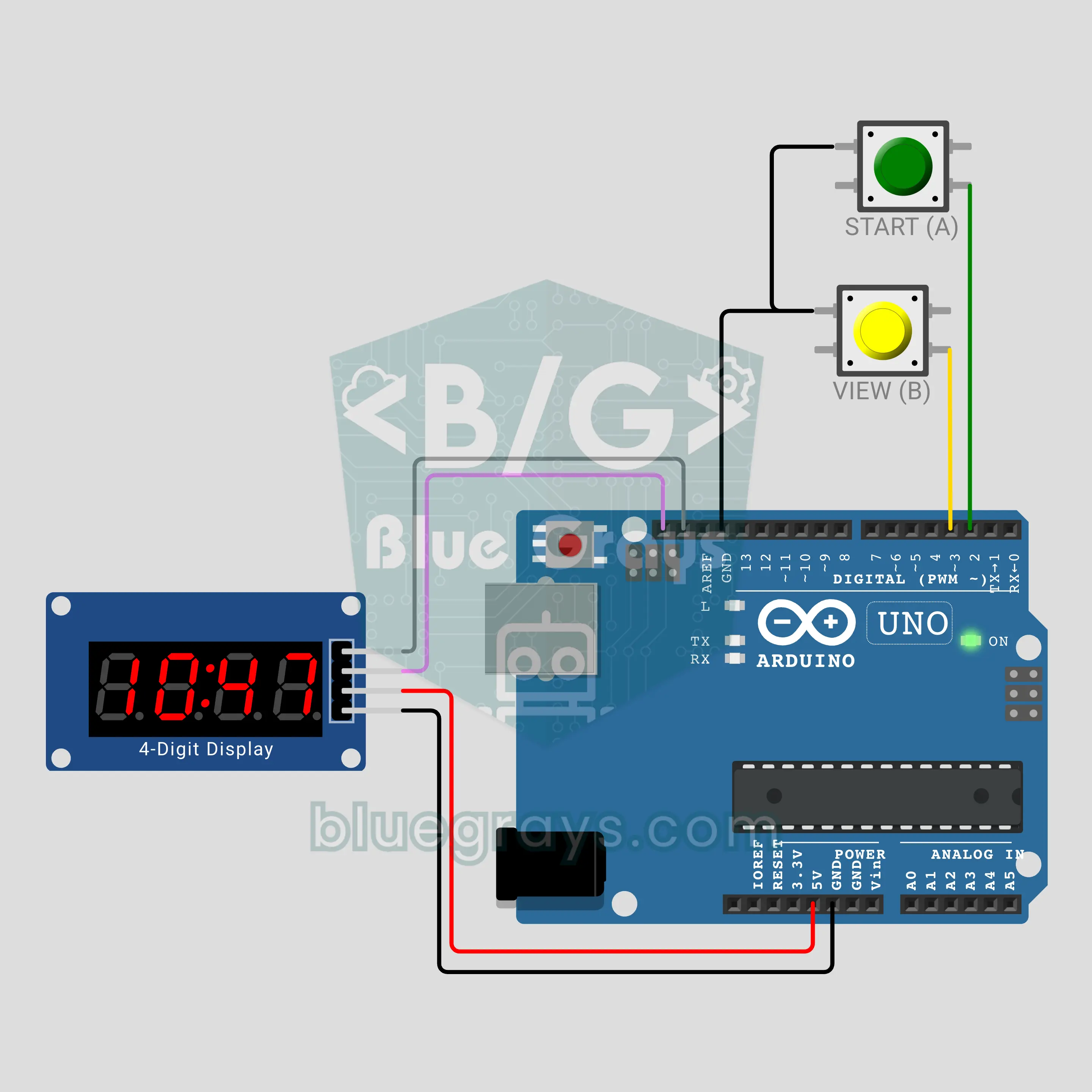
Timer1 Stopwatch That Never Drifts (Arduino + TM1637)
The Timer1 hardware counter fires an interrupt every 10 ms and the stopwatch counts hundredths with it; however busy the loop gets, the time does not drift. Next to it a second clock counts with delay(10), and button B lets you compare the two on the TM1637 display. In the video, over 15.36 seconds the delay clock counted only 6.22. Covers CTC mode, the prescaler, the OCR1A maths and the ISR.
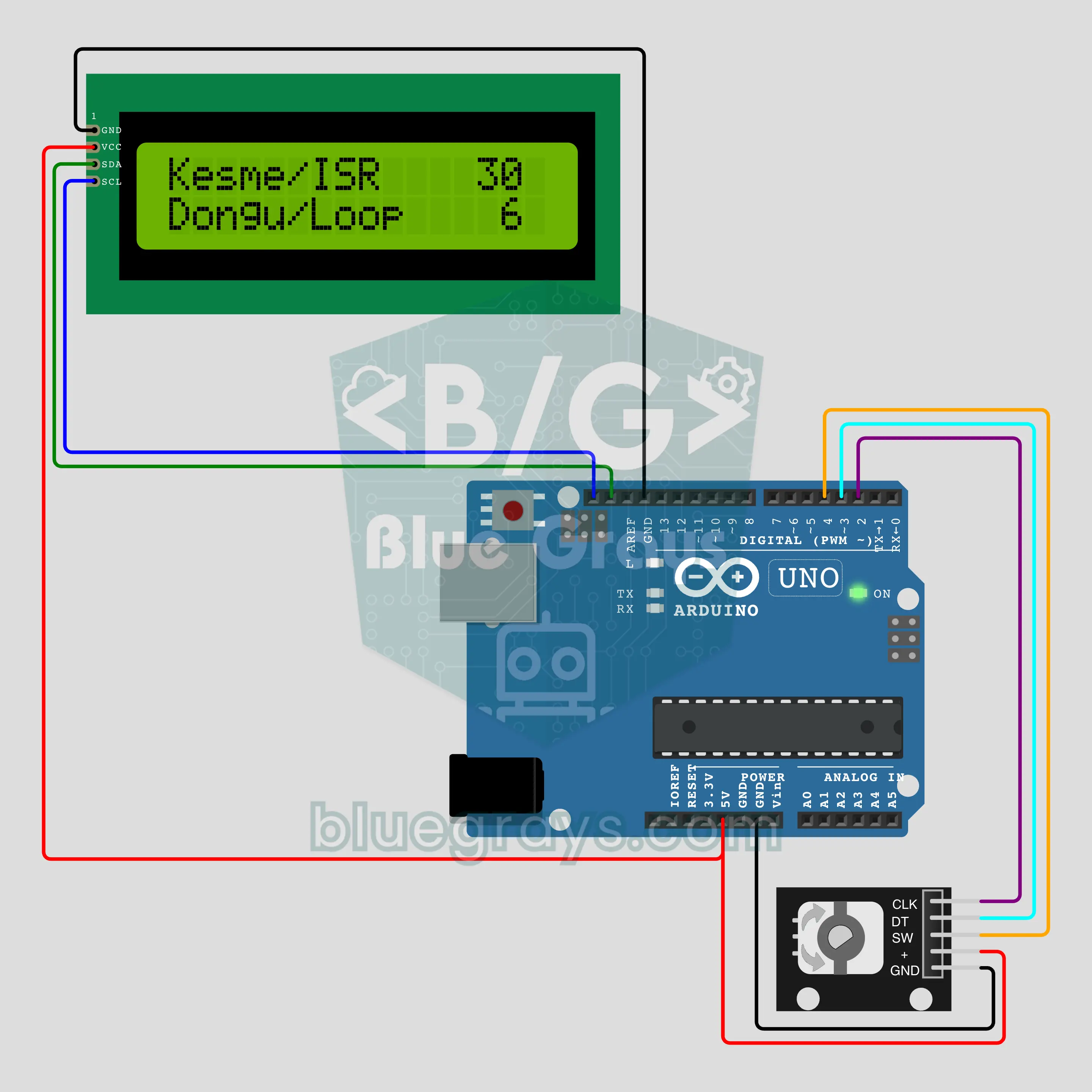
A Menu That Never Skips: Rotary Encoder with Interrupts (Arduino + KY-040 + I2C LCD)
Both pins of the KY-040 rotary encoder are read with interrupts, and you build a turn-and-press settings menu on an I2C LCD: brightness, volume and timer. Even with a slow 50 ms job in the loop, not a single step is lost. In the Step test, spin the encoder fast: in the video the interrupt counted 50 steps, the loop only 10. Covers direction decoding with a state table and debouncing.
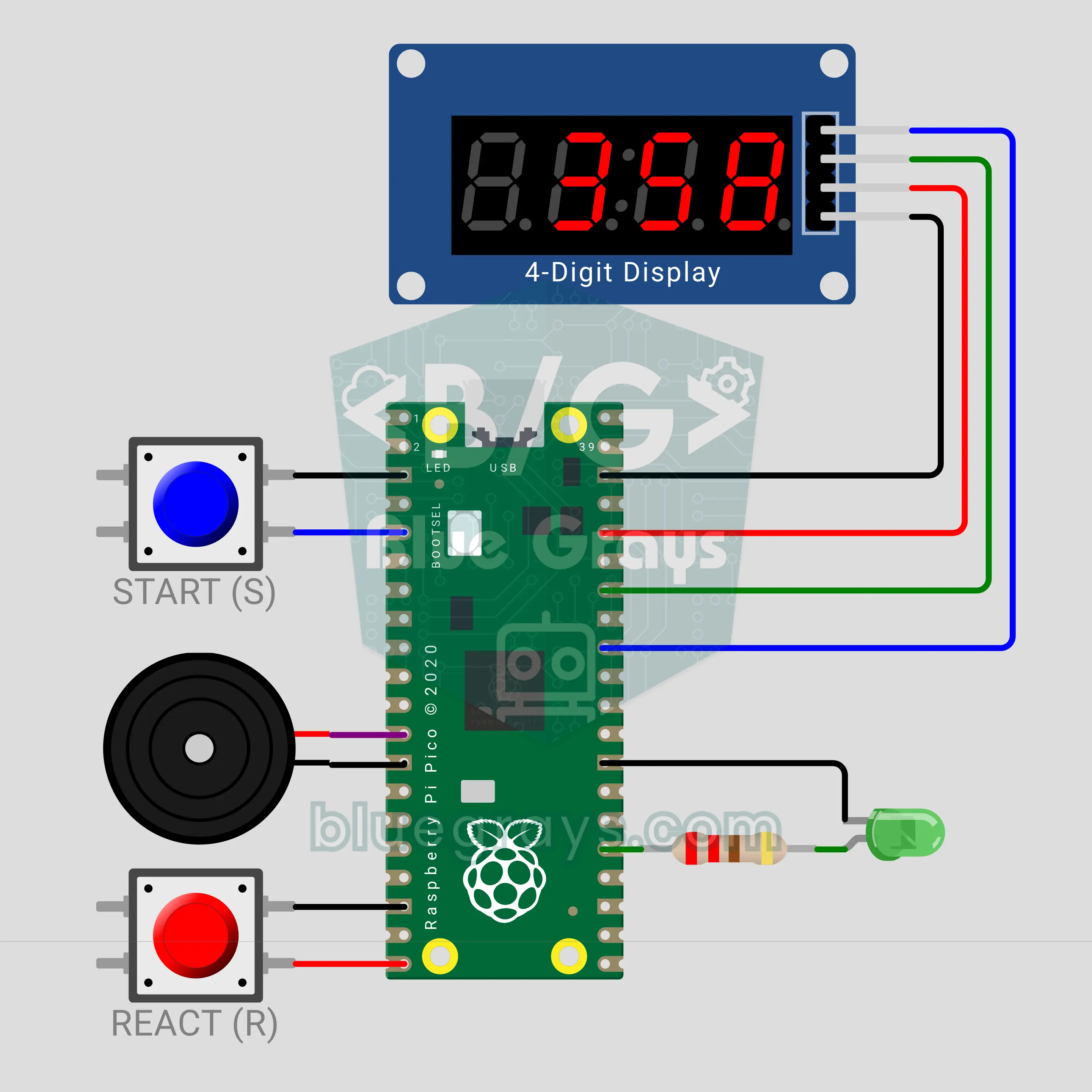
Pico Reaction Timer: A Millisecond Reflex Game (Pin.irq + TM1637)
Press START, the LED lights up at a random moment with a beep; how fast you hit the REACT button shows on the TM1637 display in milliseconds. The press is caught by a Pin.irq interrupt and its timestamp is taken right then, so the measurement stays exact even when the loop is busy. Press before the LED and you get "Err". The average of 5 rounds and your record are shown: 313 ms average and a 257 ms record in the video.
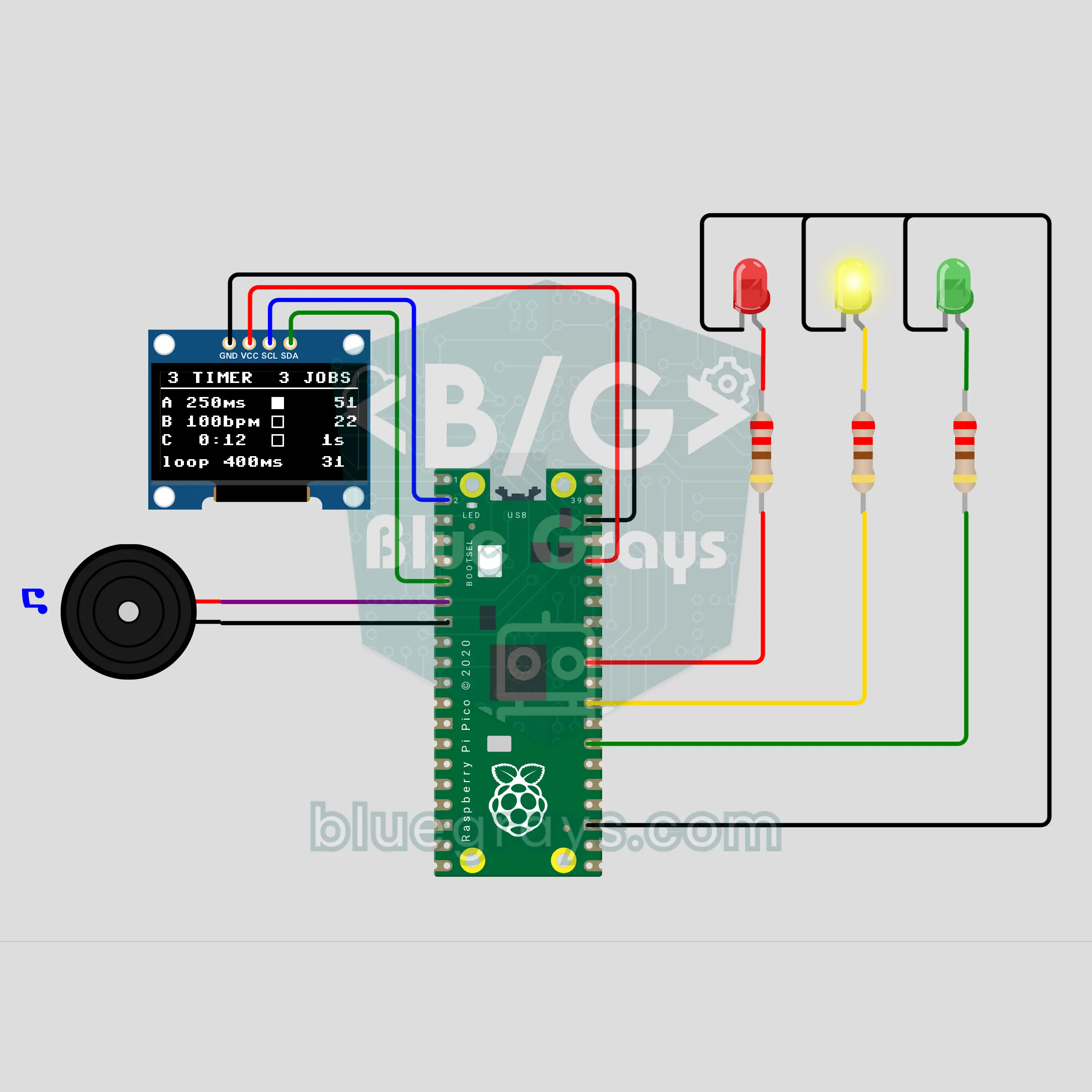
Pico Multitasking with Three Timers: LED, Metronome and Clock at Once (machine.Timer + OLED)
Three machine.Timers run three jobs at once: the red LED blinks every 250 ms, a metronome beeps 100 times a minute and lights the green LED, and the yellow LED counts the seconds. The main loop deliberately sleeps 400 ms on every pass, yet the rhythms never slip; the OLED shows how many times each timer has run. You learn real multitasking, which delay cannot do, and the keep-the-ISR-short rule.
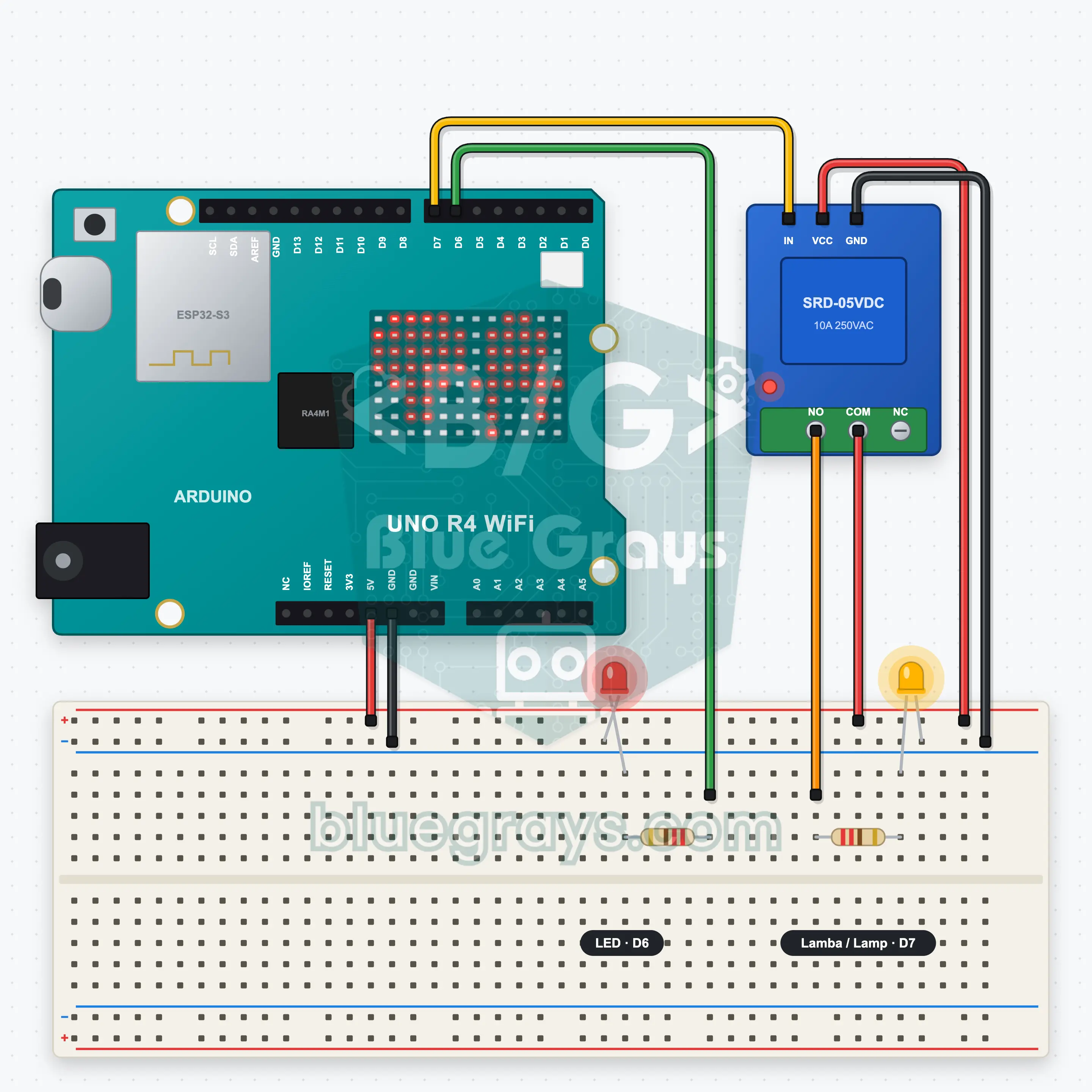
UNO R4 WiFi Web Server: Relay and LED
The UNO R4 WiFi joins your home Wi-Fi and serves its own web page. Two big buttons in your phone's browser switch the relay (a lamp LED) and a second LED on and off; no extra app needed. At start-up the board's IP address scrolls on the LED matrix, then the matrix shows the state with two icons: the lamp on the left, the LED on the right. You learn to build a web server with the R4's own WiFiS3 library.
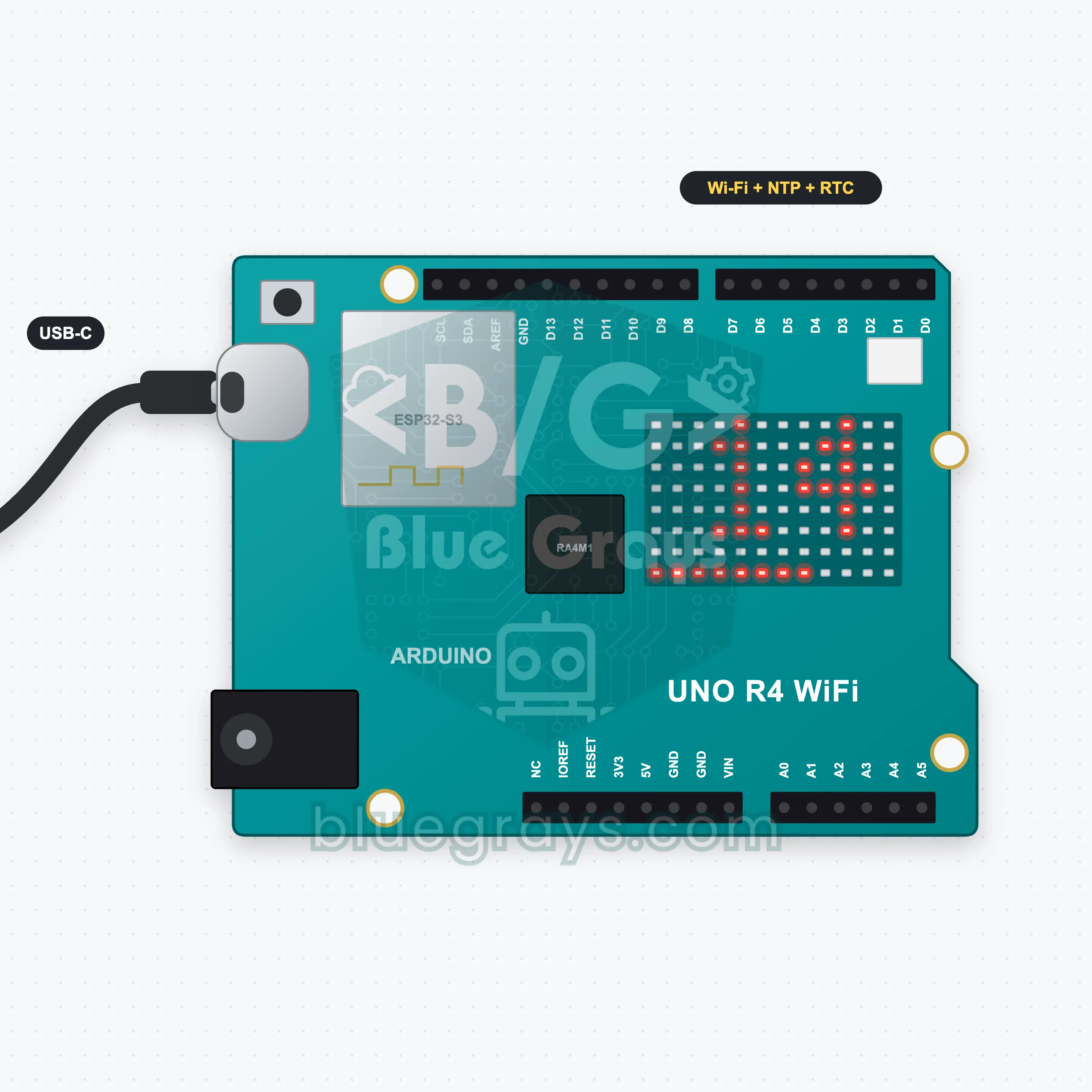
UNO R4 WiFi Internet Clock: NTP and Matrix
A clock you never have to set: the UNO R4 WiFi joins Wi-Fi, gets the time from an NTP server on the internet and sets the RTC (real-time clock) inside the board. Hours and minutes scroll across the 12x8 LED matrix and the bottom row shows the seconds as a filling bar. The clock is corrected from the internet every 6 hours; unplug it, plug it back in and it finds the right time again by itself. No extra parts.
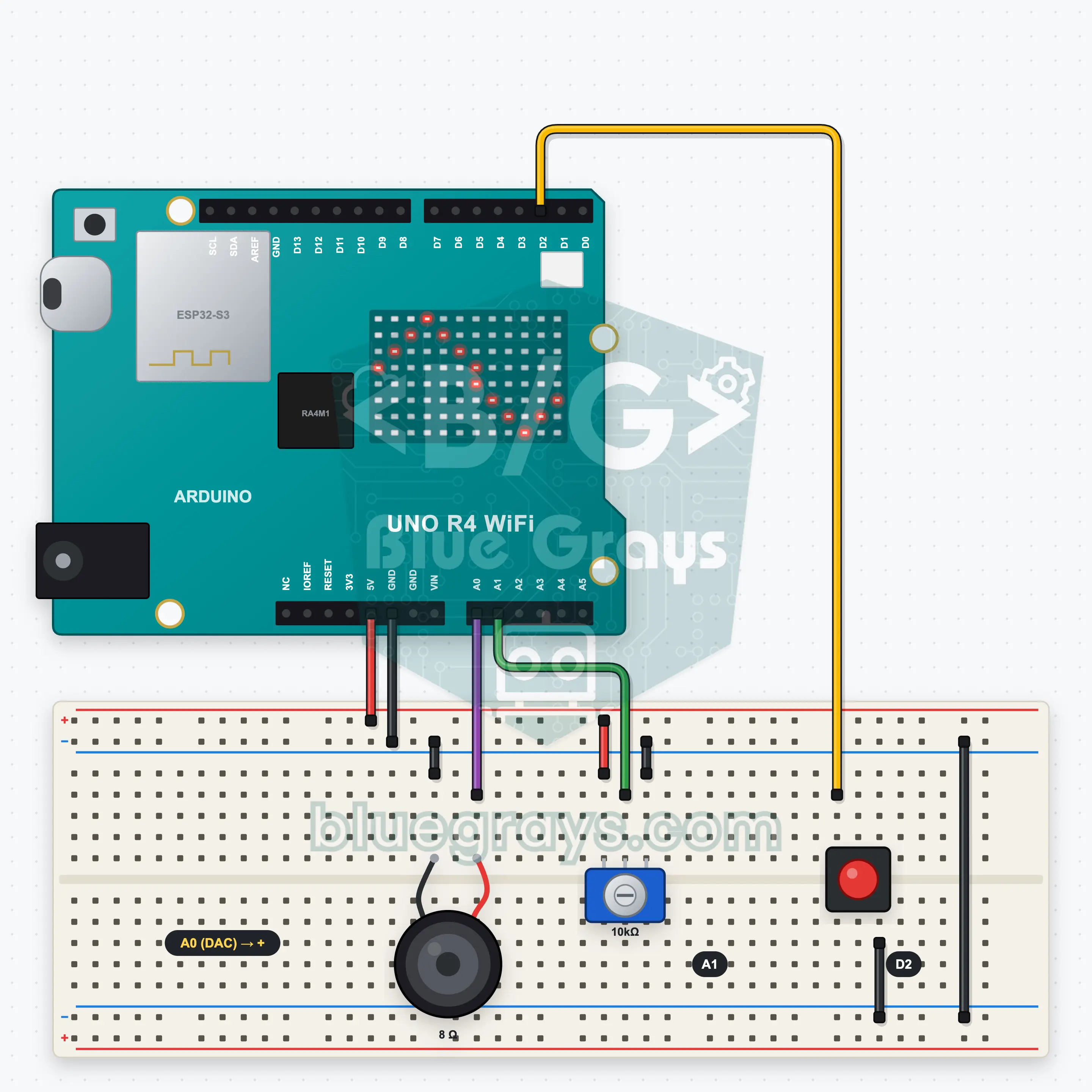
UNO R4 WiFi DAC Melody and Wave Generator
A classic Arduino makes sound only by switching on and off; the UNO R4's 12-bit DAC sends a real waveform to the speaker. In this project a button cycles four modes: a melody (Ode to Joy), a sine, a square and a sawtooth wave. In the melody the pot sets the tempo; for the waves it sets the frequency from 100 to 1000 Hz. The 12x8 LED matrix scrolls the current wave shape or shows the notes like a piano roll.
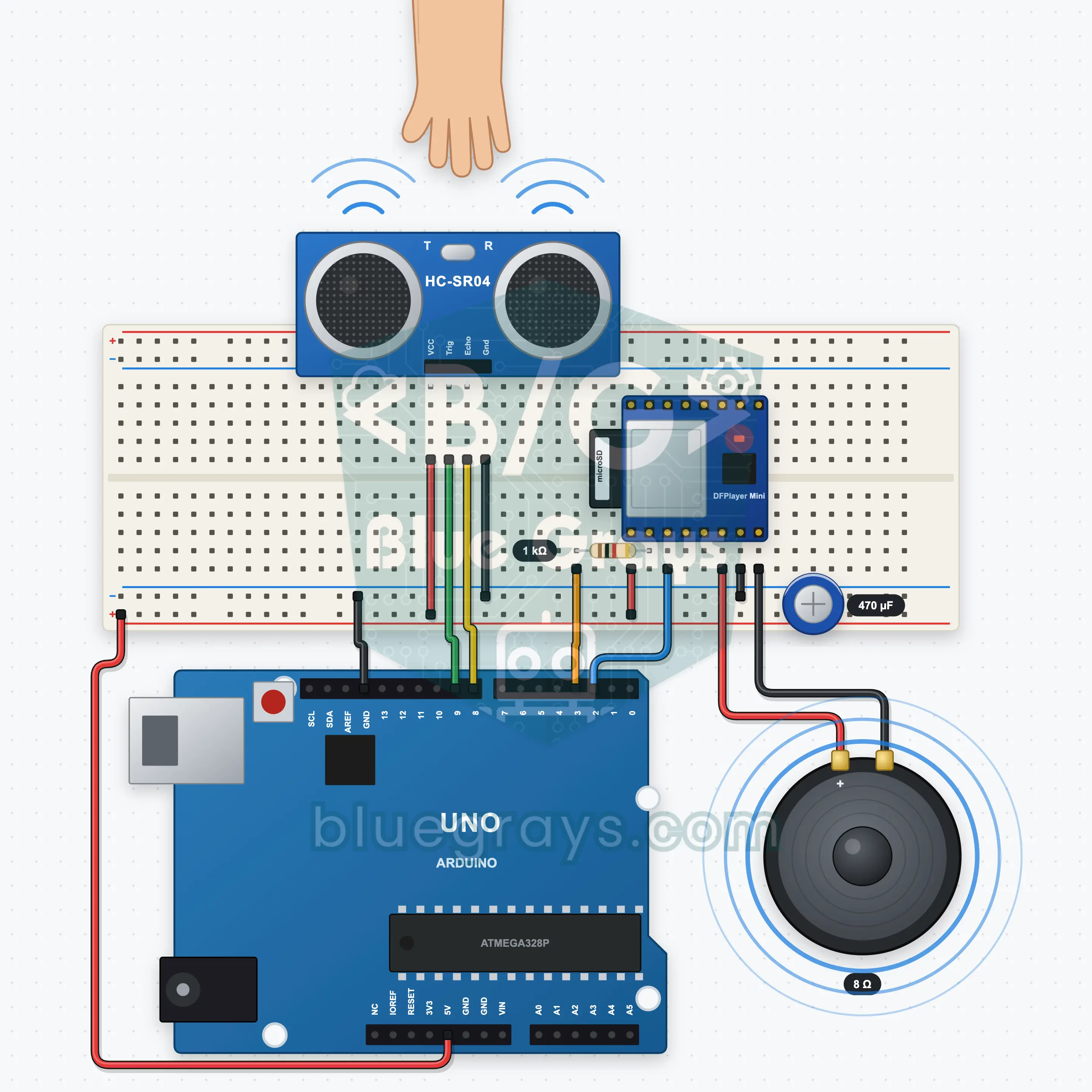
Arduino Talking Distance Robot: A Robot That Talks When You Come Closer (HC-SR04 + DFPlayer Mini + Speaker)
A robot that stays quiet while nobody is around and talks with a real voice when someone comes closer. The HC-SR04 measures the distance and the DFPlayer Mini plays MP3 files from a microSD card through a speaker: "Hello! I'm the BlueGrays robot." at 150 cm, "You're a bit close." at 60 cm, "Too close, step back!" at 20 cm and "See you!" when you leave. Each band has two sentences that take turns. A median filter and hysteresis stop it chattering at a border.
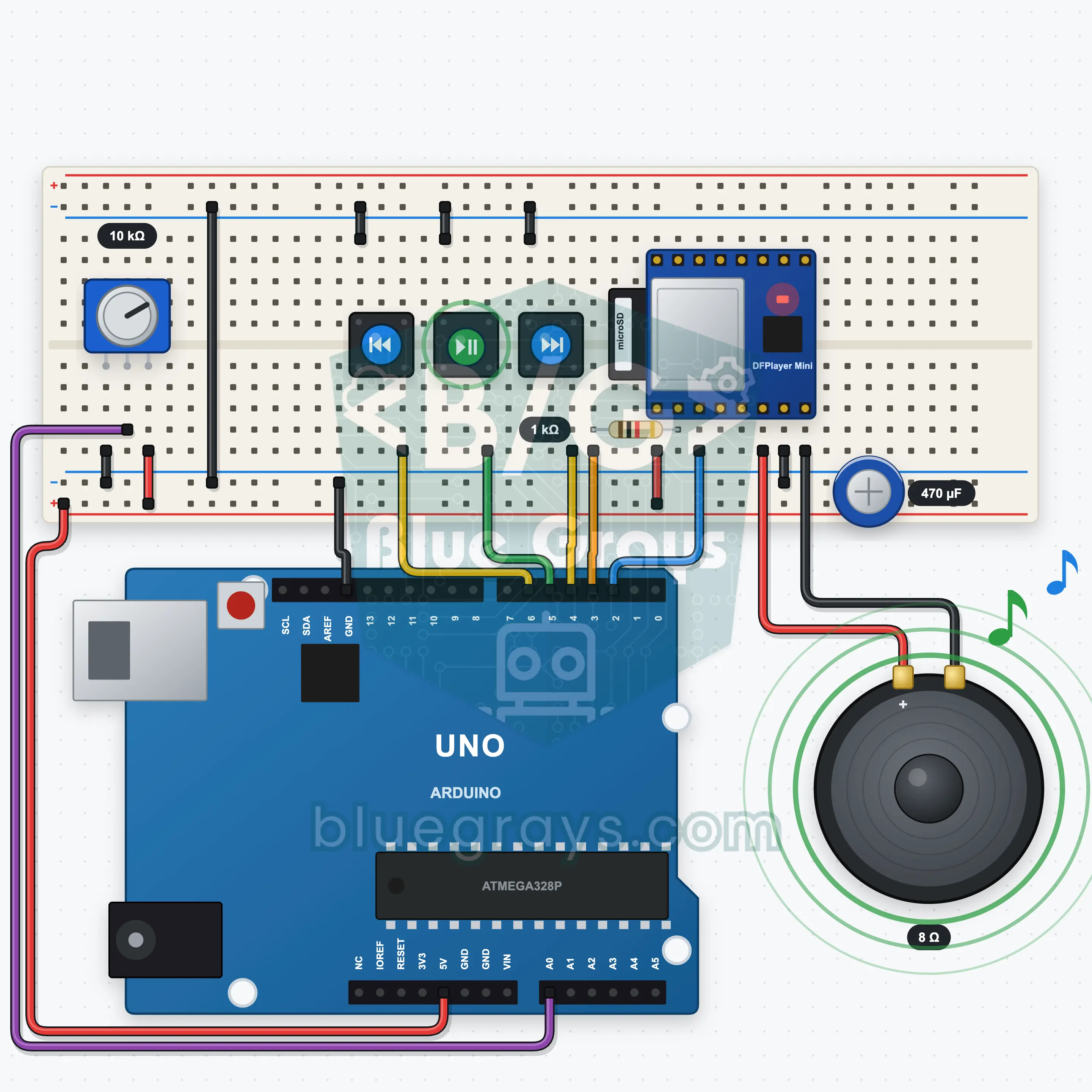
Arduino MP3 Player: A Music Player With Buttons and a Volume Knob (DFPlayer Mini + Potentiometer + Speaker)
An MP3 player for your own music with three buttons and a volume knob. The DFPlayer Mini plays MP3 files from a microSD card through a speaker. The previous, play/pause and next buttons move between tracks, and the potentiometer sets the volume from 0 to 30. When a track ends the next one starts, and after the last it goes back to the first. A long press on play turns on shuffle. The Serial Monitor shows the track and the volume.
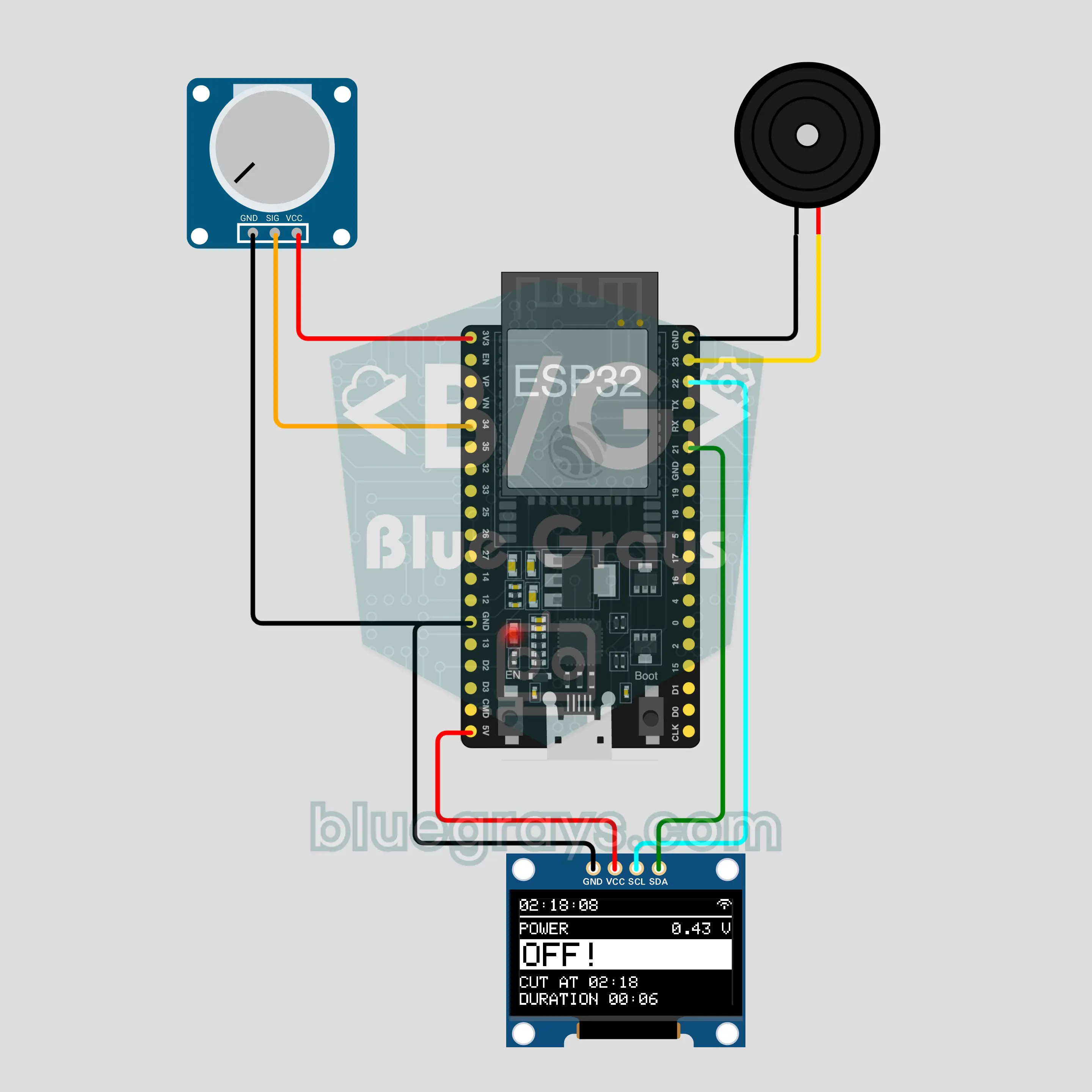
ESP32 Power Outage Alert: A Telegram Message to Your Phone When the Power Goes Out (Voltage Divider + OLED + Power Bank)
When the power goes out at home, a Telegram message reaches your phone with the time, and when it comes back you get the outage length. The 5 V of an adapter in the wall socket is read by the ESP32 through a voltage divider; the ESP32 runs from a power bank, so it keeps working during the outage. The OLED shows the state, voltage and duration, and a buzzer beeps. There is no connection to the 230 V mains, only the 5 V side of the adapter is measured.