
Arduino loyihalarini kashf qil
Boshlang‘ichdan yuqori darajagacha, sxemali, kodli va videoli yuzlab loyihalar. Qaysi darajada bo‘lsang, o‘sha yerdan boshla.
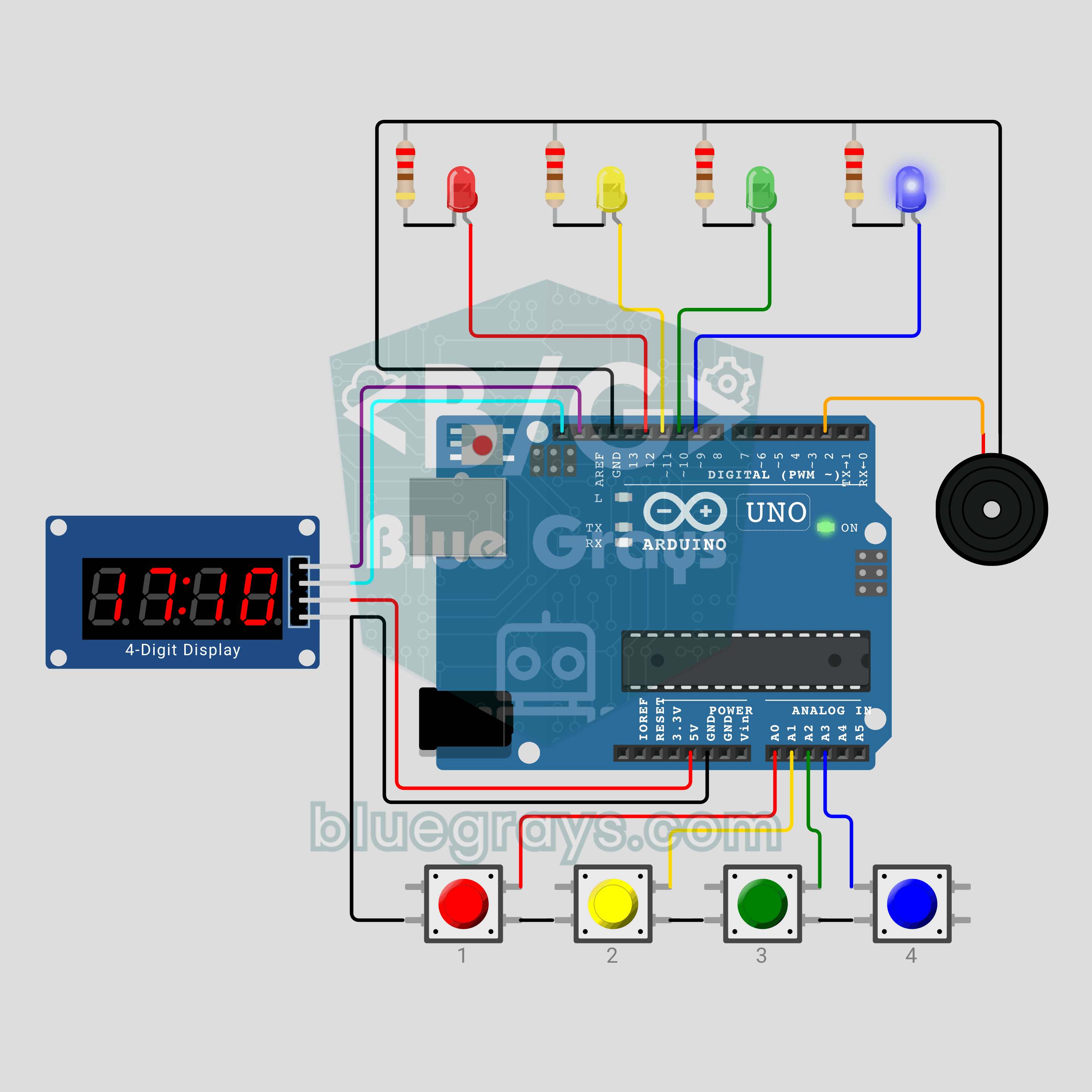
Arduino Whack-a-Mole Game (4 LEDs + 4 Buttons + TM1637 Display)
Hit it the moment it lights up! The arcade classic whack-a-mole on your desk: one of 4 LEDs lights up at random, and if you press the button of the same colour before it goes out, you score. Every 5 hits is a new level and the moles stay up for less time. A wrong button costs 1 point and 3 seconds. Time and score show on the TM1637, the record lives in EEPROM, and a passive buzzer gives each hole its own sound.
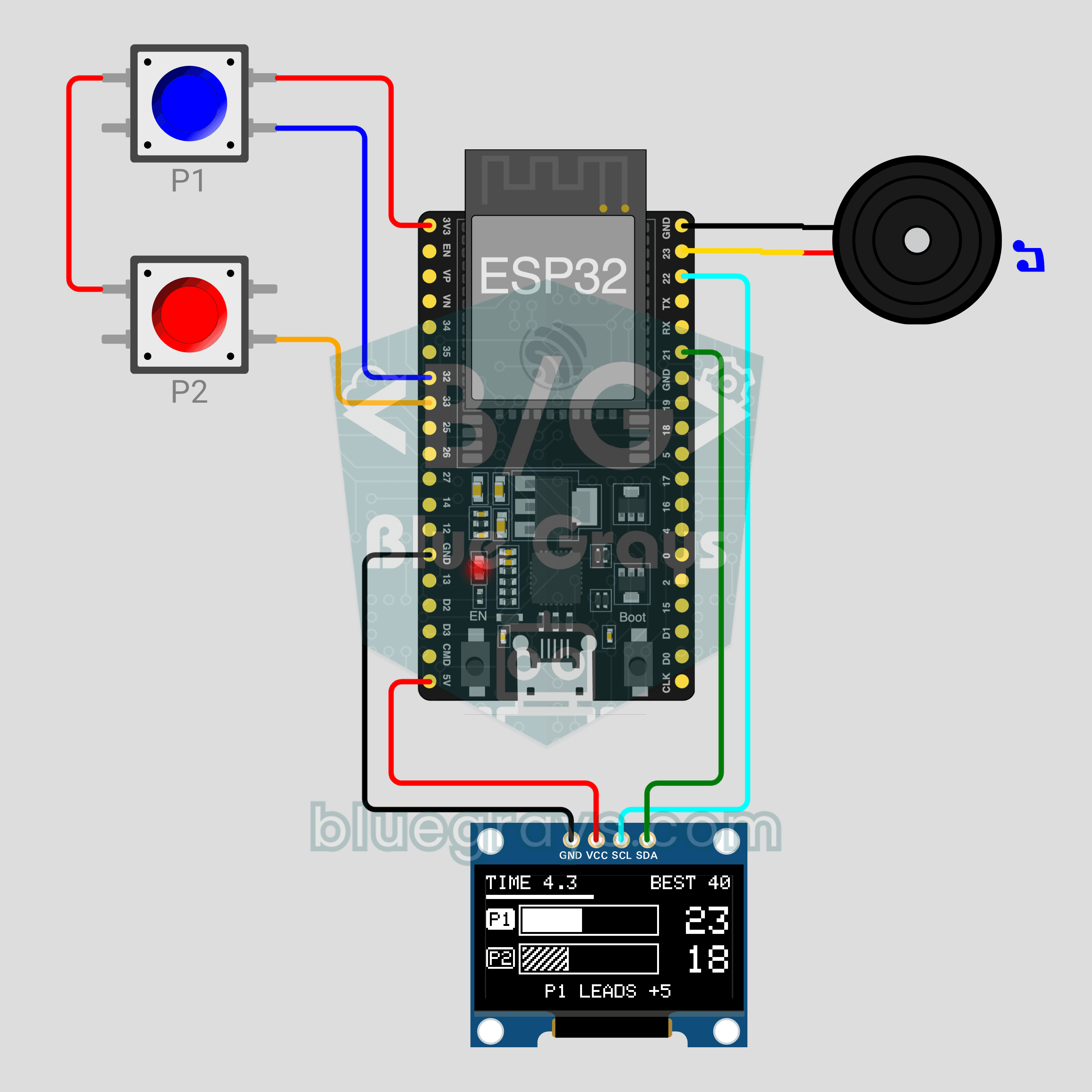
ESP32 Two-Player Click Race (OLED Display + 2 Buttons + Buzzer)
Challenge a friend to a 10-second click race! Both players press their button to get ready, then after a 3-2-1 countdown everyone mashes as fast as they can. The ESP32 races two bars side by side on a 0.96 inch OLED, with the time left, both scores and the leader shown live. When time is up you see the winner and clicks per second, and the best score is saved with Preferences. A passive buzzer plays a click tone for each player, a whistle and a fanfare.
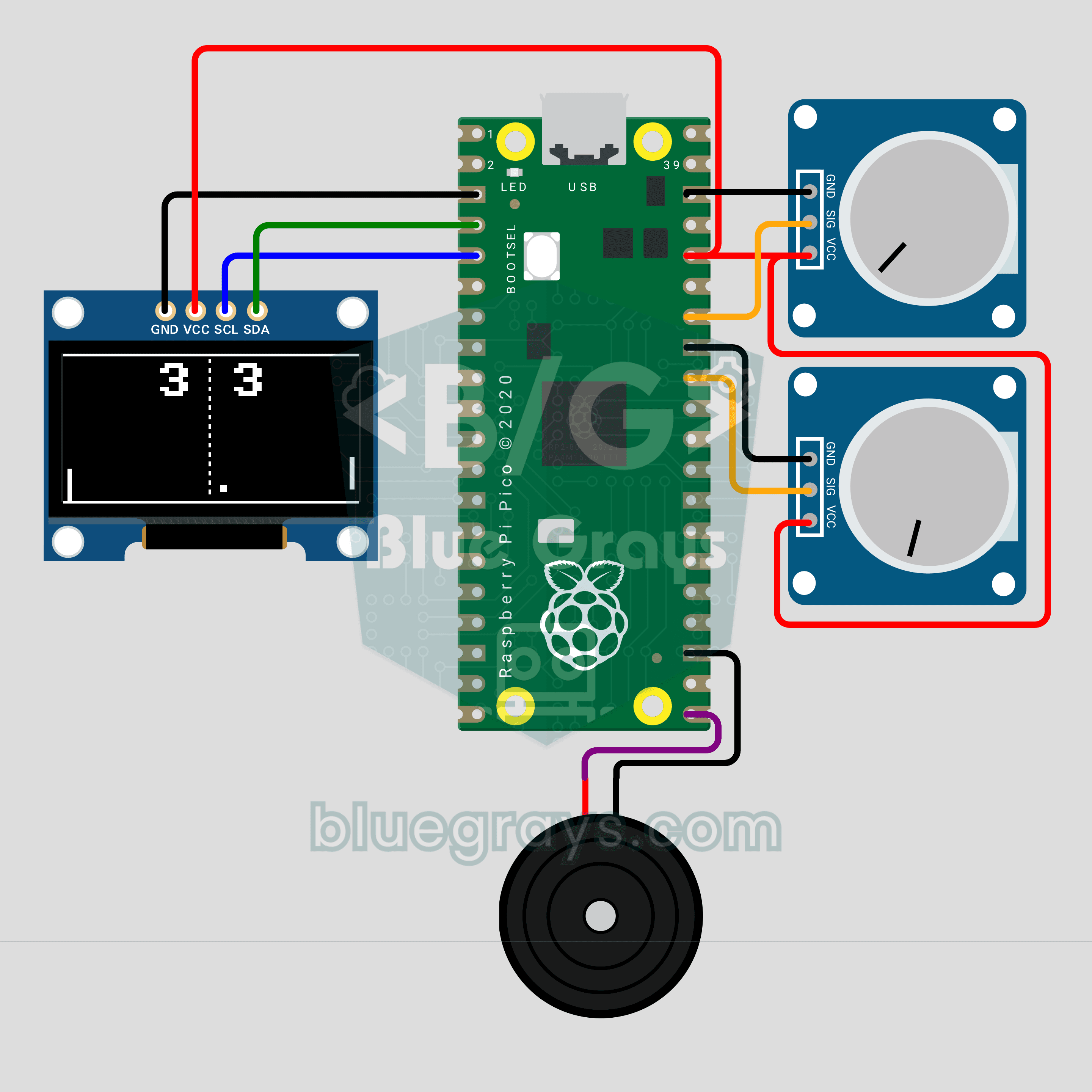
Raspberry Pi Pico Paddle Ball Game (OLED Display + 2 Potentiometers + Buzzer)
The classic paddle ball game, now on a 0.96 inch OLED for two players! Each player turns their own potentiometer to move a paddle. The ball speeds up on every hit and bounces off at an angle set by where it lands on the paddle; first to 5 points wins. A buzzer plays the wall, paddle and point sounds. Analog input, integer physics and partial screen updates in one game on the Raspberry Pi Pico.
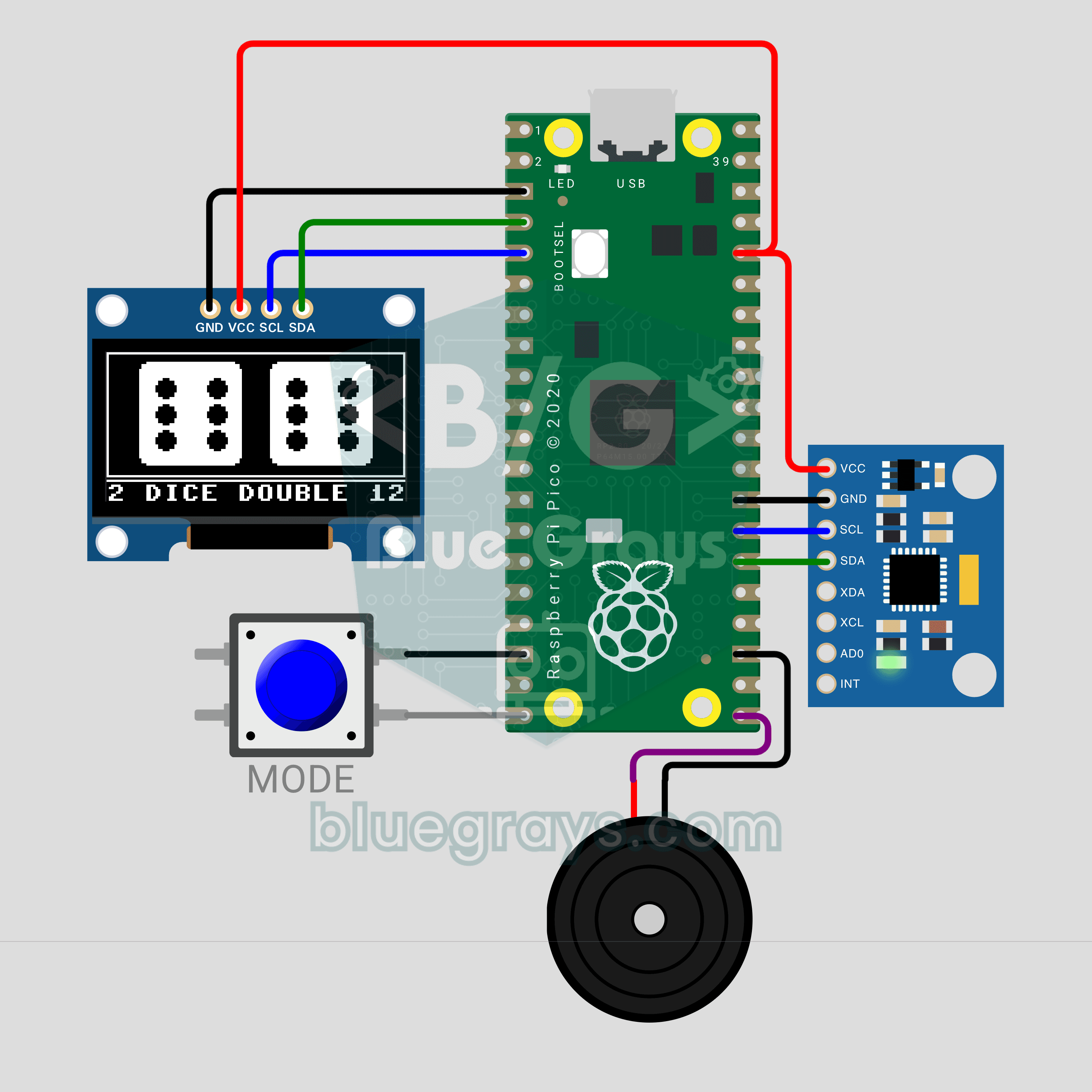
Raspberry Pi Pico Shake Dice (MPU-6050 + OLED Display + Buzzer)
Lost your dice? No problem: shake the circuit and the die rolls on a 0.96 inch OLED! An MPU-6050 accelerometer senses the shake, the die wobbles and spins, and once you stop it slows down and lands on a face. The MODE button switches between one die and two; roll a double and the screen flashes while the buzzer plays a celebration tune. The Raspberry Pi Pico reads the sensor straight over I2C, no library needed.
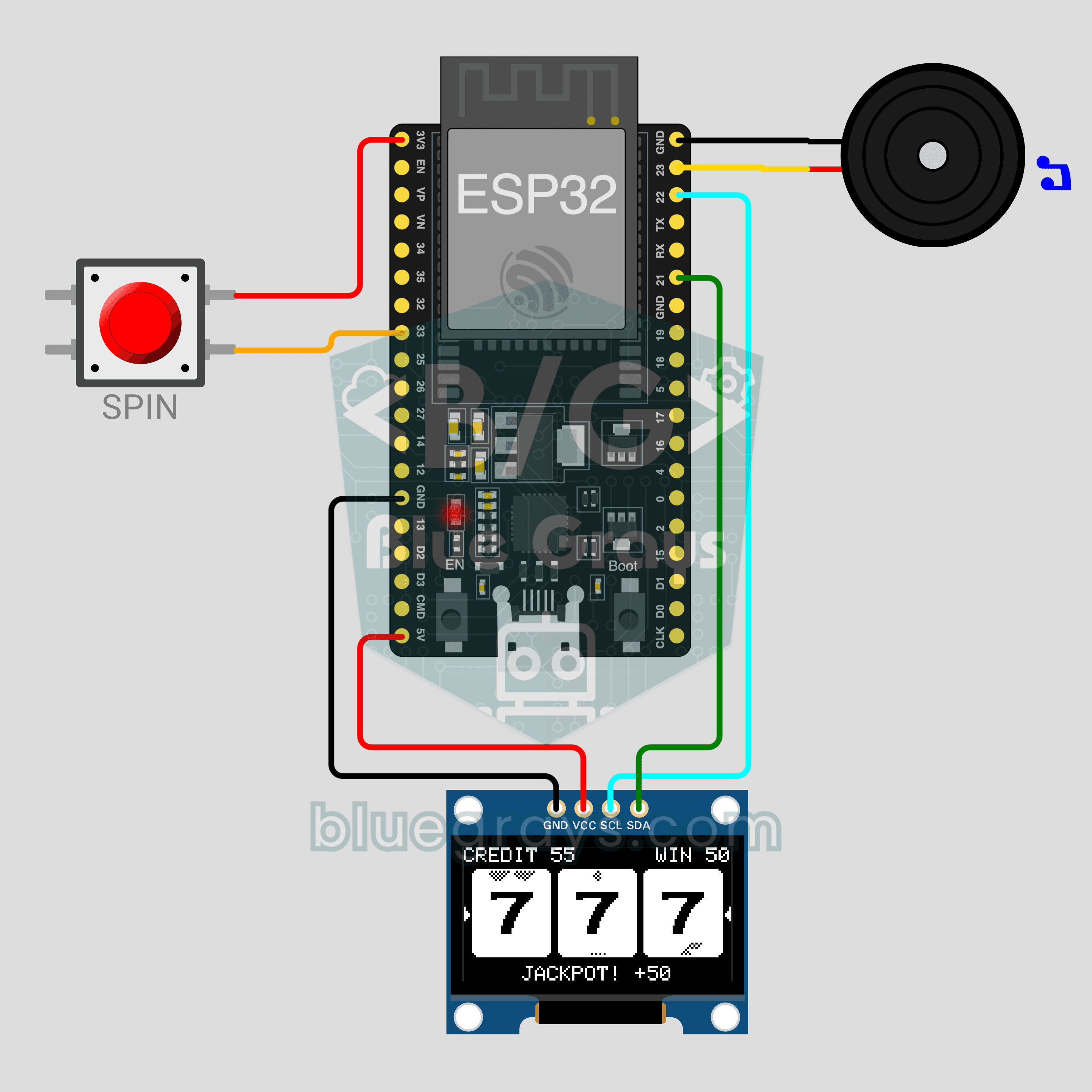
ESP32 Slot Machine Game (OLED Display + Button + Buzzer)
Pull the lever and watch the reels spin! This ESP32 project spins three reels of cherry, bell, BAR and 7 icons on a 0.96 inch OLED with a realistic slow-down, all from one button. The credits are purely virtual, with no real money involved: the goal is to learn the probability and random numbers behind games of chance. If the first two reels match, the third spins longer for suspense, 7-7-7 plays a JACKPOT tune, and Preferences keeps the credits.
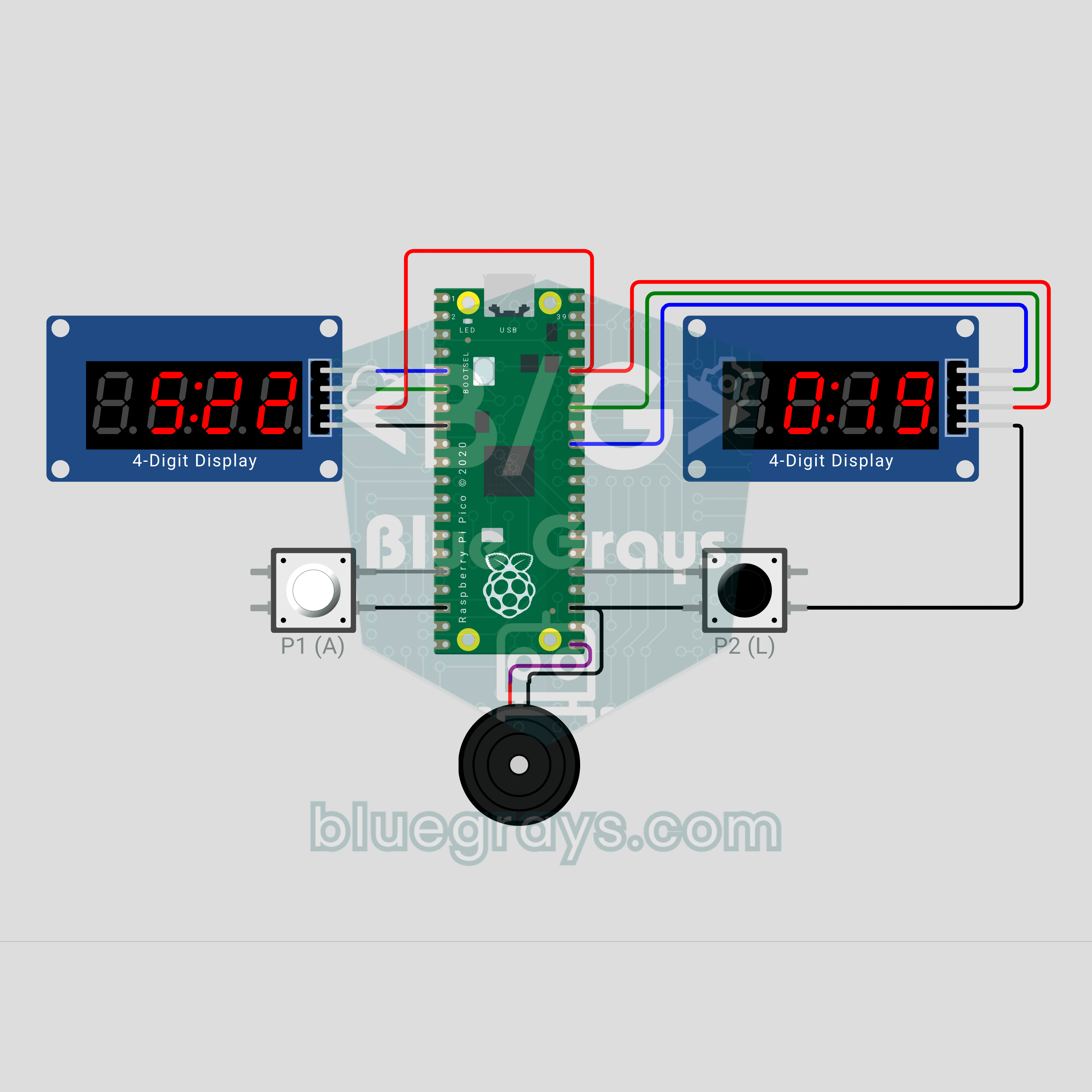
Raspberry Pi Pico Chess Clock (2 TM1637 Displays + 2 Buttons + Buzzer)
Make your move, hit the button, and the clock switches sides! A two-player chess clock with a Raspberry Pi Pico: each player's time runs down on their own TM1637 display and the mover gets an increment. The last 10 seconds show hundredths, a flagged side blinks FLAG and the buzzer sounds an alarm. Press both buttons together to pause. The TM1637 driver lives in the code, no library needed.
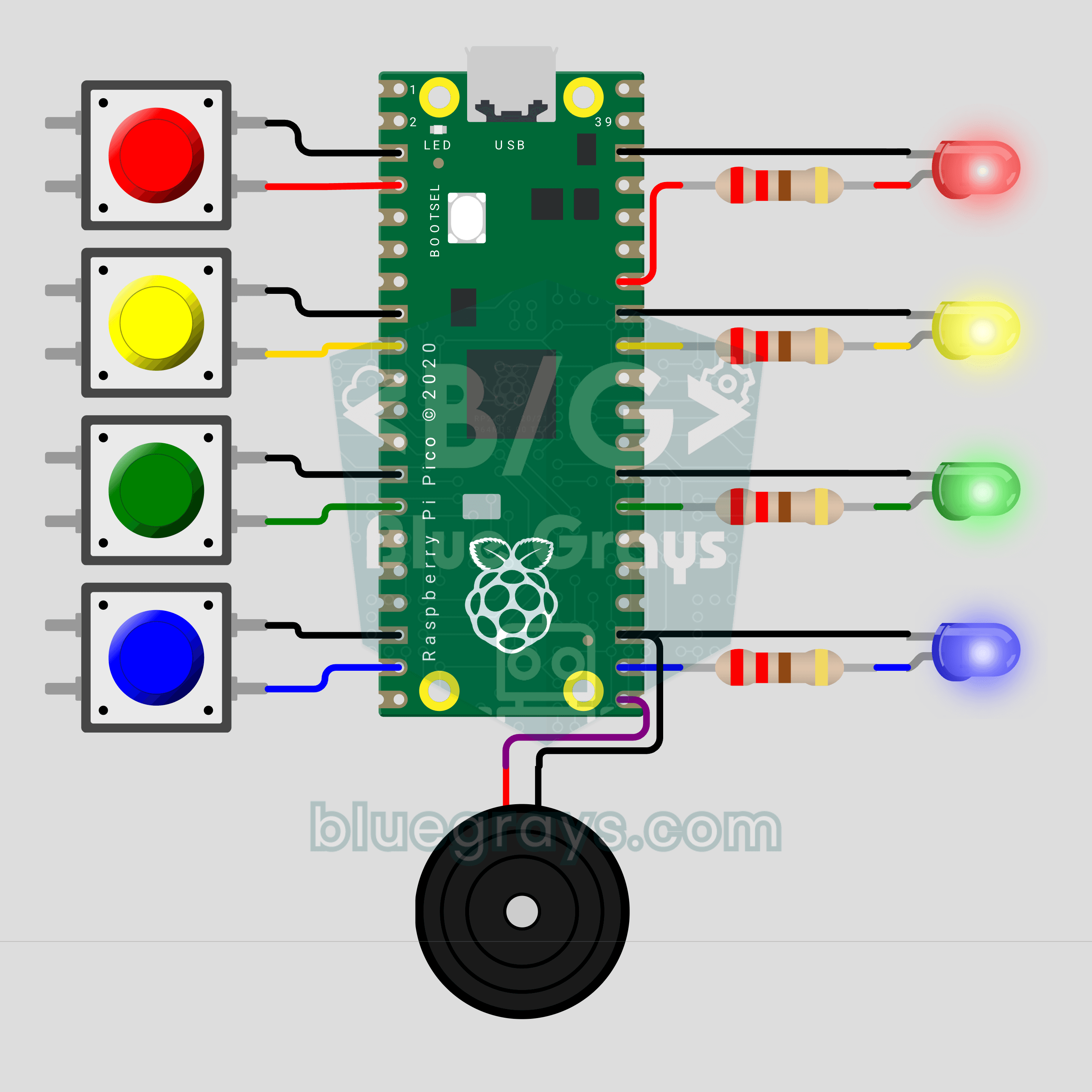
Raspberry Pi Pico Whack-a-Mole (4 LEDs + 4 Buttons + Buzzer)
Hit it when it lights up! The arcade classic Whack-a-Mole on your desk with a Raspberry Pi Pico. Four LEDs are four holes; a lit LED is a mole popping up, so press the button on the same row before the light goes out. Every 5 hits you level up and the moles stay up for less time. You get 3 misses, and a buzzer announces every hit, miss and new record.
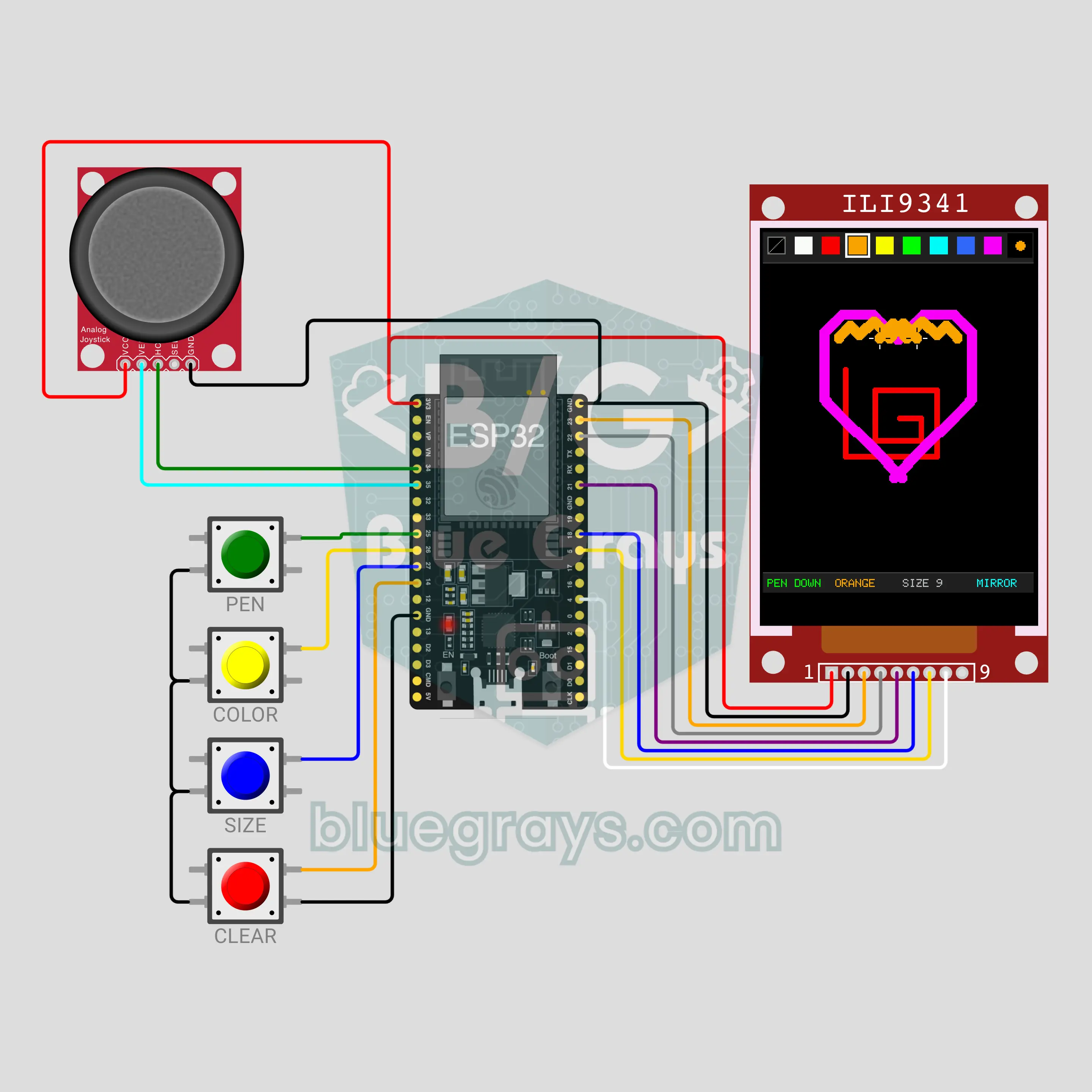
ESP32 Color Drawing Tablet (ILI9341 + Joystick + Buttons)
Push the joystick and draw! We are building a small drawing tablet with an ESP32 and a 2.8 inch ILI9341 color display. The joystick moves the cursor faster the further you push it, and four buttons lift the pen, change the color (8 colors + eraser) and brush size, and clear the canvas. In mirror mode every stroke is copied to the other side, so hearts and butterflies draw themselves.
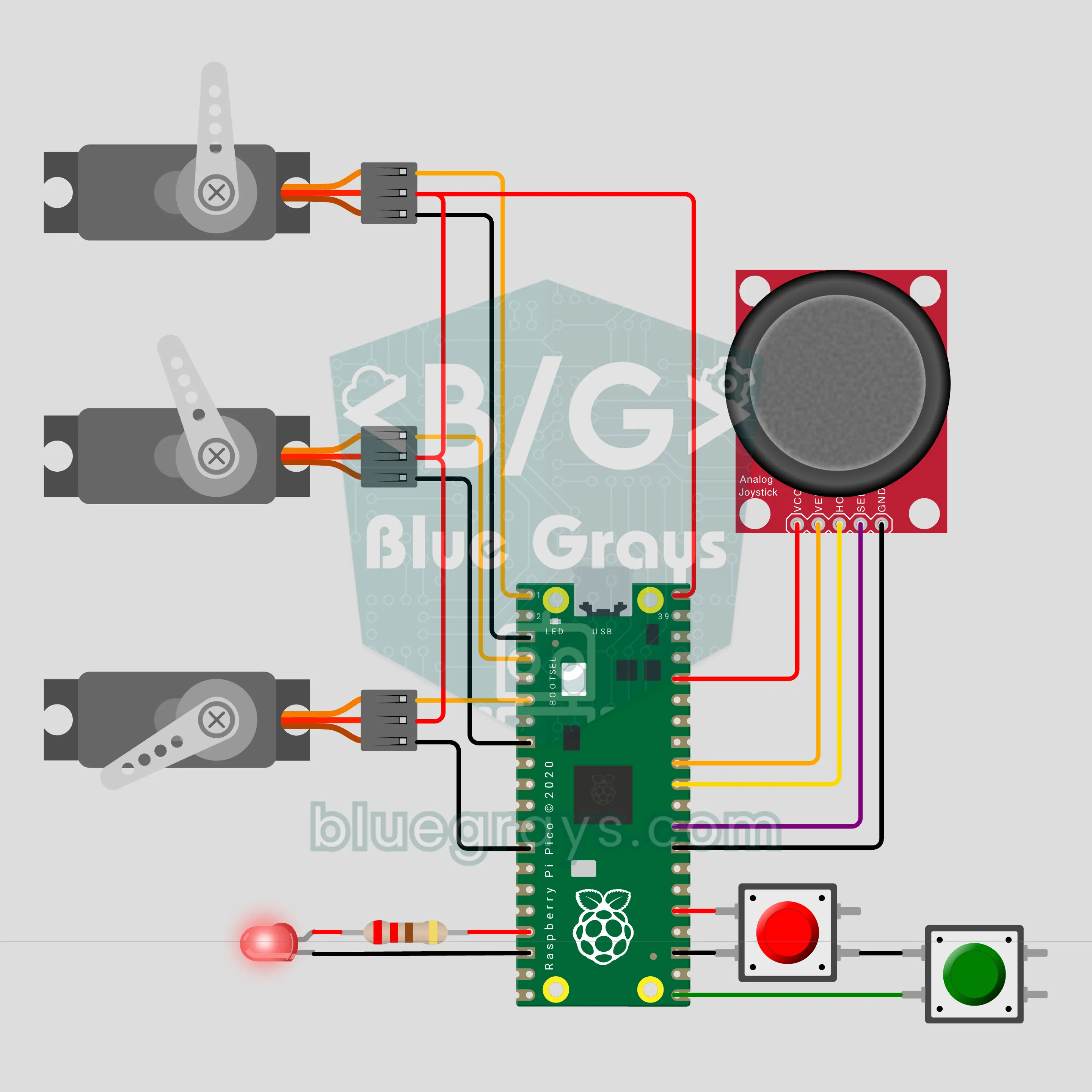
Raspberry Pi Pico Record-and-Replay Robot Arm (3 Servos + Joystick)
Show it a move once and the robot arm repeats it on its own! The Raspberry Pi Pico drives the base, shoulder and gripper with three SG90 servos; a joystick steers the arm and a click opens or closes the gripper. Press RECORD and the motion is saved every 100 ms; press PLAY and the arm follows the same path once or on a loop, at x1, x2 or x0.5 speed. The "teach and repeat" method of factory robots, right on your desk.
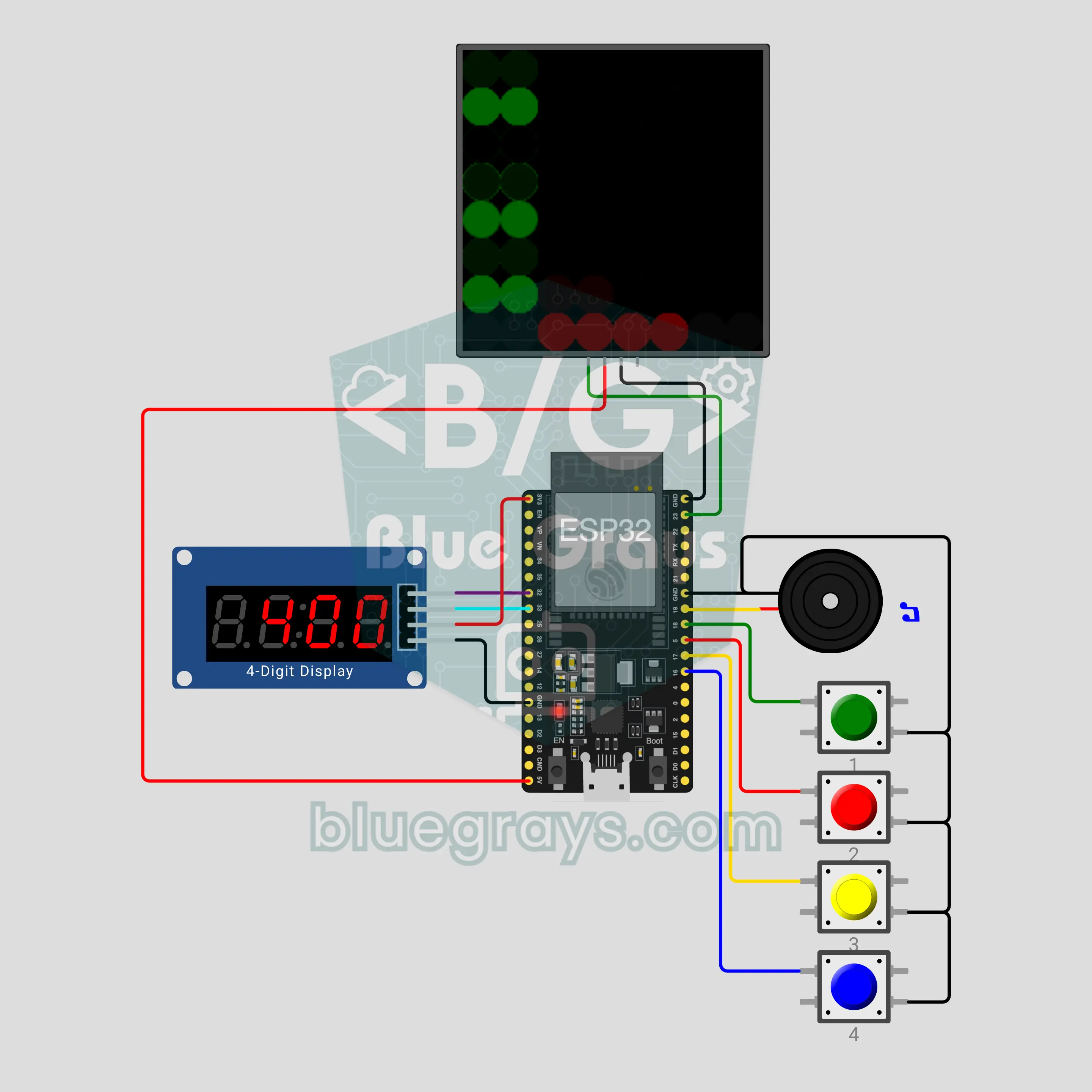
ESP32 Rhythm Game (8x8 NeoPixel Matrix + 4 Buttons + TM1637)
Notes rain down, and if you hit them on time you're the one playing the song! Colored notes fall down 4 lanes of an 8x8 NeoPixel matrix; press the right button the moment one reaches the bottom row and the buzzer plays that note of the melody. The score is on a TM1637 display and combos multiply your points. Üsküdar'a Gider İken, Ode to Joy and Jingle Bells are built in, with an S/A/B/C grade at the end and fireworks for a new record.
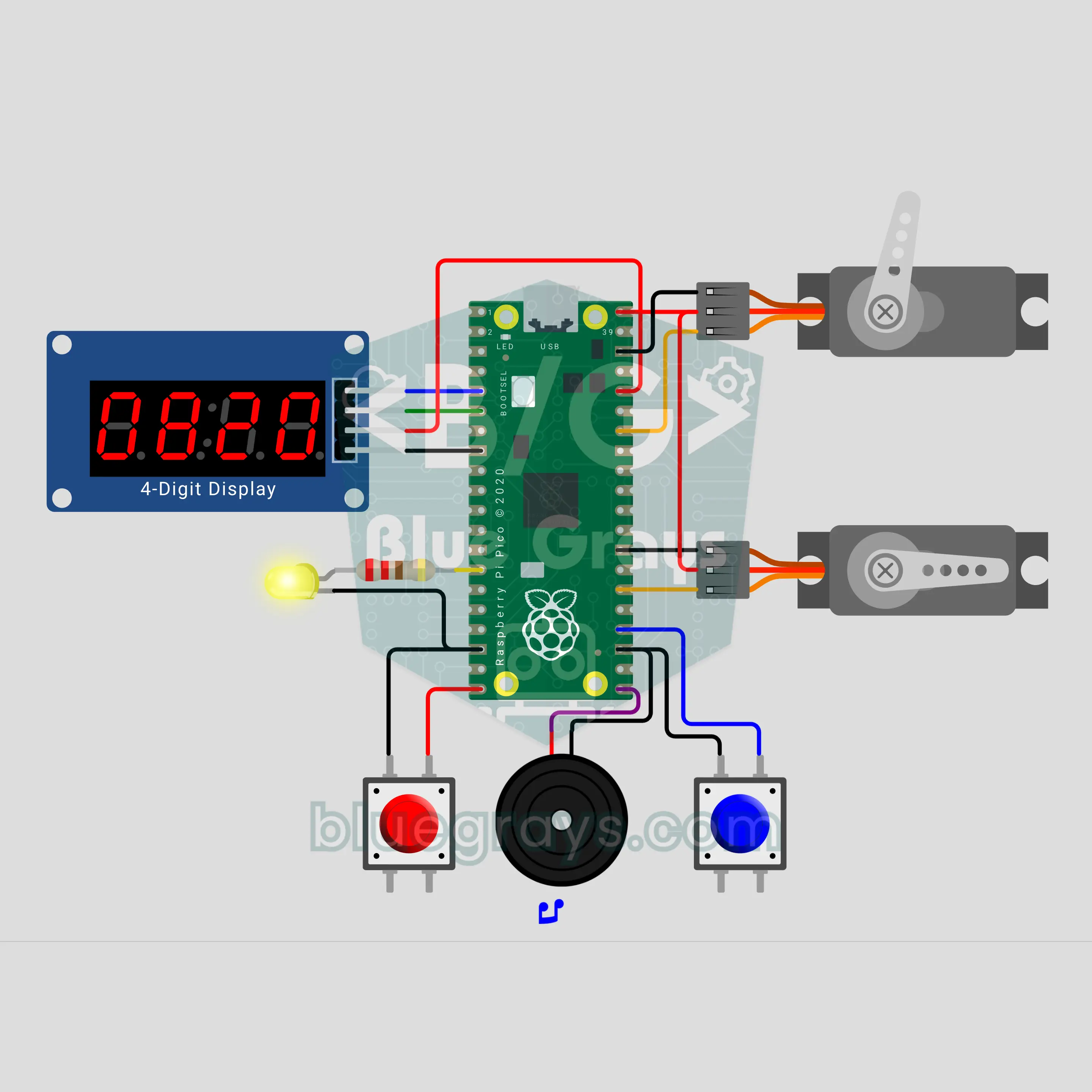
Raspberry Pi Pico Cowboy Duel (2 SG90 Servos + TM1637 + Buzzer)
A two-player reflex duel: a western whistle plays, the yellow LED lights up at a random moment and the first to press wins! The Raspberry Pi Pico knocks the loser's cardboard cowboy down with an SG90 servo and makes the winner's wave; a TM1637 display shows the reaction time in milliseconds. Press before the LED and you shoot your own cowboy. First to 3 points is champion, and the fastest reaction is saved as the record.
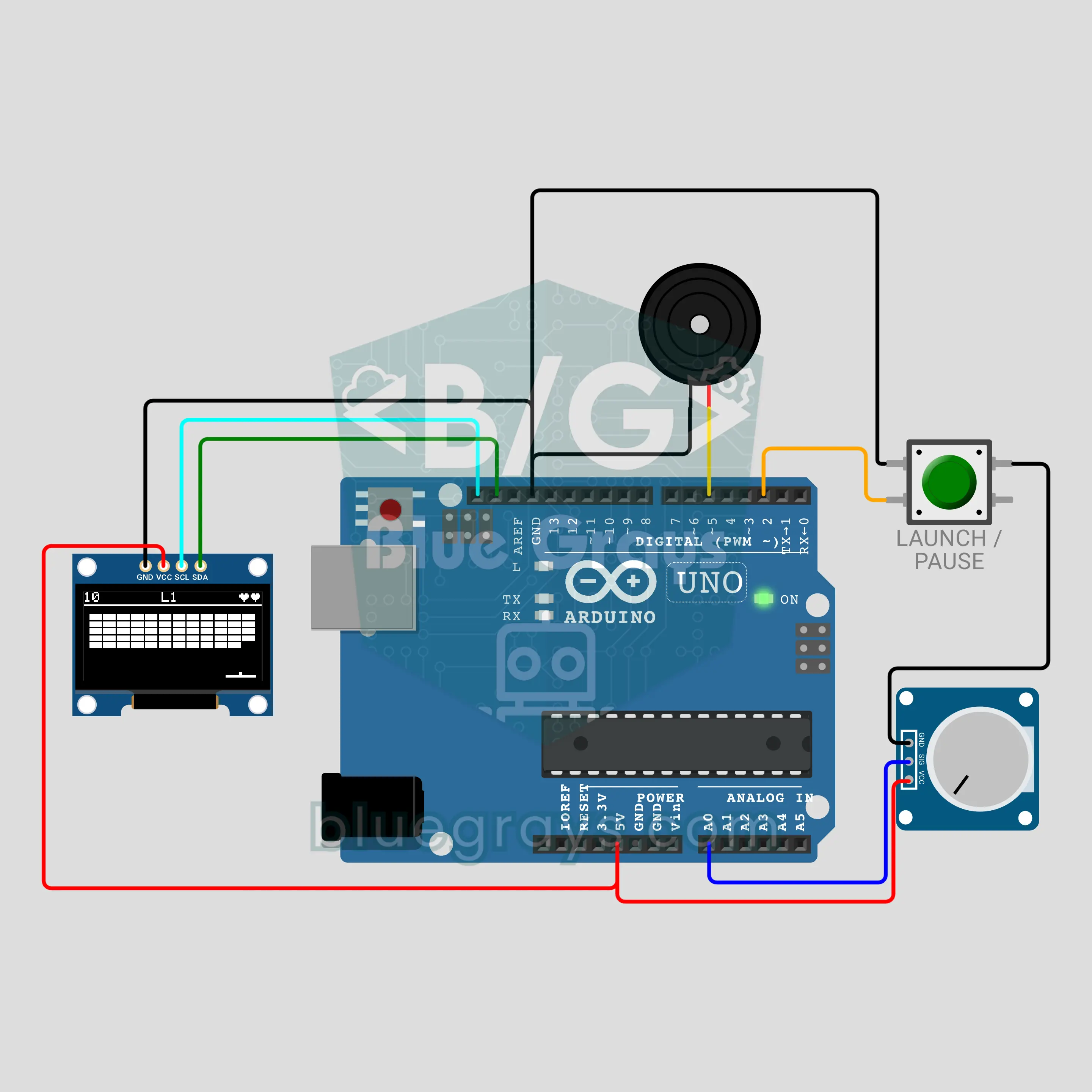
Arduino Brick Breaker Game (OLED Display + Potentiometer + Buzzer)
The 80s arcade classic in your hands! Bounce the ball and smash 5 rows of bricks on a 0.96 inch OLED, sliding the paddle by turning a potentiometer. Five levels bring five different patterns, top row bricks take two hits and some bricks drop a box that widens your paddle. Every brick broken before the ball touches the paddle again raises the passive buzzer's note one step. If nobody plays, the game plays itself.