
Arduino loyihalarini kashf qil
Boshlang‘ichdan yuqori darajagacha, sxemali, kodli va videoli yuzlab loyihalar. Qaysi darajada bo‘lsang, o‘sha yerdan boshla.

ESP32 LED Brightness Control with a Potentiometer (Analog → PWM)
In this project, we control the brightness of an LED analogically using a potentiometer. The ESP32's ADC pin reads the 0-3.3V voltage from the potentiometer, and this value is then converted into a PWM (Pulse Width Modulation) signal and sent to the LED. As a result, as you turn the potentiometer, the LED gradually brightens and dims. With Arduino Core 3.0+, analogWrite() can be used directly; on the ESP32-S2/S3, the ADC resolution is fixed at 12-bit.

Automatic Lighting with the ESP32 PIR Motion Sensor
In this project an HC-SR501 PIR motion sensor detects someone entering the room and turns on an LED automatically. millis() tracks how long the LED stays on: each HIGH reading refreshes the last-motion time, and the LED turns off at least 10 seconds after the last HIGH. The code also waits 50 ms with delay(50) in every loop, so the loop is not fully non-blocking. Great for stairs, hallways, bathrooms or closet lighting.

ESP32 WS2812B NeoPixel Strip Control
WS2812B (NeoPixel) addressable LEDs are smart RGB LEDs that can be chained and controlled from a single data pin. In this project we drive an 8-LED WS2812B strip with the Adafruit_NeoPixel library and create a smooth rainbow animation. The ESP32's 3.3V logic works with most WS2812B batches; if it gets unstable, we show the fix with a 470Ω series resistor and a 1000µF capacitor. The animation shifts the hue in HSV color space.
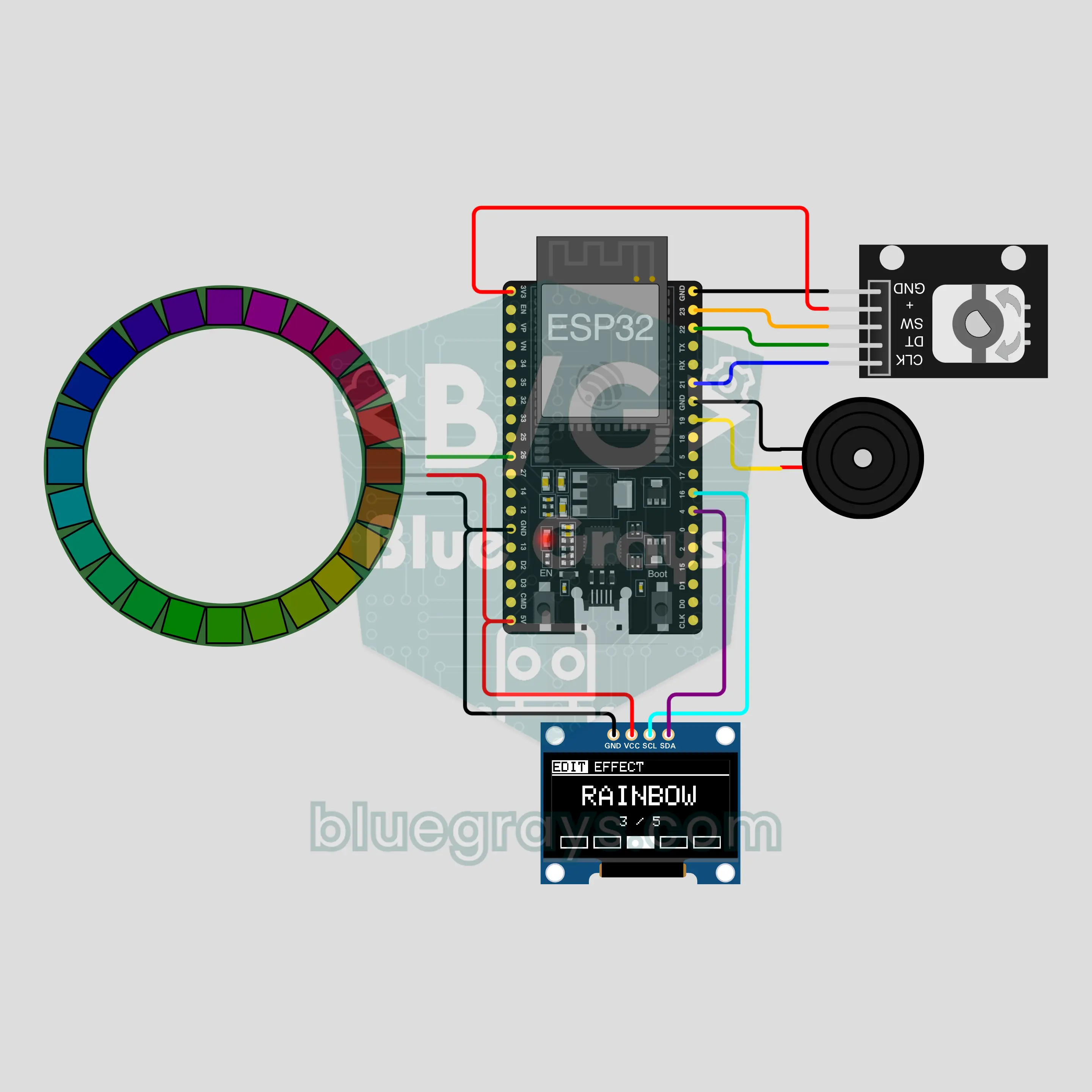
ESP32 Smart Lamp with Rotary Encoder Menu (KY-040 + OLED + NeoPixel Ring)
One knob, five settings! Turn the KY-040 rotary encoder to scroll the menu on the 0.96 inch OLED, press it to edit the color, brightness, effect, sleep timer or warm-cool white. The 24-LED NeoPixel ring shows every change instantly. Settings live in the ESP32 flash, so after a power cut the lamp comes back exactly as you left it. Interrupt-based encoder reading and a menu UI in one project.
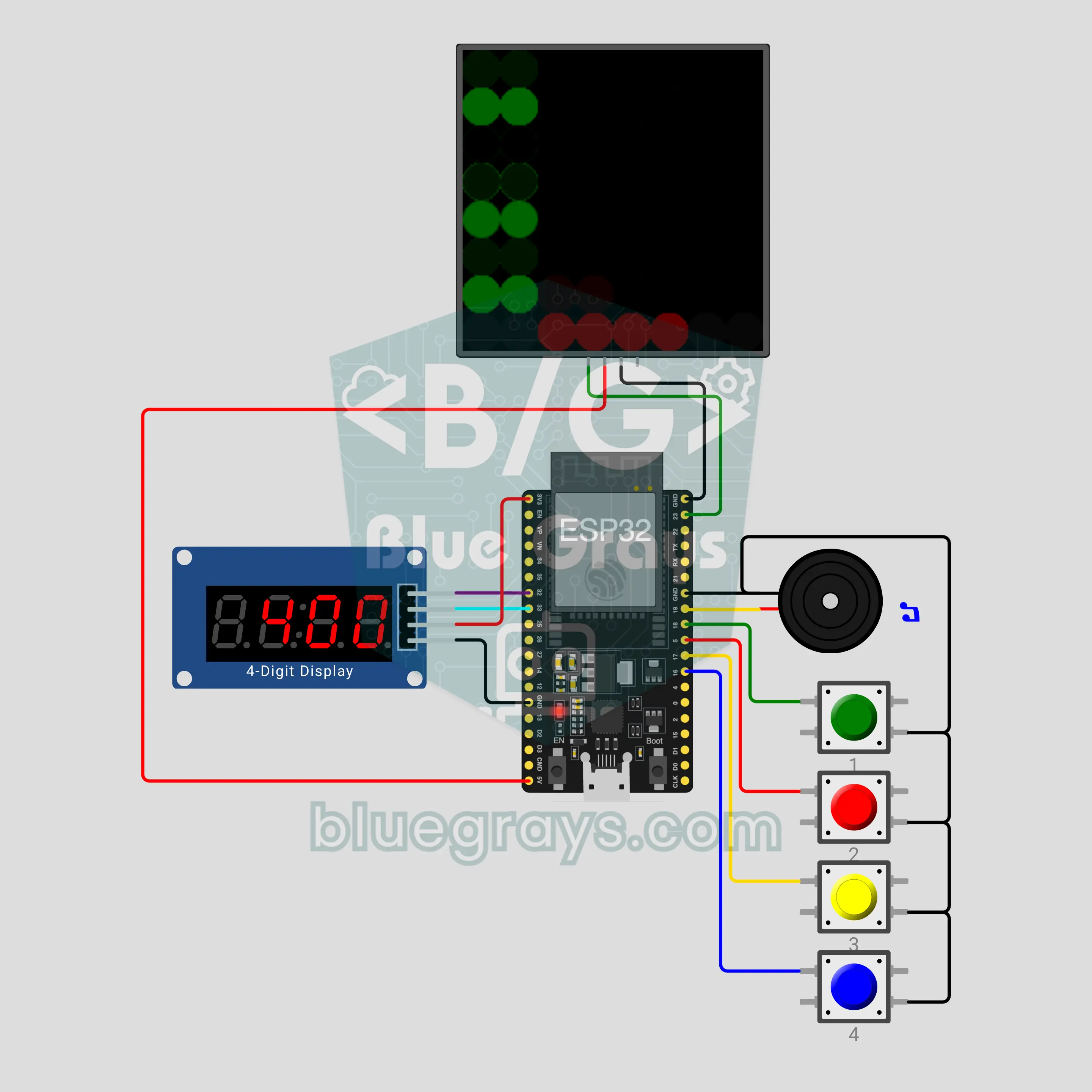
ESP32 Rhythm Game (8x8 NeoPixel Matrix + 4 Buttons + TM1637)
Notes rain down, and if you hit them on time you're the one playing the song! Colored notes fall down 4 lanes of an 8x8 NeoPixel matrix; press the right button the moment one reaches the bottom row and the buzzer plays that note of the melody. The score is on a TM1637 display and combos multiply your points. Üsküdar'a Gider İken, Ode to Joy and Jingle Bells are built in, with an S/A/B/C grade at the end and fireworks for a new record.
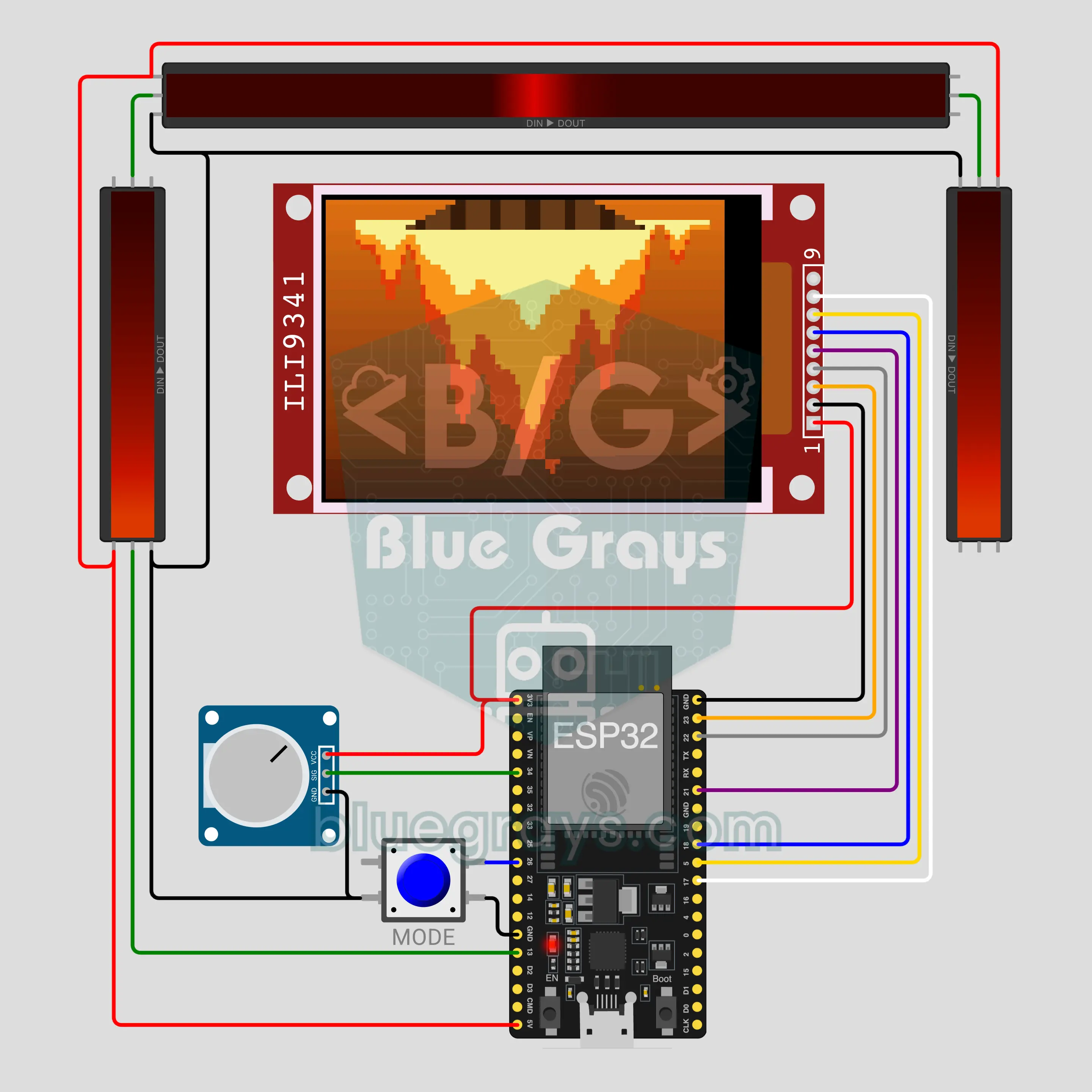
ESP32 Ambient TV Backlight (ILI9341 TFT + WS2812B LED Strip)
A TV backlight that spills the colors of the screen edges onto the wall! A 2.8 inch ILI9341 display plays the TV with six scenes; the ESP32 averages the color of each edge zone and sends it to a 34-LED WS2812B strip along the left, top and right. Exponential smoothing and gamma correction keep the fades soft, a potentiometer sets the brightness and a button switches between demo, warm white, colors from the computer and off.
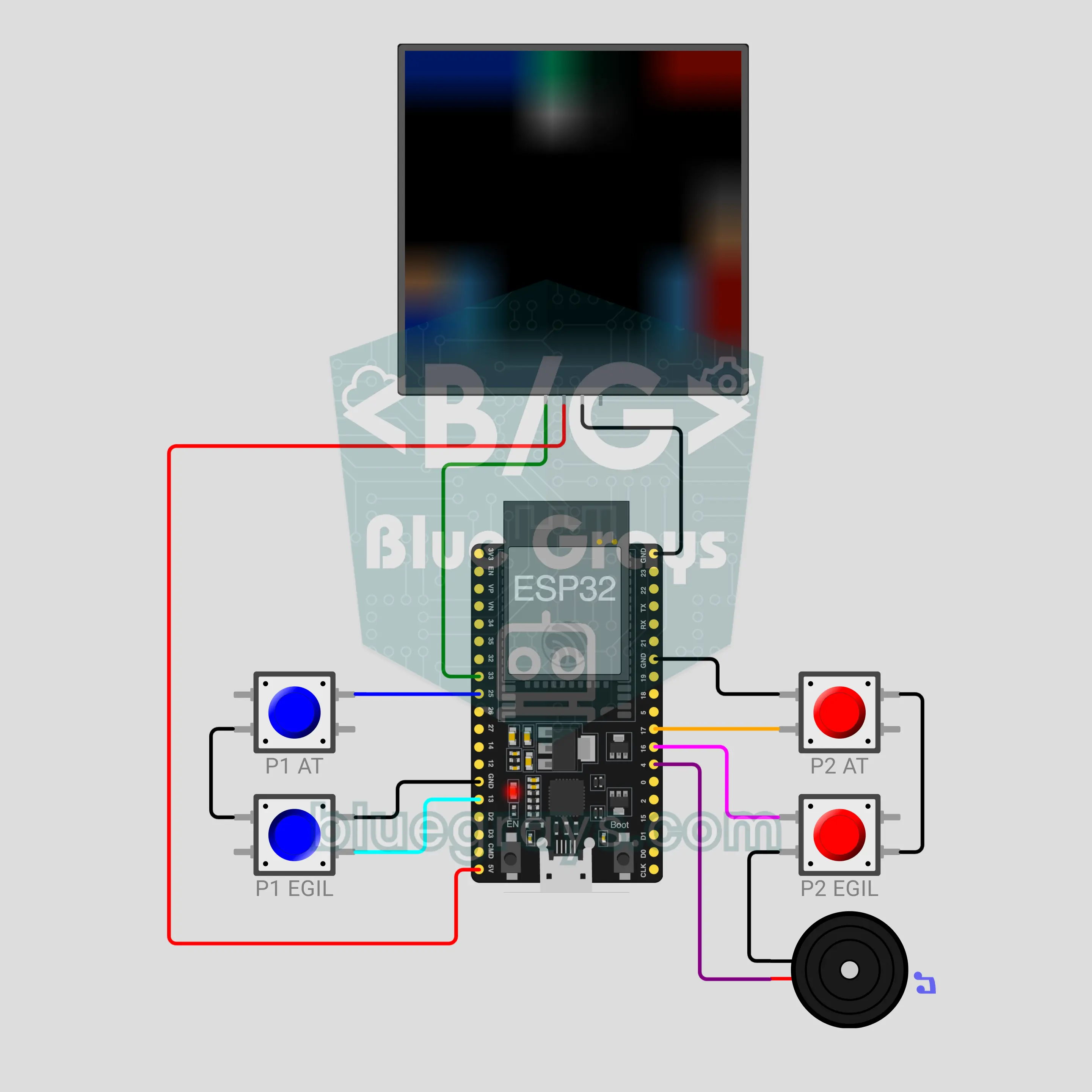
ESP32 Snowball Fight: Two-Player Matrix Game (8x8 NeoPixel + 4 Buttons + Buzzer)
A two-player snowball fight for the winter break on an 8x8 NeoPixel matrix. Blue on the left, red on the right, both behind an ice wall. The THROW button sends a snowball flying in an arc, the DUCK button hides you behind the wall. Balls that meet in the air burst, and every round has its own wind that speeds balls up or slows them down. Lose 3 lives first and you lose; the winner gets falling snow and fireworks, with throw, hit and victory sounds from the buzzer.
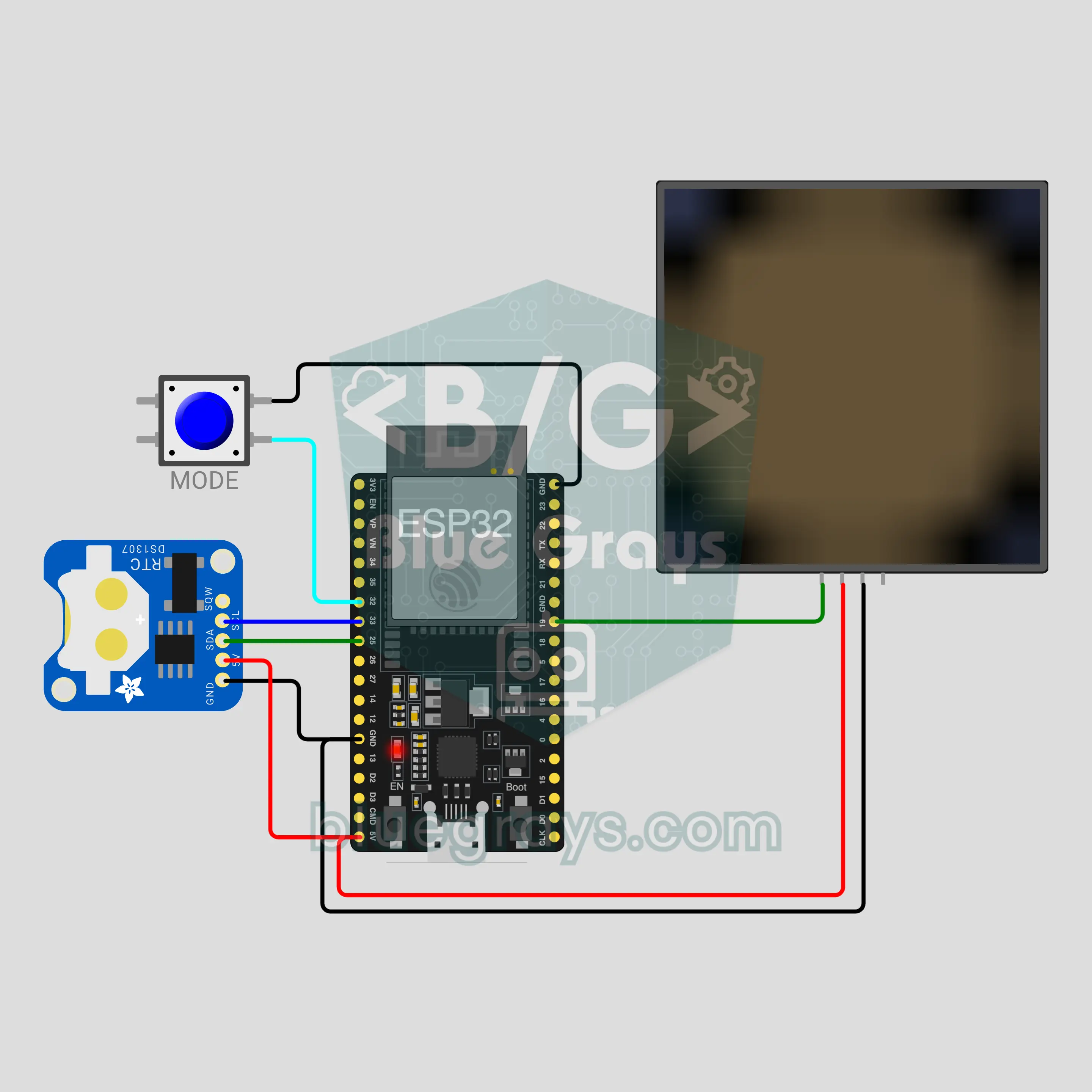
ESP32 Moon Phase Lamp: What Does the Moon Look Like Tonight? (DS1307 + 8x8 NeoPixel + Button)
A night lamp for your desk that draws tonight's moon: an 8x8 NeoPixel matrix shows a crescent, a quarter, a gibbous or a full moon. The DS1307 keeps the date, and the ESP32 counts the phase from a known new moon and corrects it with Meeus' terms to within a minute. One button switches between today, days to full moon and a whole month played in 8 seconds. 24 December 2026 is the last full moon of the year.
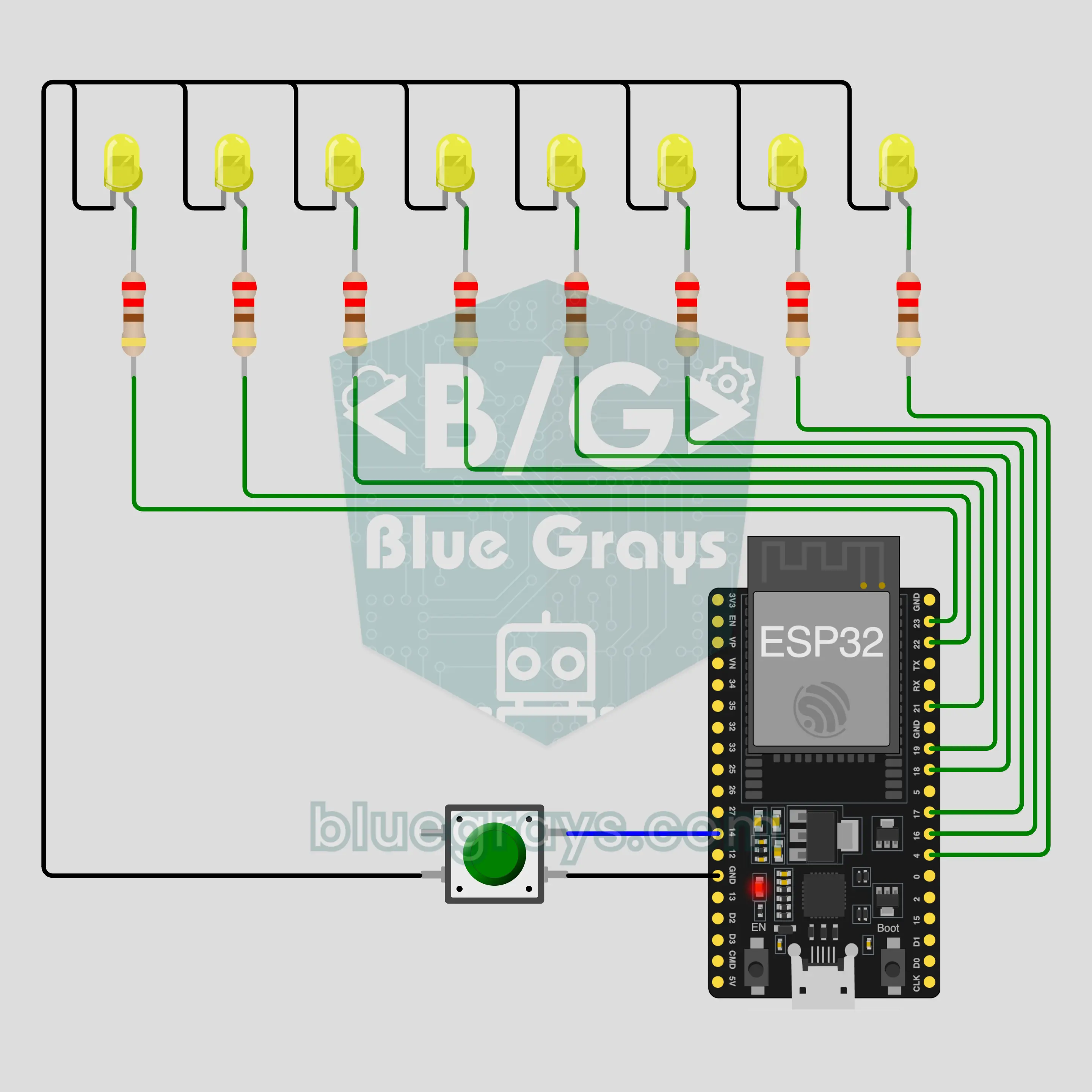
ESP32 Firefly Jar: Lights That Fall Into Sync on Their Own (8 LEDs + Button)
The 8 LEDs in the jar are fireflies: they flash at random first, and a few minutes later, with nobody telling them, all of them flash at once. There is one rule: a firefly that sees a neighbour flash moves its own clock a little forward. When sync arrives the jar glows for 3 seconds. A short press of the button shakes the jar and scatters them; a long press stops them seeing each other. In the fast version in the video sync takes 11 seconds. No PWM, no library.
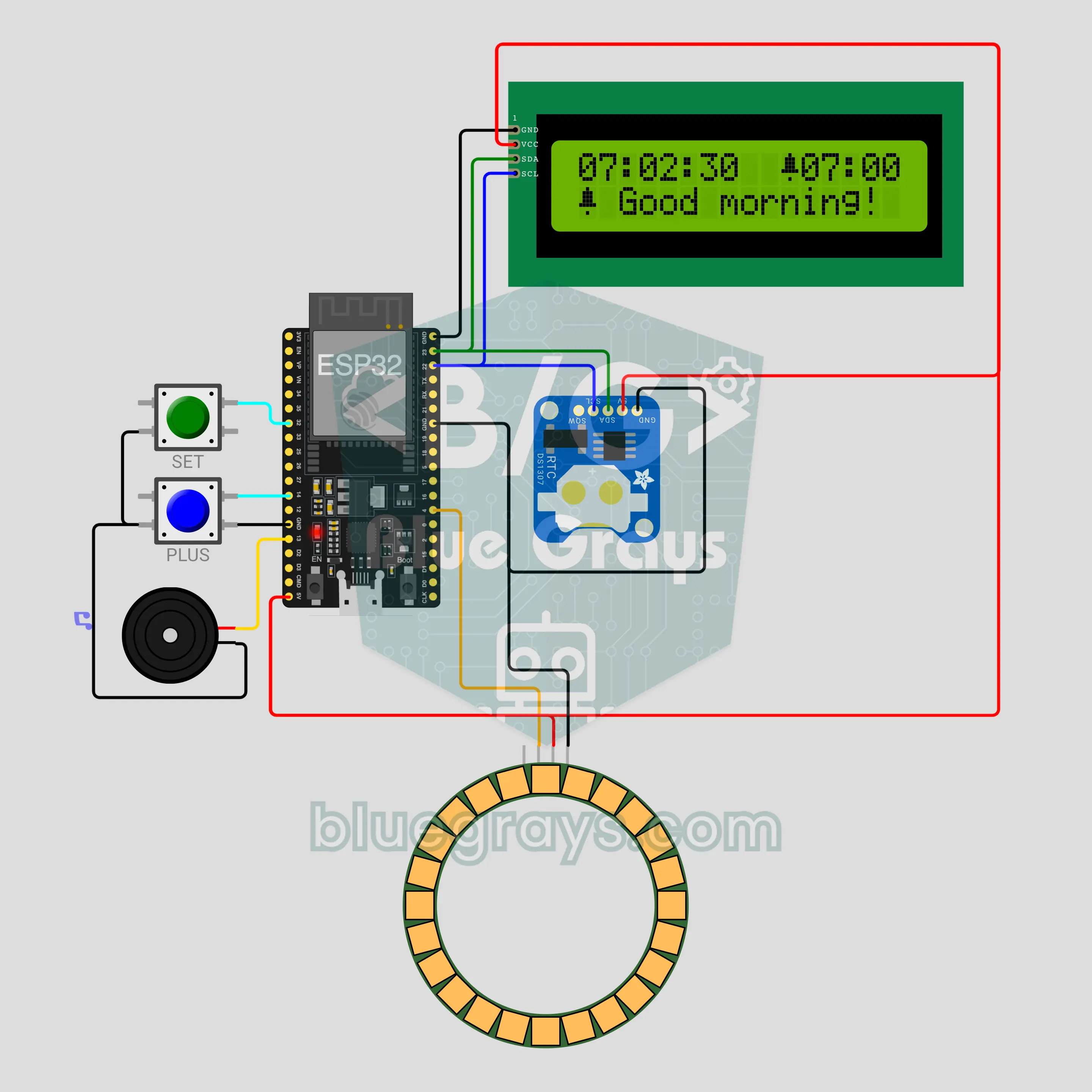
ESP32 Sunrise Alarm Clock: Wake Up Gently with Light (DS1307 + LED Ring + LCD)
Getting up in the dark on a winter morning is hard. 20 minutes before the alarm this clock slowly lights a 24-LED ring from the bottom up: deep red first, then orange, warm white at the end. At alarm time the buzzer plays birdsong. The PLUS button snoozes for 5 minutes, the SET button silences it. A battery-backed DS1307 keeps the time and the alarm is stored on the board, so neither is lost in a power cut. The LCD shows the time, the alarm and the sunrise percentage.
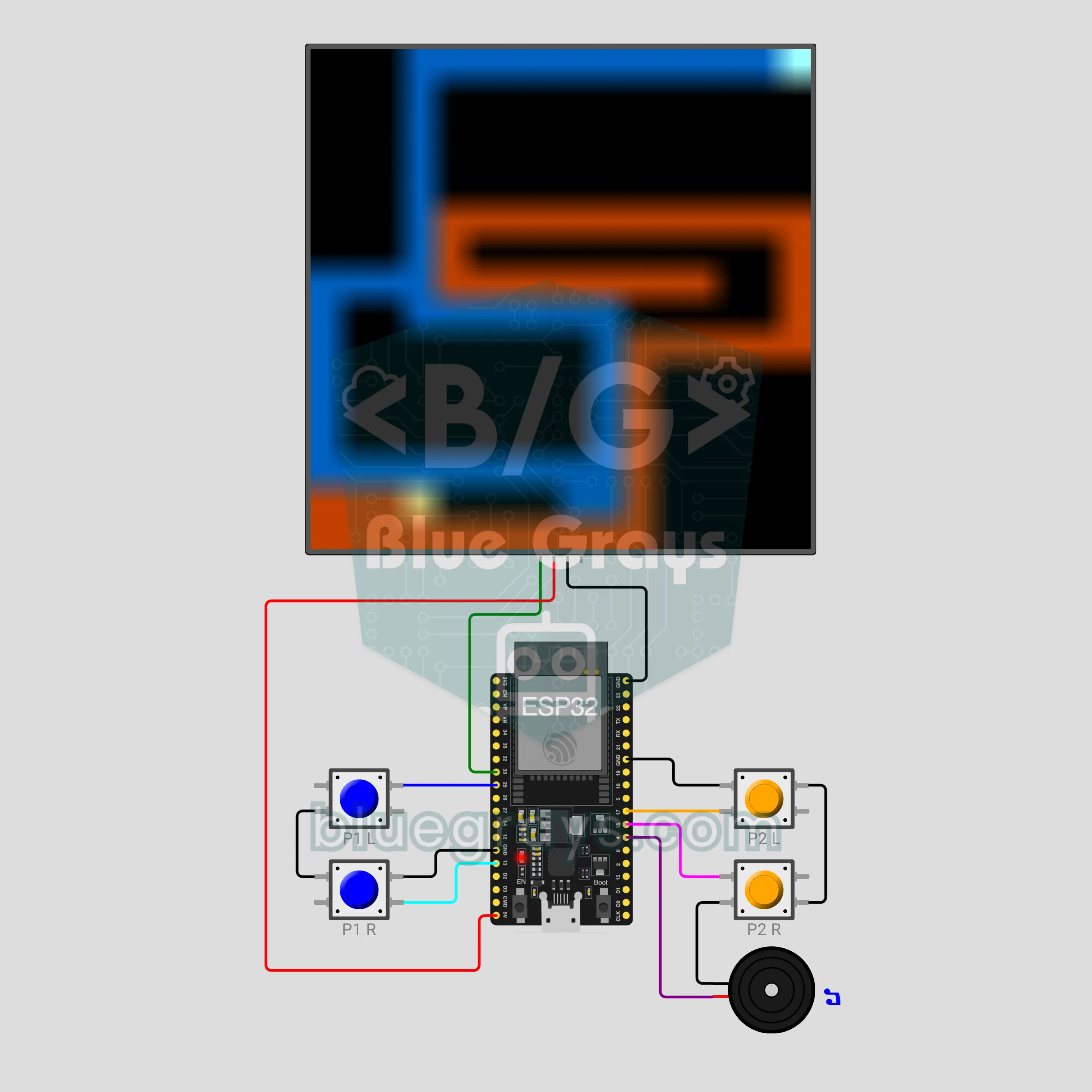
ESP32 Light Trail Duel: Two Player Retro Game (16x16 NeoPixel + 4 Buttons + Buzzer)
Two light bikes race across a 16x16 NeoPixel matrix without stopping and leave a glowing trail behind. Each player has two buttons: one turns the bike left, the other right. Hit a trail, the rival or the edge and you lose the round. The bikes speed up as the round goes on and the room runs out; the first to win 3 rounds takes the match. Score on the matrix, sounds from the buzzer. A two player duel in the style of the 80s trail games, made for New Year's Eve.
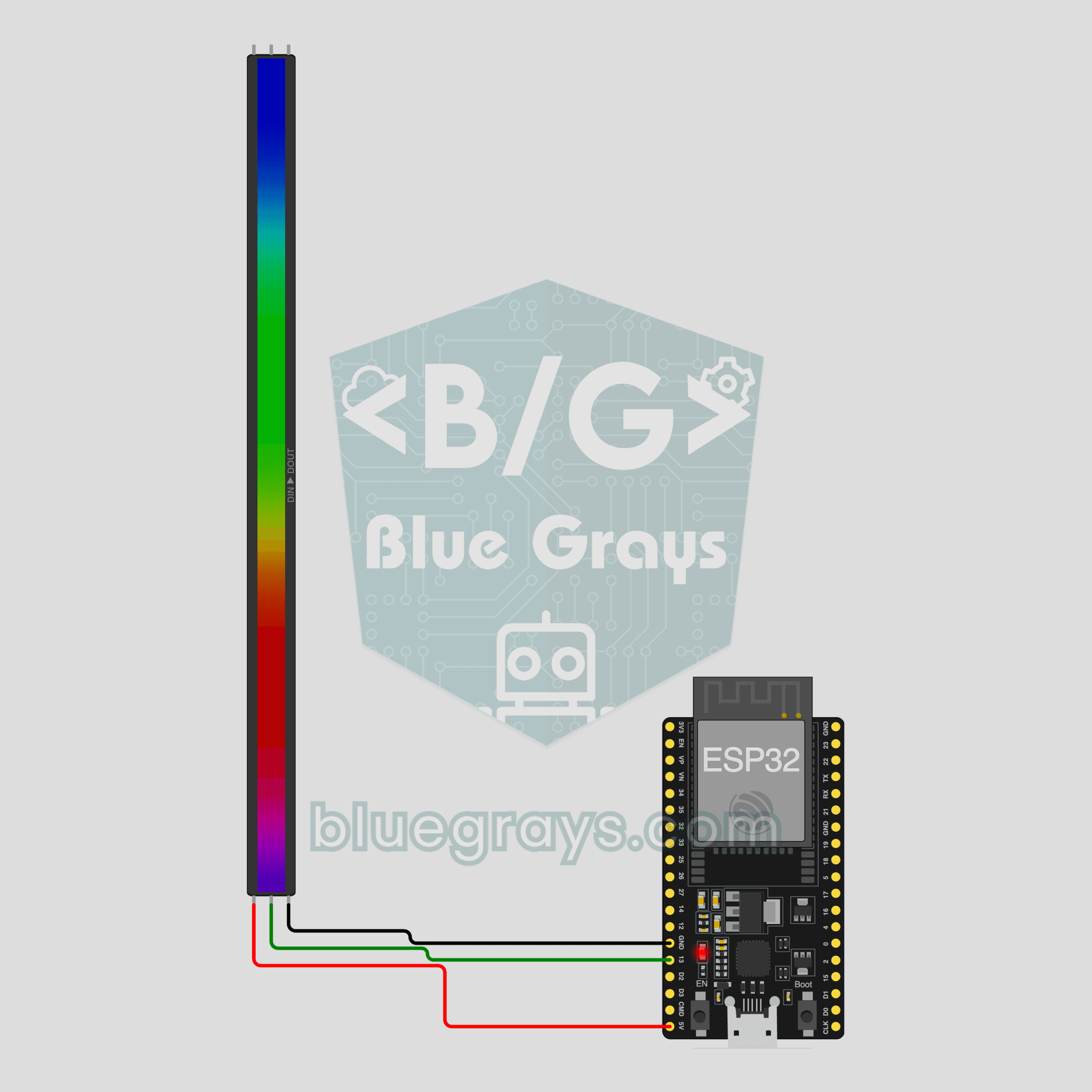
ESP32 IoT RGB LED Strip (WS2812B)
Control your room's light from your phone: pick a color, set the brightness, turn on the rainbow or breathe effect. This project is the step-by-step guide to the RGB LED strip IoT template in the app, built with an ESP32 and a 30-LED WS2812B strip using three wires. Go to Workshop › Devices › Add a device and pick RGB LED strip; Ohmi prepares the code with your own device key. The code on this page is an example: the key and Wi-Fi details are placeholders.