
Arduino loyihalarini kashf qil
Boshlang‘ichdan yuqori darajagacha, sxemali, kodli va videoli yuzlab loyihalar. Qaysi darajada bo‘lsang, o‘sha yerdan boshla.
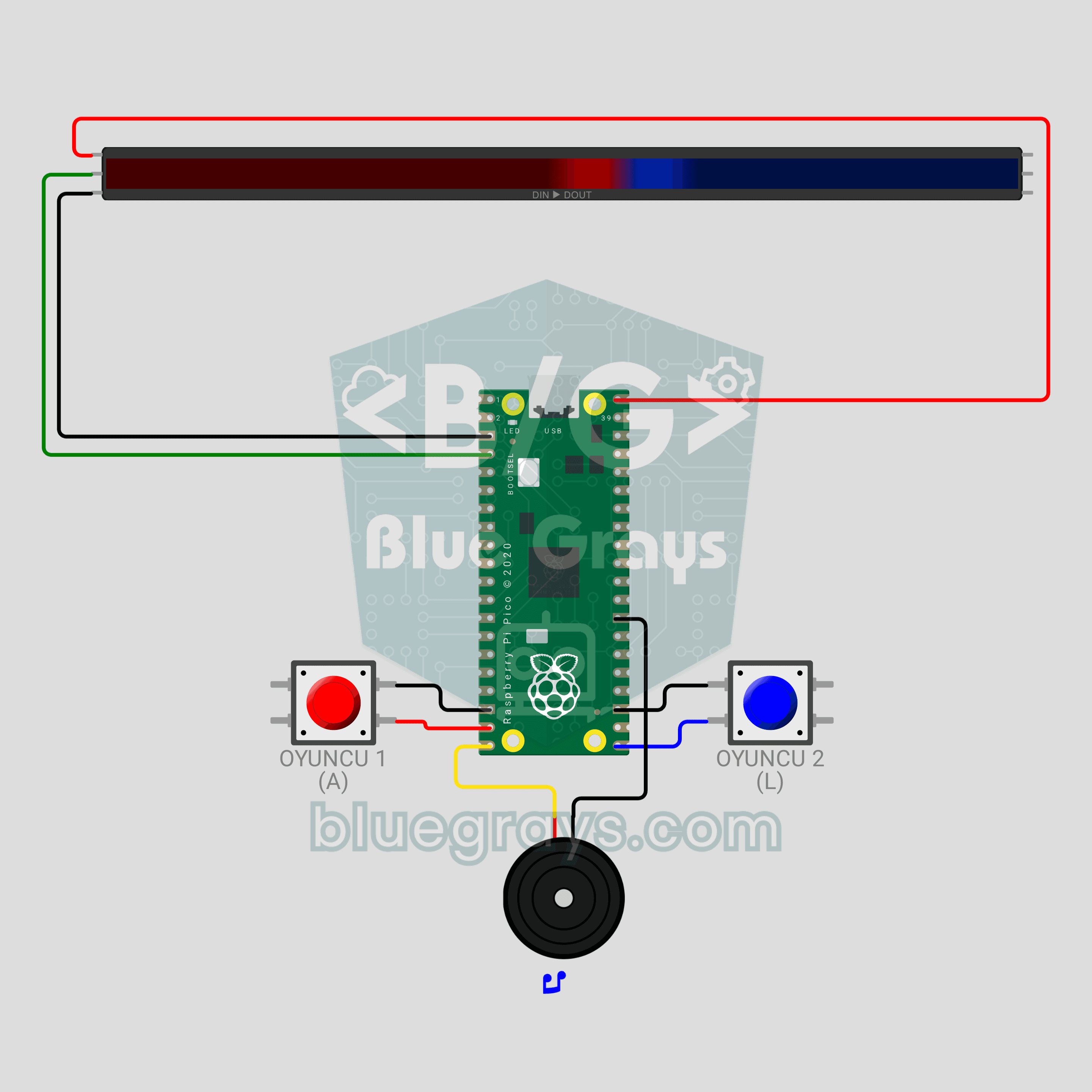
Raspberry Pi Pico LED Tug of War Game (NeoPixel Strip + 2 Buttons + Buzzer)
A two-player button duel! The Raspberry Pi Pico turns a 30-LED WS2812B NeoPixel strip into a rope: red player on the left, blue player on the right. Every press pushes your color one LED forward; fill the whole strip to win the round, and take 3 rounds to win the match. Press too early in the countdown and you lose ground, the passive buzzer gives each player a different click, and the match ends in a rainbow. neopixel, debouncing and non-blocking sound in MicroPython.
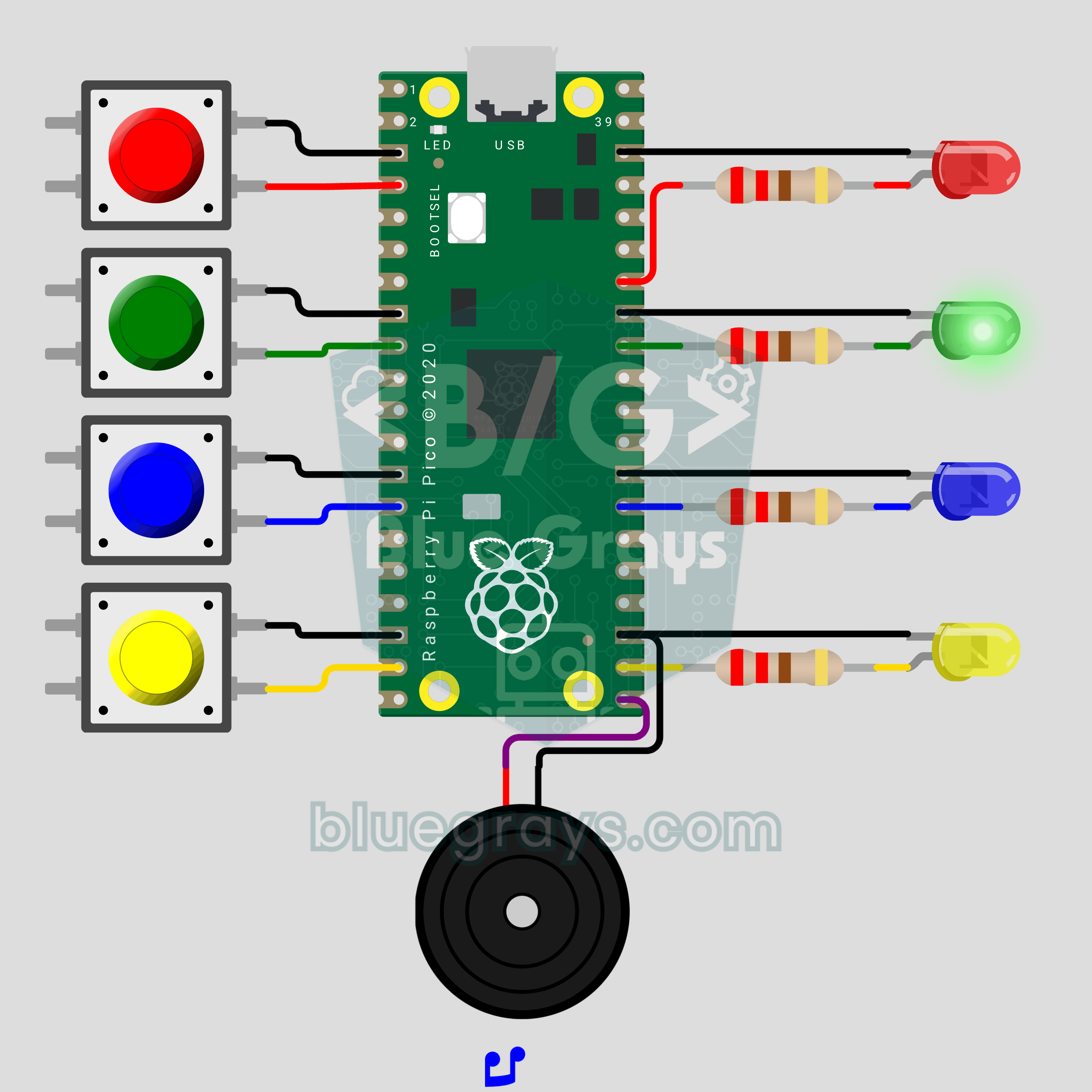
Raspberry Pi Pico Memory Game (4 LEDs + 4 Buttons + Buzzer)
How many rounds can you last? The classic color and sound memory game comes to your desk with a Raspberry Pi Pico. The Pico plays a random color sequence, each color with its own LED and its own note. Repeat it in the same order on 4 buttons and one more color joins every round. Press a wrong one and the buzzer plays a game over tune while the right color blinks. Lists, random numbers and button reading in one game.
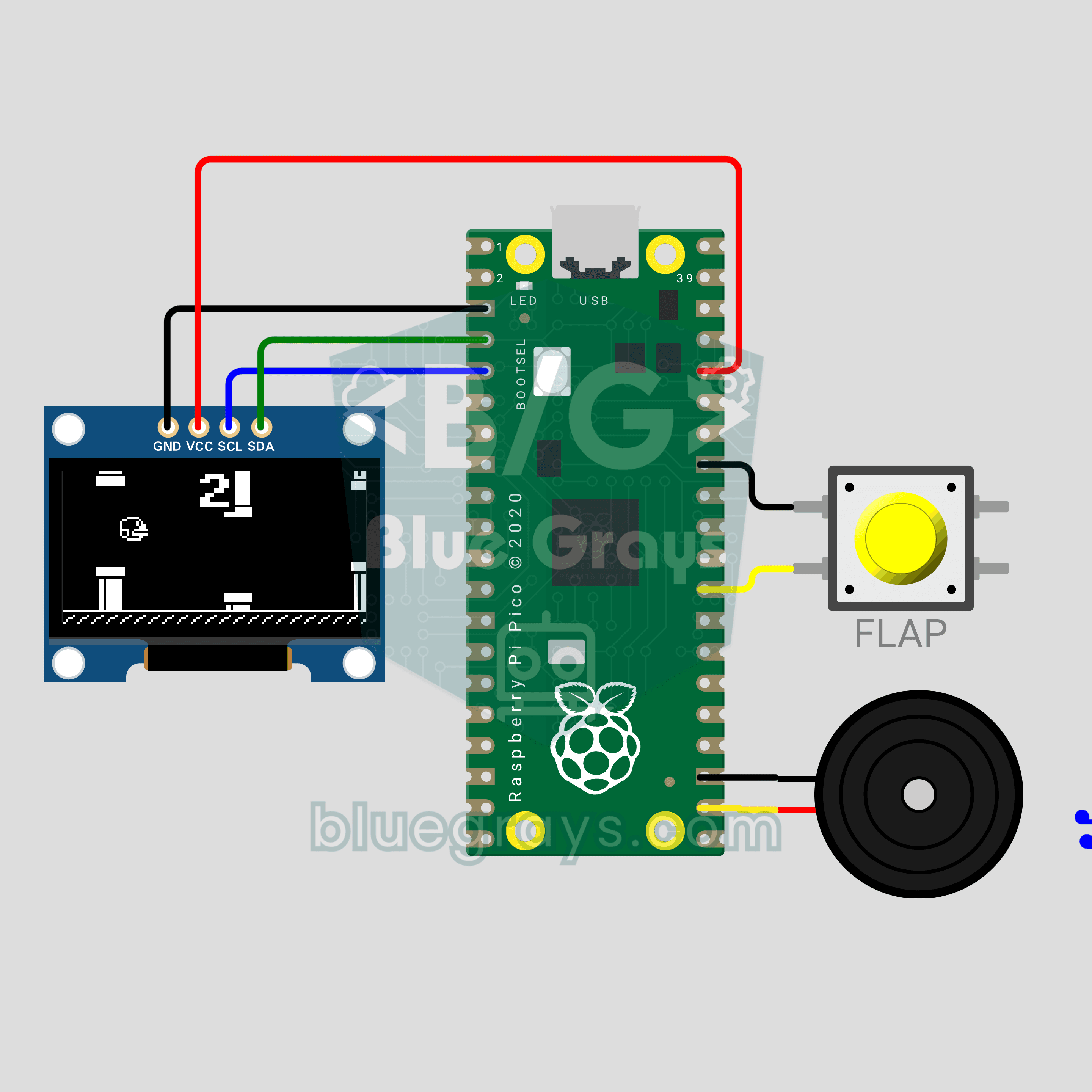
Raspberry Pi Pico Flappy Bird (OLED Display + Button + Buzzer)
That infuriating bird from your phone, now on a 0.96 inch OLED with a single button! A Flappy Bird style game on the Raspberry Pi Pico: every button press makes the bird flap, each pair of pipes you pass scores a point and the gaps get tighter. A buzzer plays the flap, point and record sounds. The high score lives in flappy_best.txt, so it survives a power cut. Physics, collisions and a 30 FPS game loop in one file.
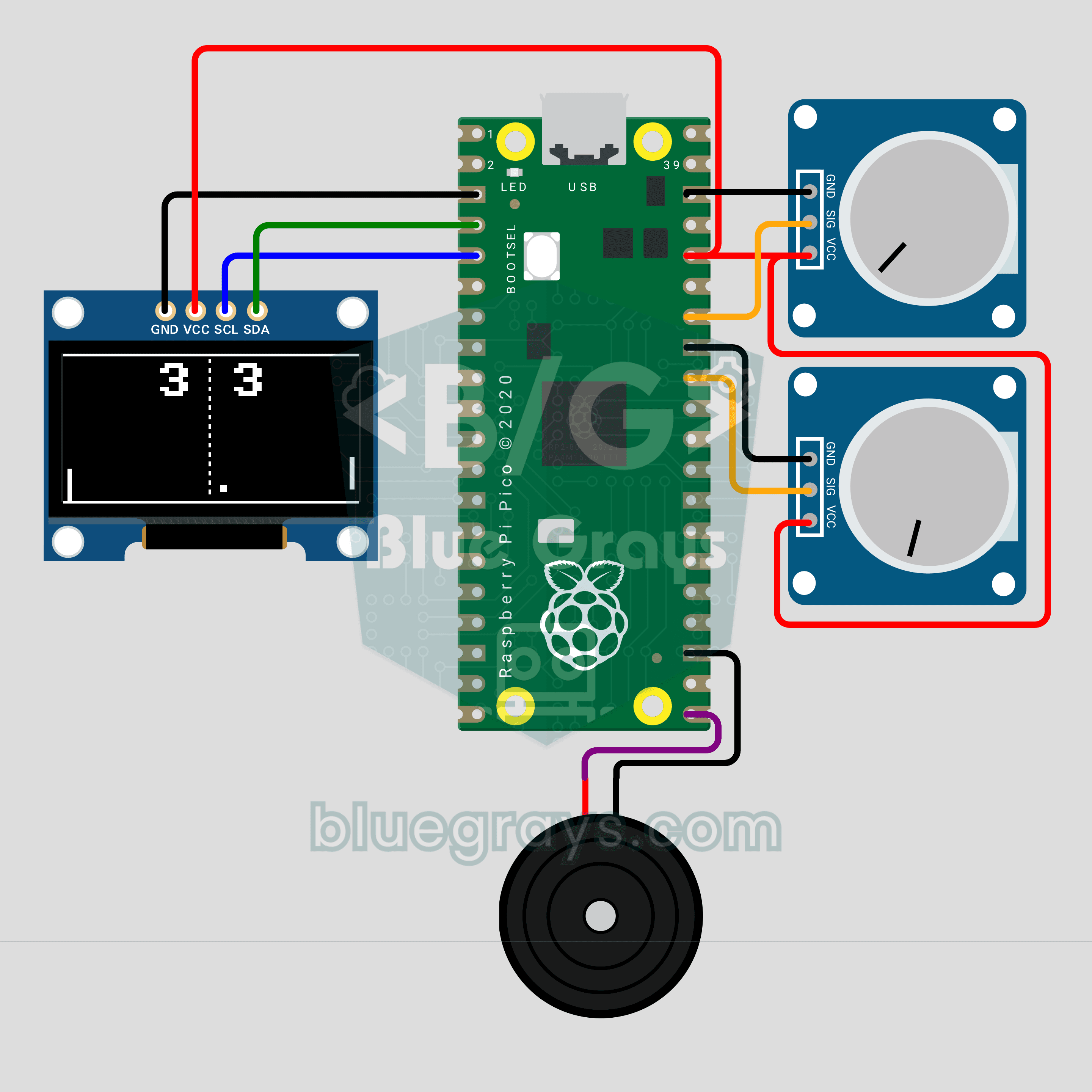
Raspberry Pi Pico Paddle Ball Game (OLED Display + 2 Potentiometers + Buzzer)
The classic paddle ball game, now on a 0.96 inch OLED for two players! Each player turns their own potentiometer to move a paddle. The ball speeds up on every hit and bounces off at an angle set by where it lands on the paddle; first to 5 points wins. A buzzer plays the wall, paddle and point sounds. Analog input, integer physics and partial screen updates in one game on the Raspberry Pi Pico.
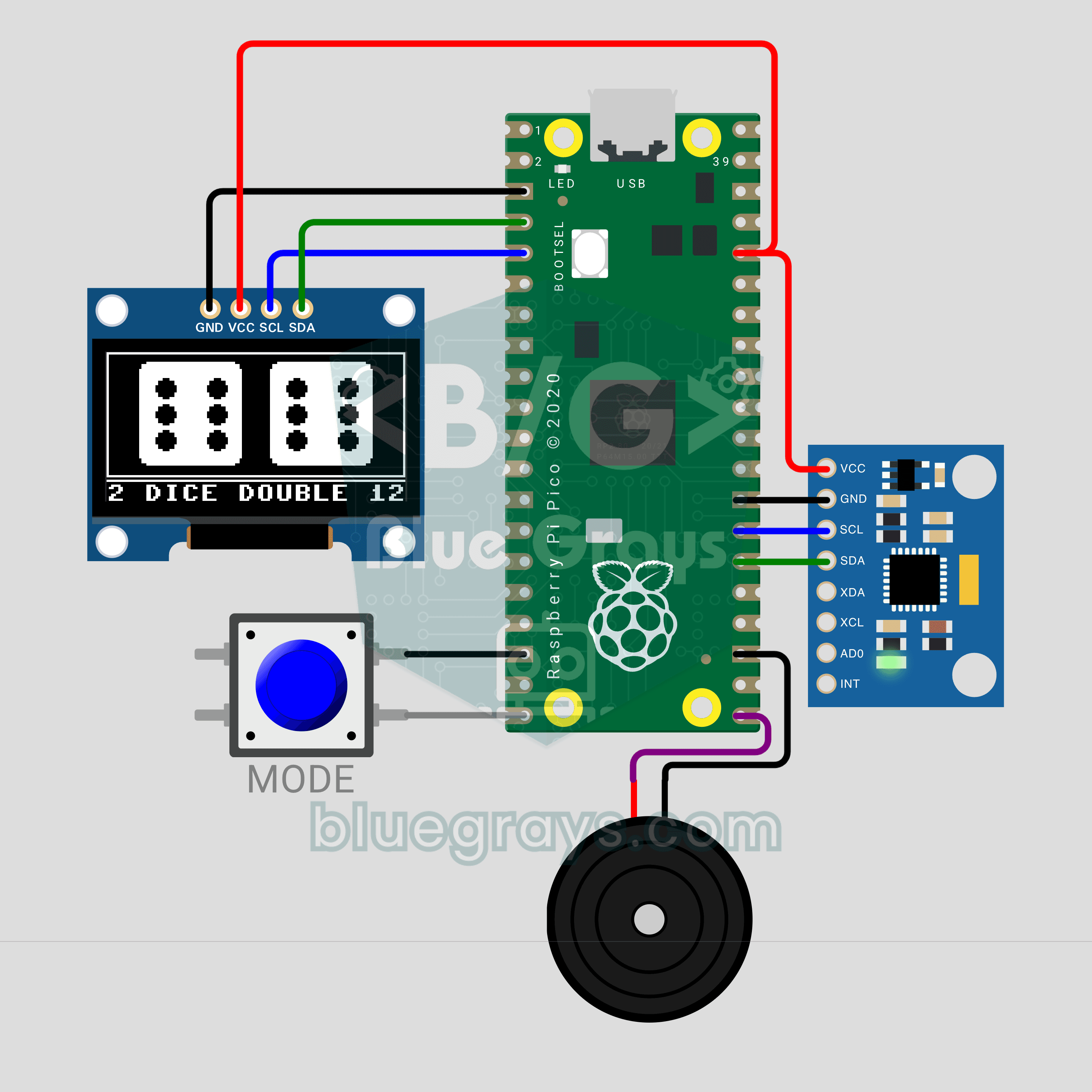
Raspberry Pi Pico Shake Dice (MPU-6050 + OLED Display + Buzzer)
Lost your dice? No problem: shake the circuit and the die rolls on a 0.96 inch OLED! An MPU-6050 accelerometer senses the shake, the die wobbles and spins, and once you stop it slows down and lands on a face. The MODE button switches between one die and two; roll a double and the screen flashes while the buzzer plays a celebration tune. The Raspberry Pi Pico reads the sensor straight over I2C, no library needed.
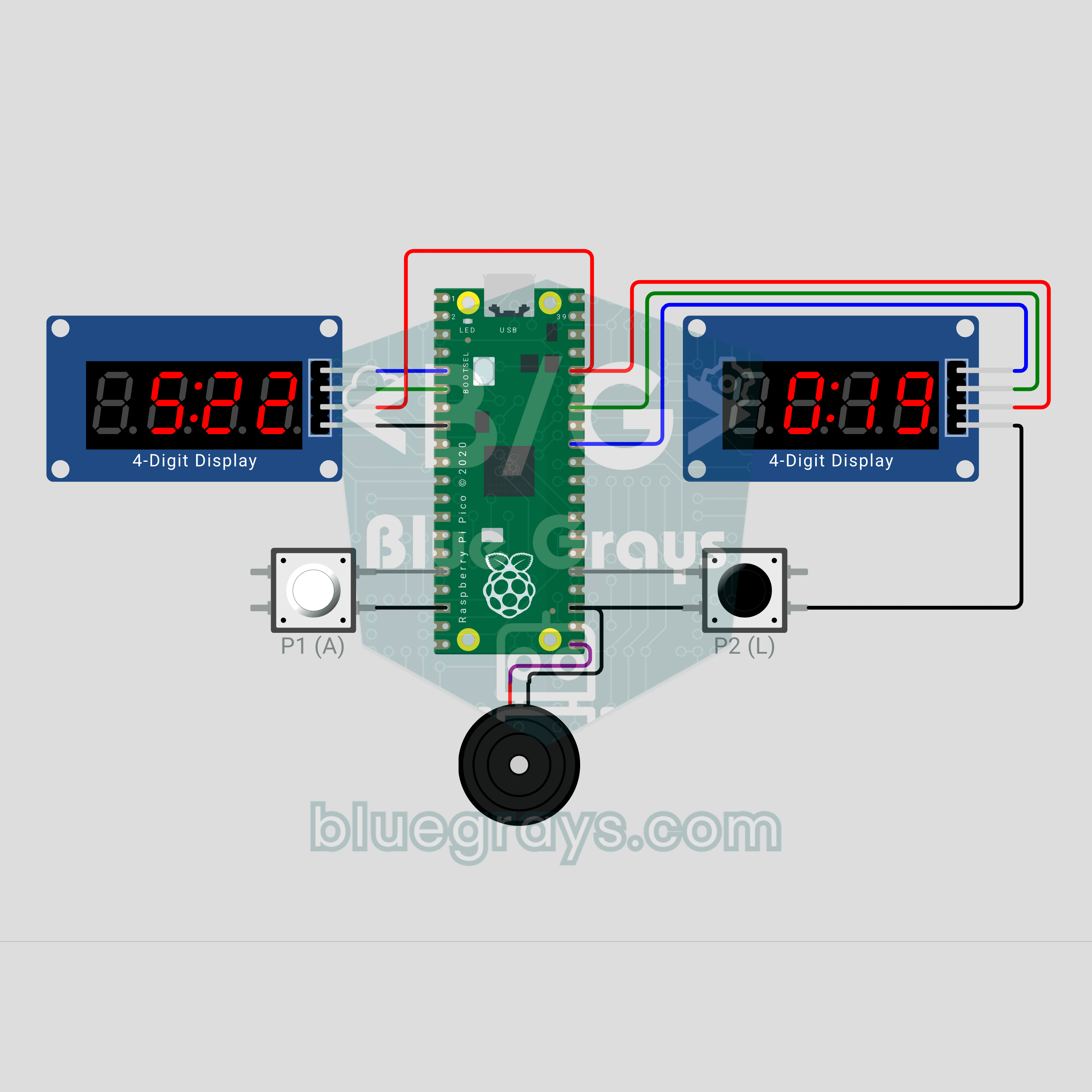
Raspberry Pi Pico Chess Clock (2 TM1637 Displays + 2 Buttons + Buzzer)
Make your move, hit the button, and the clock switches sides! A two-player chess clock with a Raspberry Pi Pico: each player's time runs down on their own TM1637 display and the mover gets an increment. The last 10 seconds show hundredths, a flagged side blinks FLAG and the buzzer sounds an alarm. Press both buttons together to pause. The TM1637 driver lives in the code, no library needed.
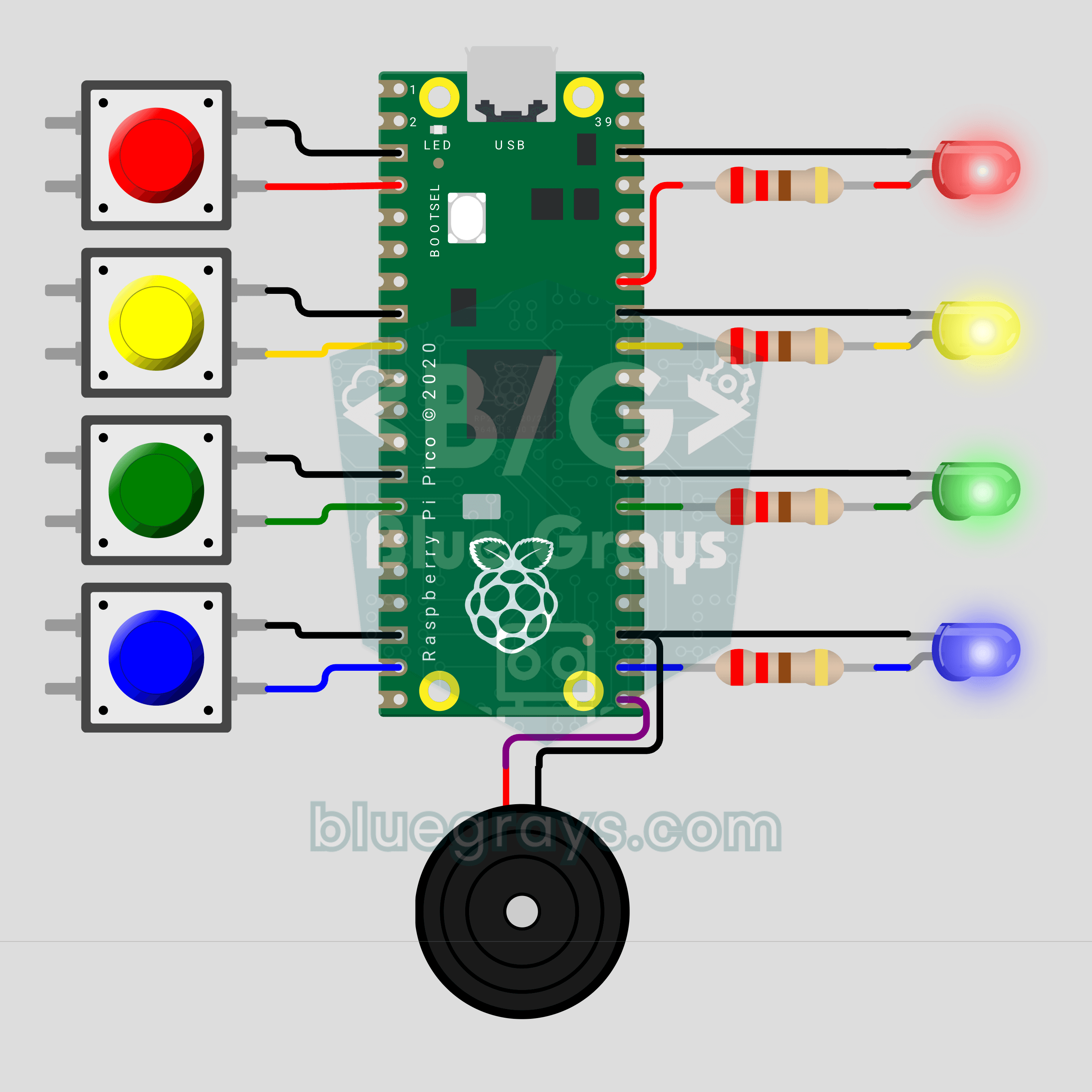
Raspberry Pi Pico Whack-a-Mole (4 LEDs + 4 Buttons + Buzzer)
Hit it when it lights up! The arcade classic Whack-a-Mole on your desk with a Raspberry Pi Pico. Four LEDs are four holes; a lit LED is a mole popping up, so press the button on the same row before the light goes out. Every 5 hits you level up and the moles stay up for less time. You get 3 misses, and a buzzer announces every hit, miss and new record.
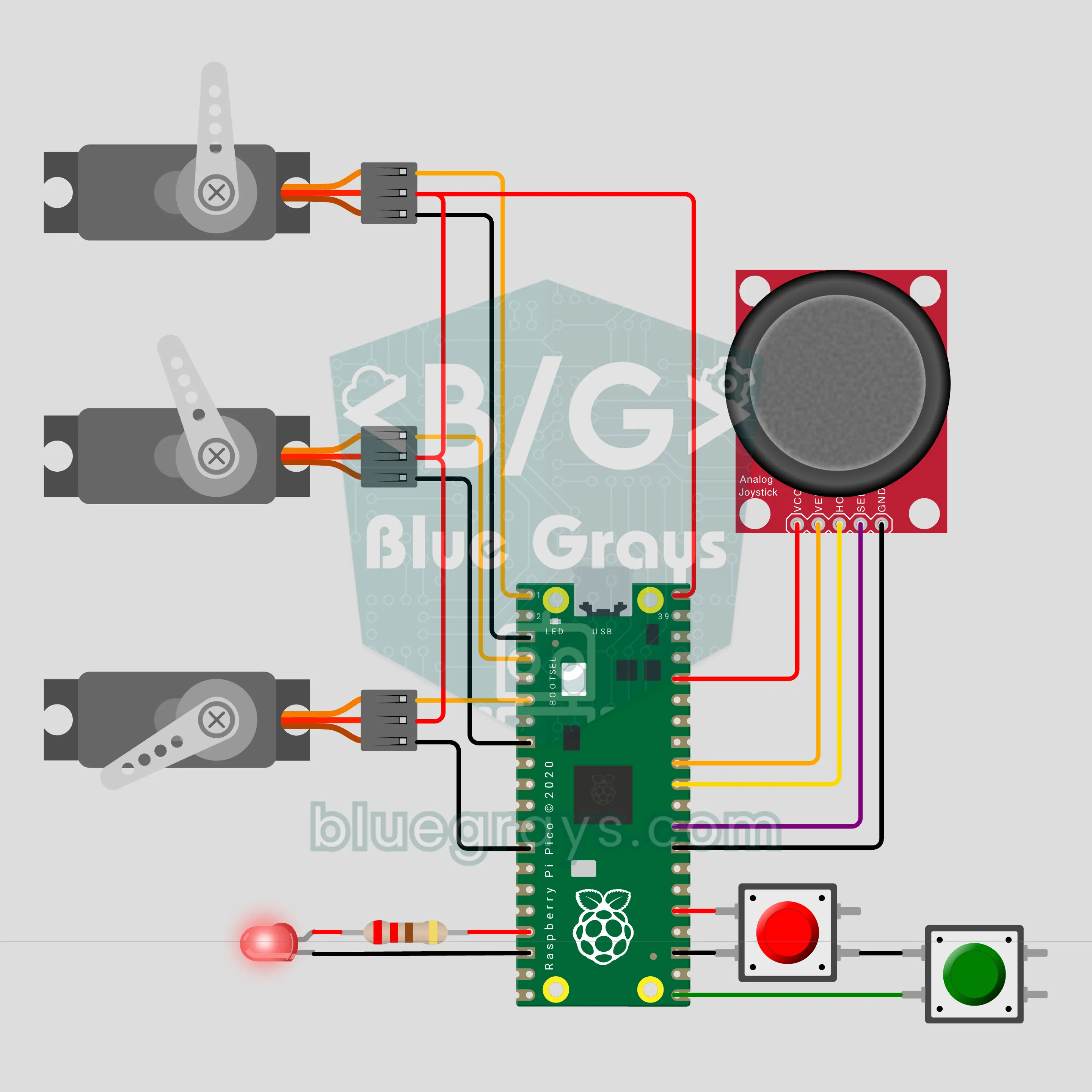
Raspberry Pi Pico Record-and-Replay Robot Arm (3 Servos + Joystick)
Show it a move once and the robot arm repeats it on its own! The Raspberry Pi Pico drives the base, shoulder and gripper with three SG90 servos; a joystick steers the arm and a click opens or closes the gripper. Press RECORD and the motion is saved every 100 ms; press PLAY and the arm follows the same path once or on a loop, at x1, x2 or x0.5 speed. The "teach and repeat" method of factory robots, right on your desk.
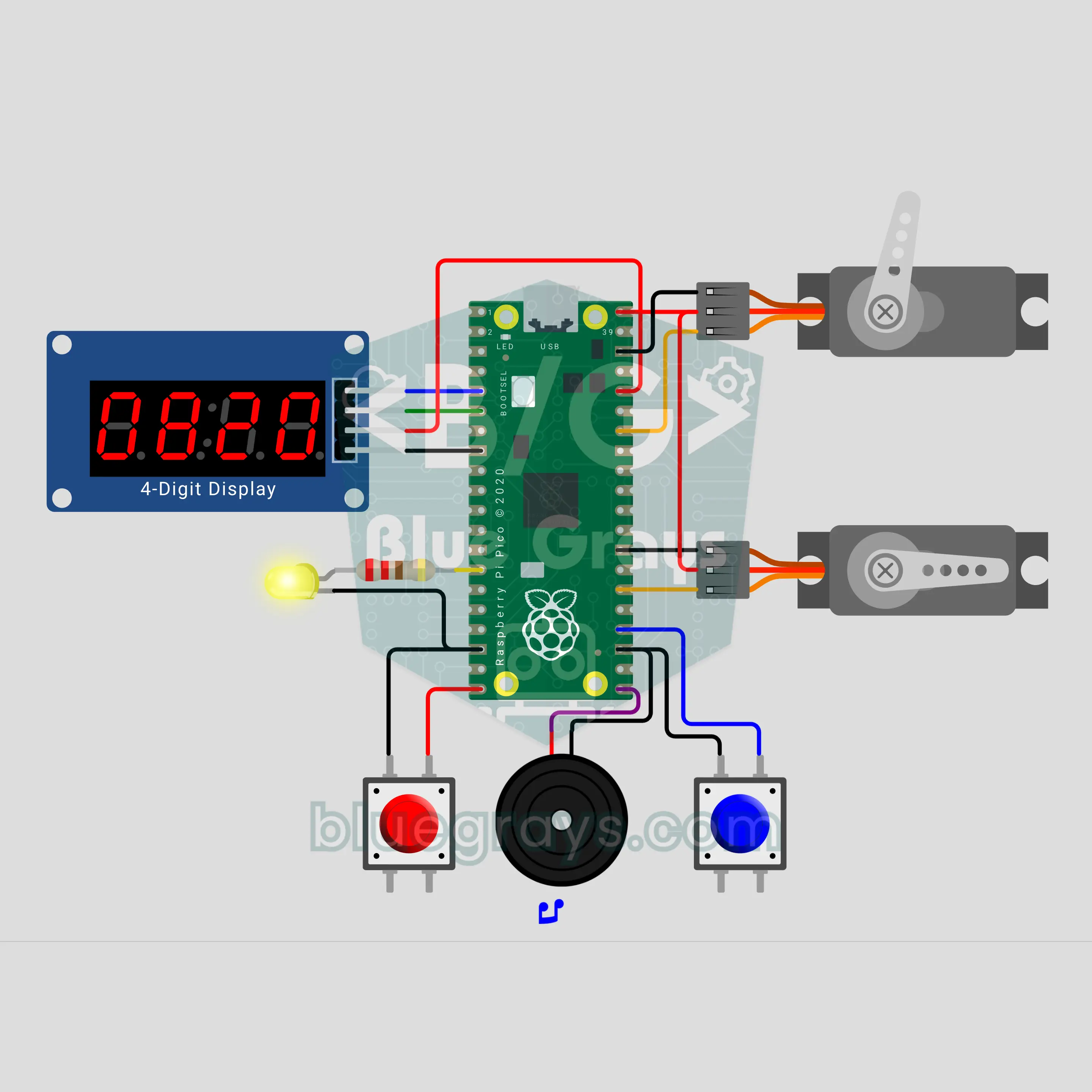
Raspberry Pi Pico Cowboy Duel (2 SG90 Servos + TM1637 + Buzzer)
A two-player reflex duel: a western whistle plays, the yellow LED lights up at a random moment and the first to press wins! The Raspberry Pi Pico knocks the loser's cardboard cowboy down with an SG90 servo and makes the winner's wave; a TM1637 display shows the reaction time in milliseconds. Press before the LED and you shoot your own cowboy. First to 3 points is champion, and the fastest reaction is saved as the record.
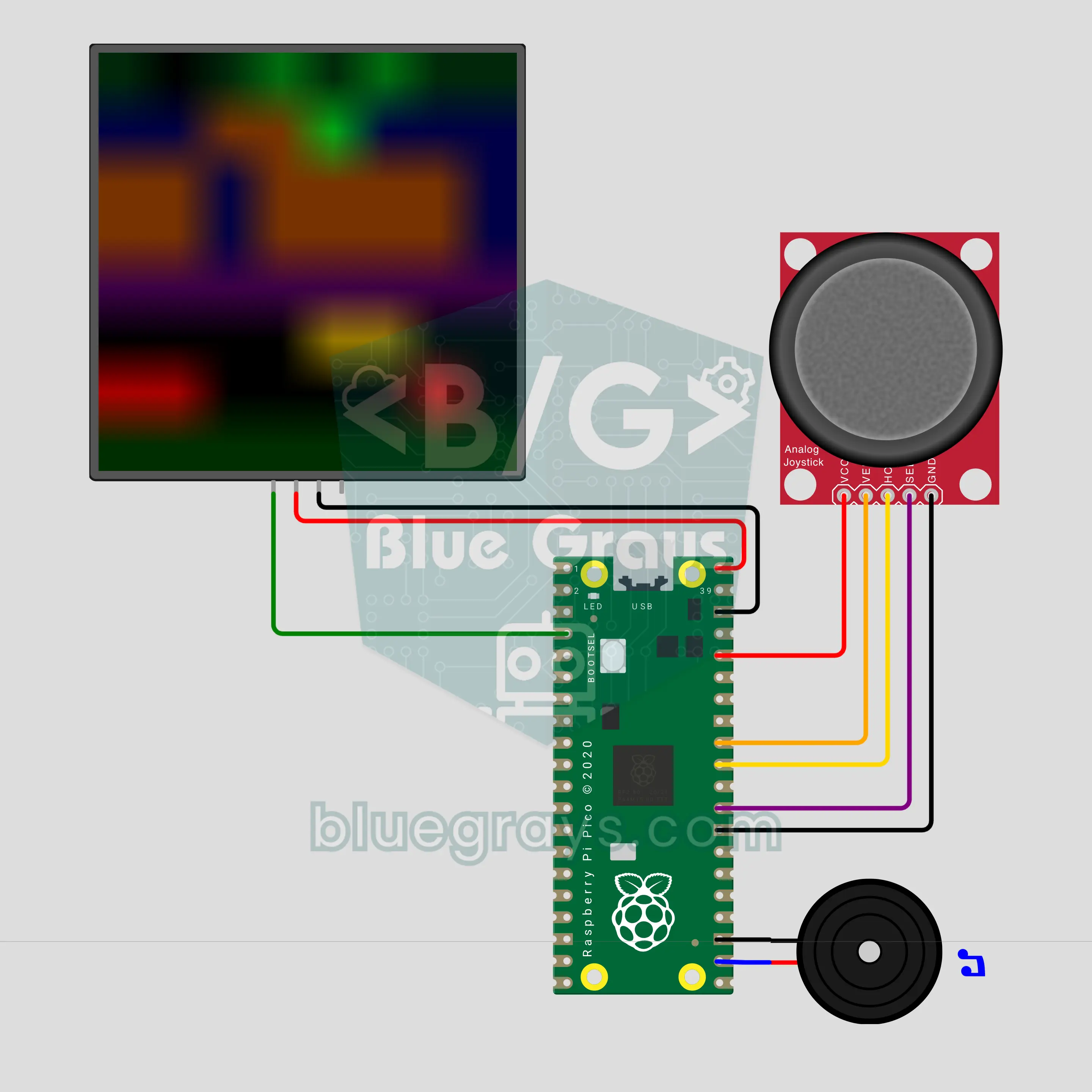
Raspberry Pi Pico Cross the Road: Frog Game (8x8 NeoPixel Matrix + Joystick + Buzzer)
The classic arcade frog game on 64 color LEDs! The Raspberry Pi Pico draws a road of red and yellow cars and a river of drifting logs on an 8x8 NeoPixel matrix; you move the frog one square at a time with a joystick and fill three homes. The traffic speeds up every level, and the buzzer plays hop, crash and home sounds. 3 lives, a score and a best score kept in flash; leave it alone and the game plays itself.
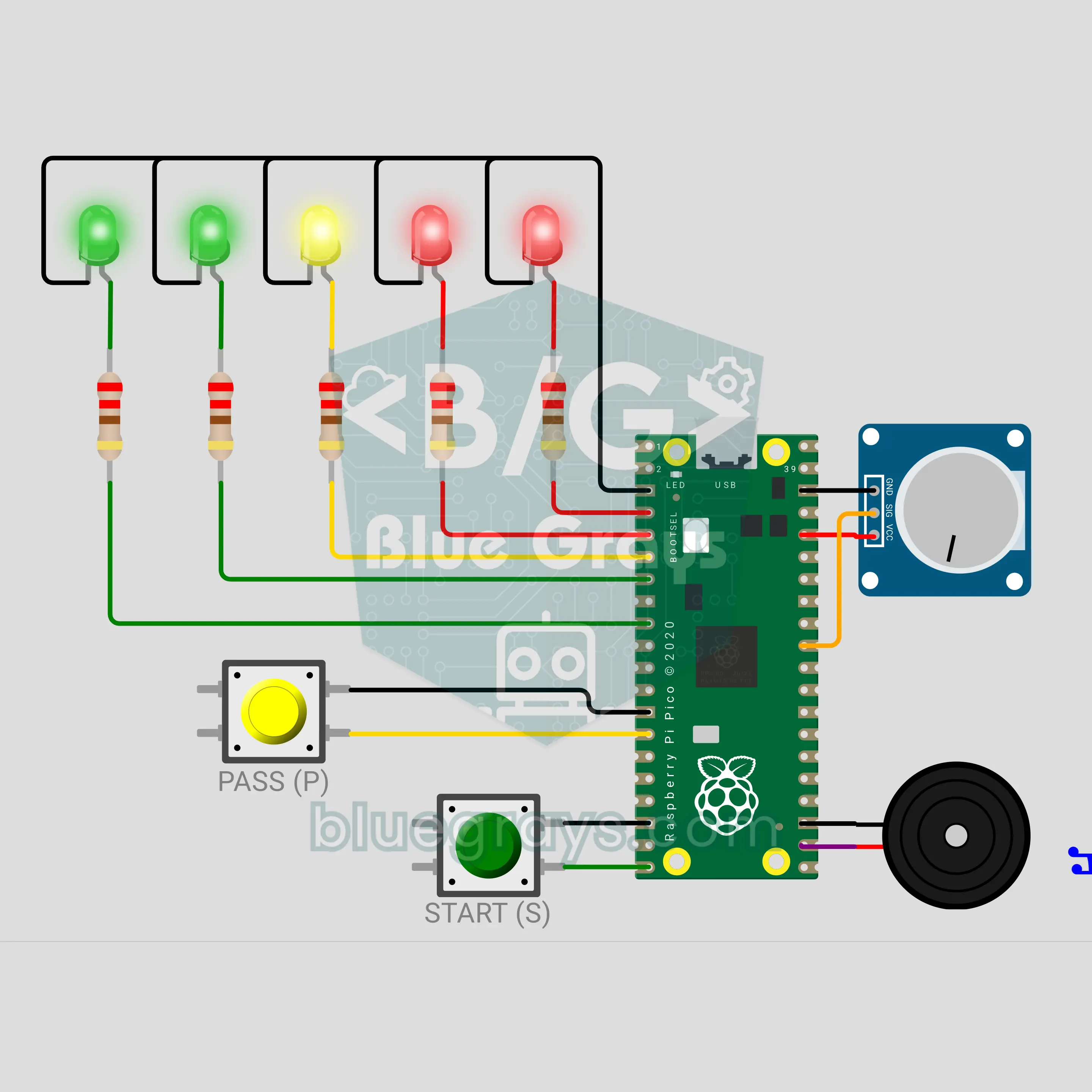
Raspberry Pi Pico Hot Potato Party Game (5 LEDs + Potentiometer + 2 Buttons + Buzzer)
A party game that goes from hand to hand: press START, a secret fuse begins and the device gets passed around to a ticking sound. The tick-tock keeps speeding up and a 5-LED heat bar fills from green to red; when time runs out the buzzer booms and whoever is holding it loses. A potentiometer picks a short, medium or long round, and the PASS button is pressed at every hand-off. Hold it longer than 6 seconds and you get a penalty: the fuse loses 2 seconds.
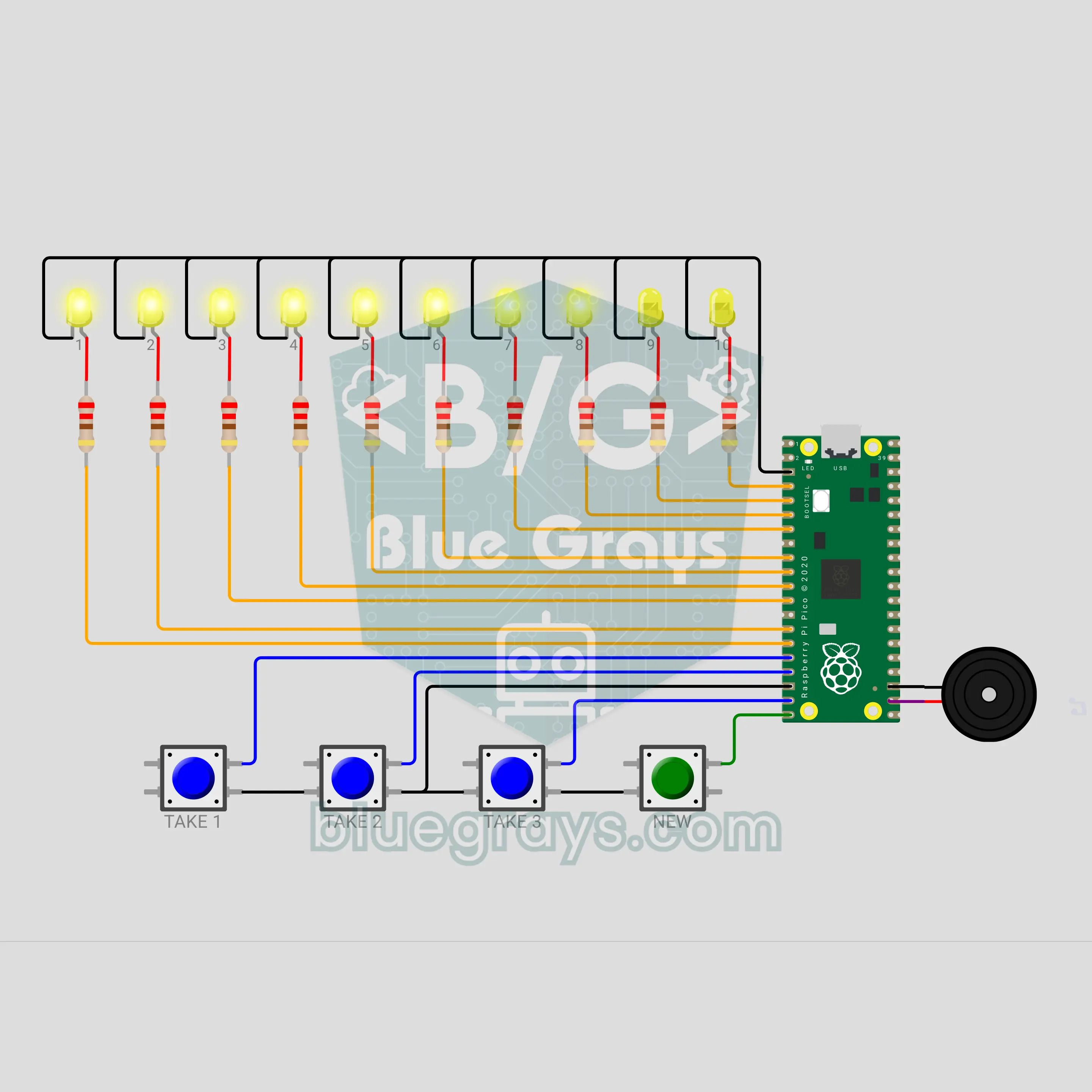
Raspberry Pi Pico Nim Game: Can You Beat the Pico? (10 LEDs + 4 Buttons + Buzzer)
Whoever takes the last stick loses: can you beat the Pico? The matchstick game Nim lights up with a Raspberry Pi Pico. 10 yellow LEDs are 10 sticks; you take turns removing 1, 2 or 3, 4 buttons pick your move and a buzzer voices every turn. The Pico uses a mod 4 trick to always leave you 1, 5 or 9 sticks: if you start, the right first move wins, but if the Pico starts it never loses.