
Teroka Projek Arduino
Ratusan projek dari pemula hingga mahir: gambar rajah litar, kod dan video. Mulakan di tahap mana pun kamu berada.
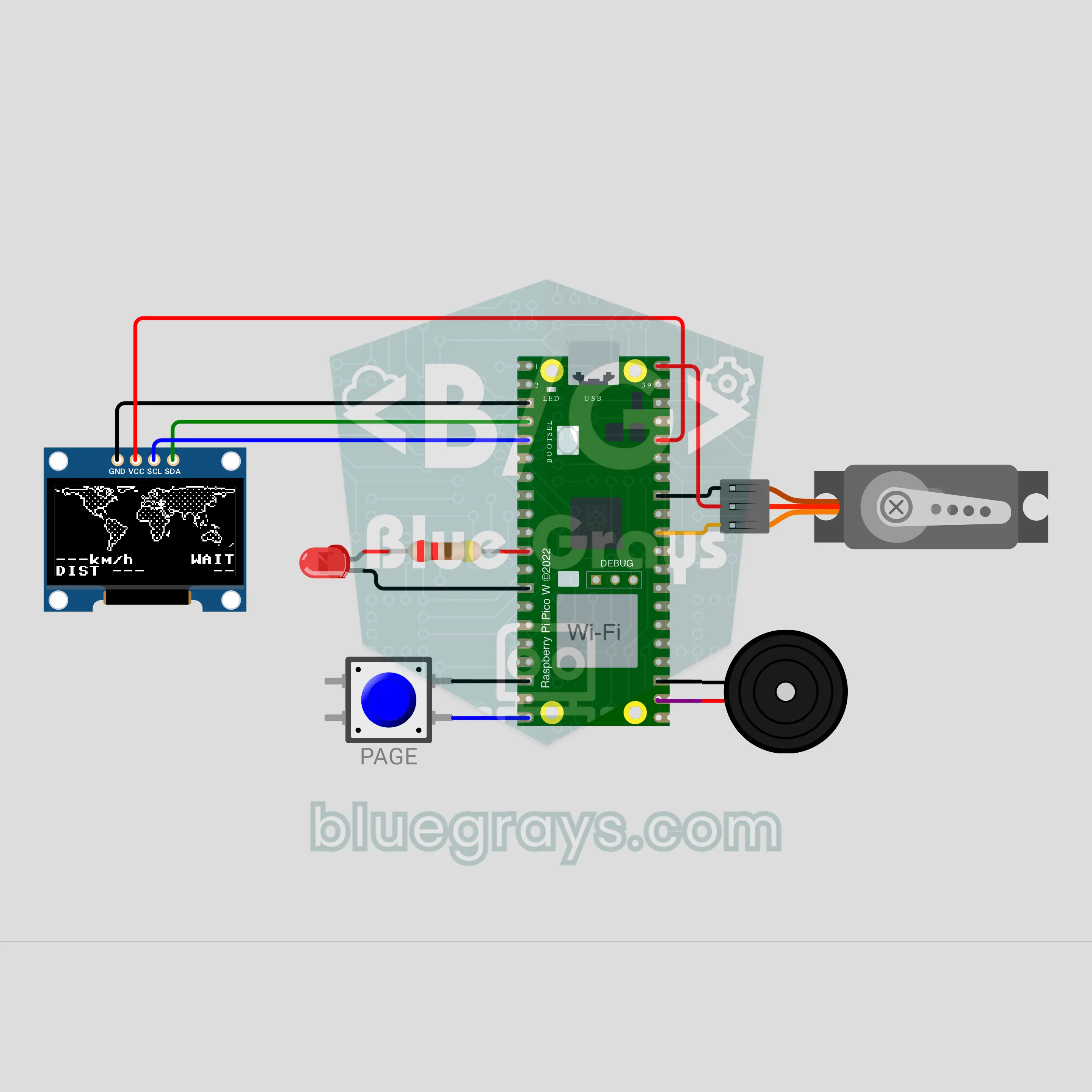
Raspberry Pi Pico W ISS Tracker (OLED World Map + Servo Pointer + Buzzer)
Where is the International Space Station right now? The Raspberry Pi Pico W fetches its position from the internet every 5 seconds; on a world map on the 0.96 inch OLED the station blinks, its past track is drawn solid and the path ahead dotted. An SG90 servo pointer shows which way the station is from your home, and when it is close an LED and the buzzer say "look up". A button switches to the people in space and the raw data; without data an orbit model keeps going.
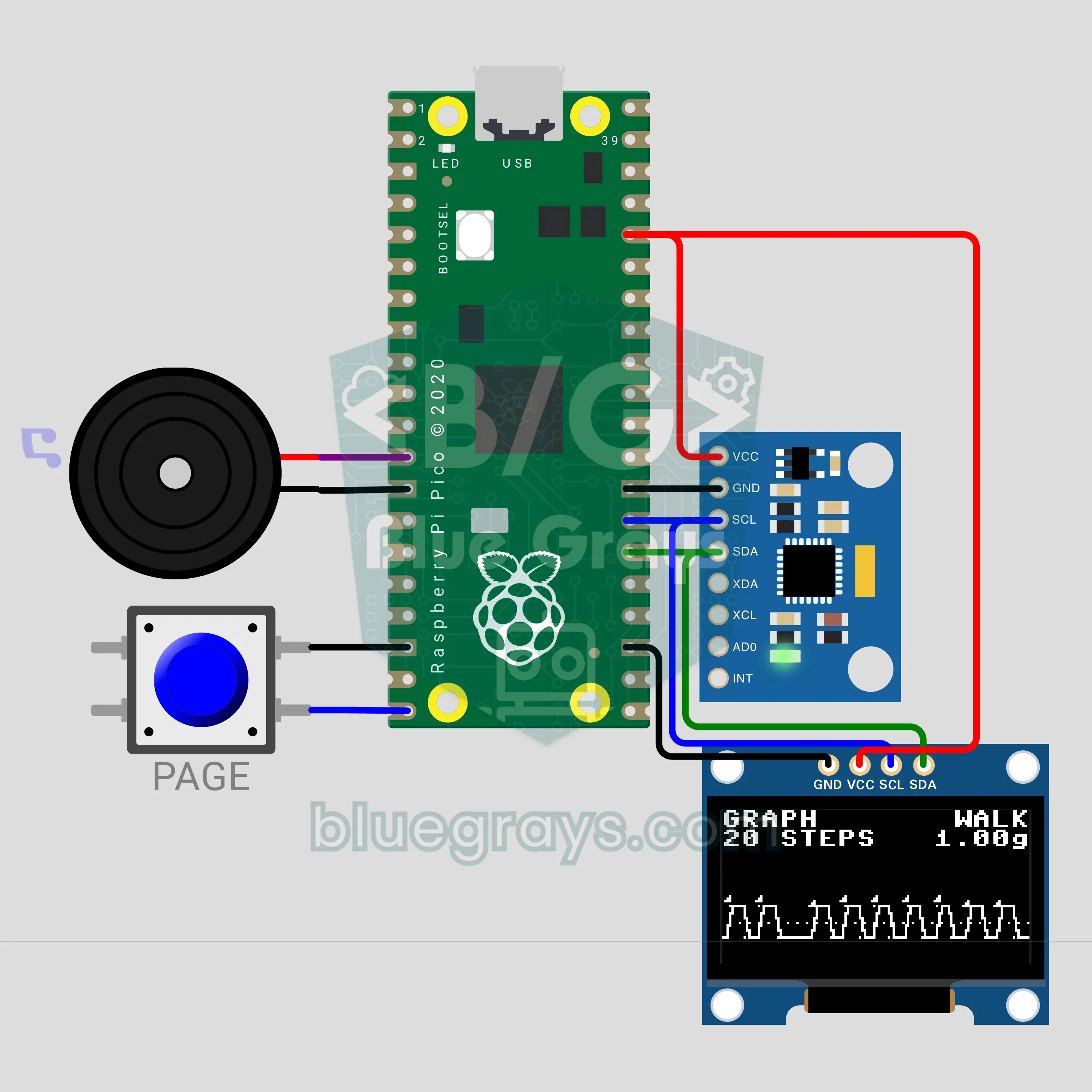
Raspberry Pi Pico Step Counter: Pedometer (MPU-6050 + OLED + Buzzer)
See how smart watches count your steps, on your own circuit! The Raspberry Pi Pico reads the MPU-6050 accelerometer 50 times a second, smooths the signal and counts the peak each step makes. The 0.96 inch OLED shows steps, distance, calories and cadence, and a live graph page draws the raw signal, the average and the threshold on top of each other. At the goal the buzzer plays a tune, and the count is saved to flash.
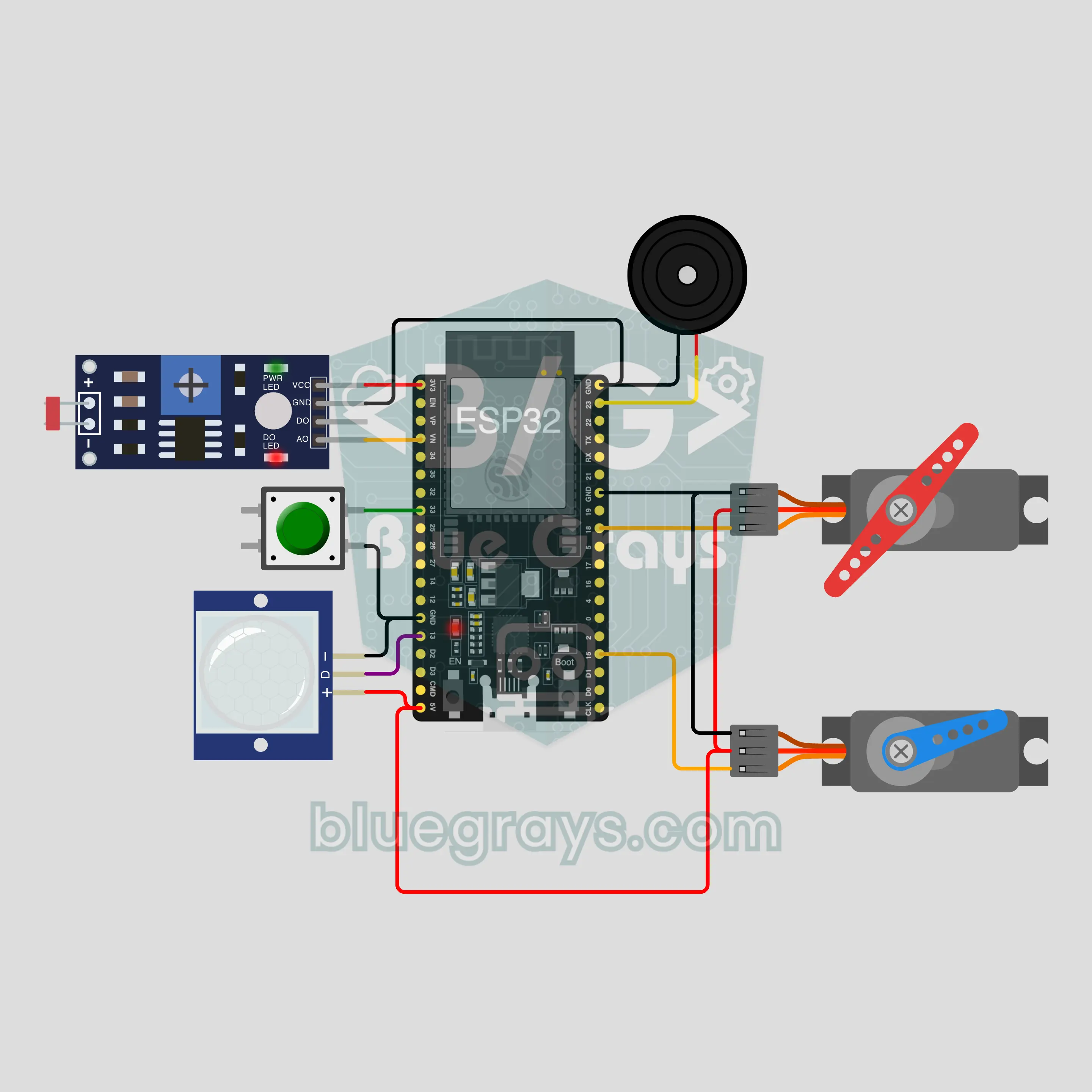
ESP32 Automatic Cat Toy (PIR + 2 Servos + LDR + Buzzer)
Keep your cat busy while it is home alone! When the PIR sensor spots the cat, the buzzer chirps like a bird and a feather wand on two SG90 servos moves like prey: mouse dash, hide and seek, zigzag, circle and bug jitter. A game lasts one minute, then the toy rests; when the LDR sees darkness it never plays at night. The moves come from the ESP32's hardware randomness, so the cat cannot learn them.
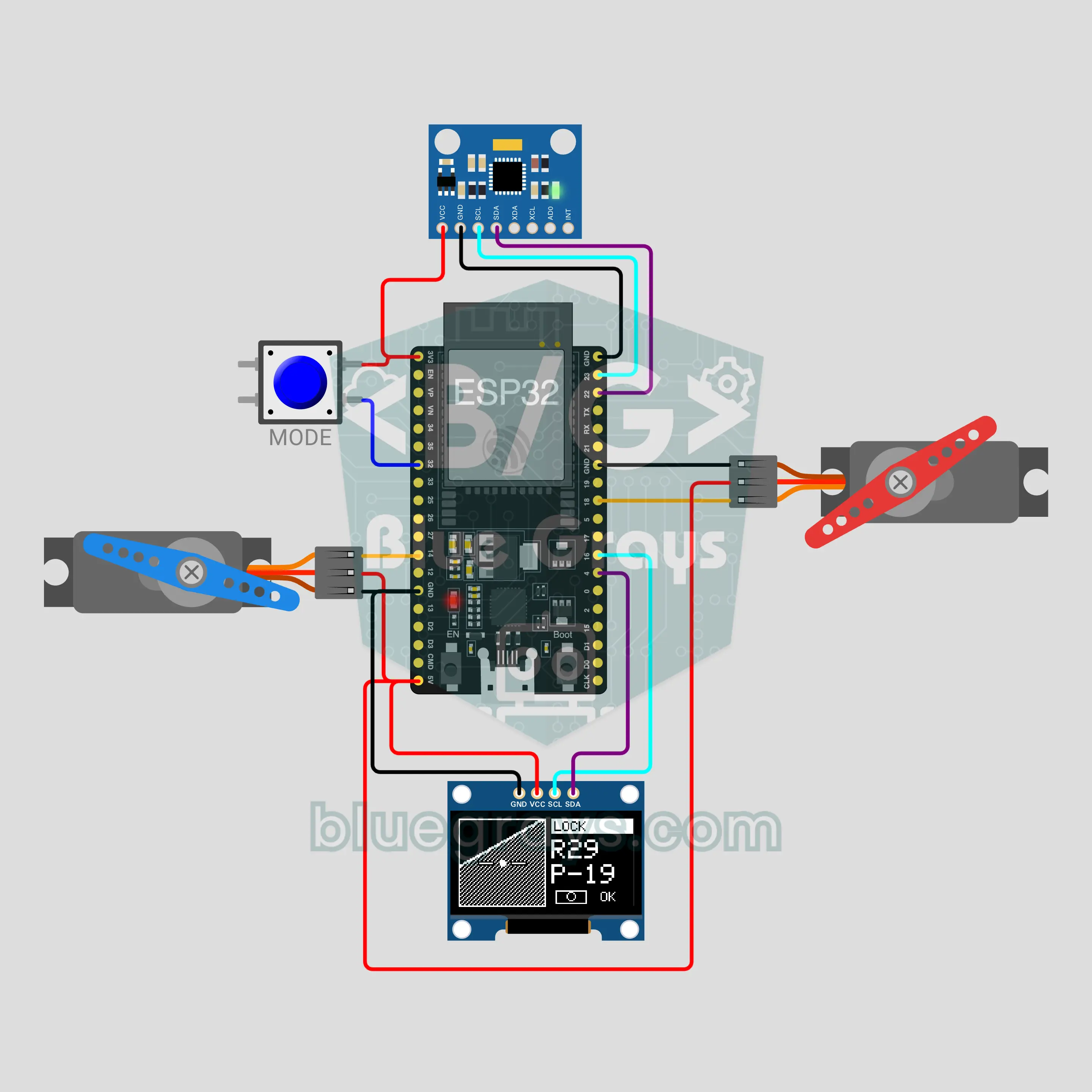
ESP32 Camera Gimbal (MPU-6050 + 2 Servos + OLED)
Discover the secret of phone gimbals yourself! As the handle tilts, the MPU-6050 measures the angle and two SG90 servos turn the opposite way to keep the platform on top level. The angle is worked out 200 times a second with a complementary filter that blends gyroscope and accelerometer. The 0.96 inch OLED draws an artificial horizon like an aircraft gauge, and one button switches between LOCK, FOLLOW and CENTER.
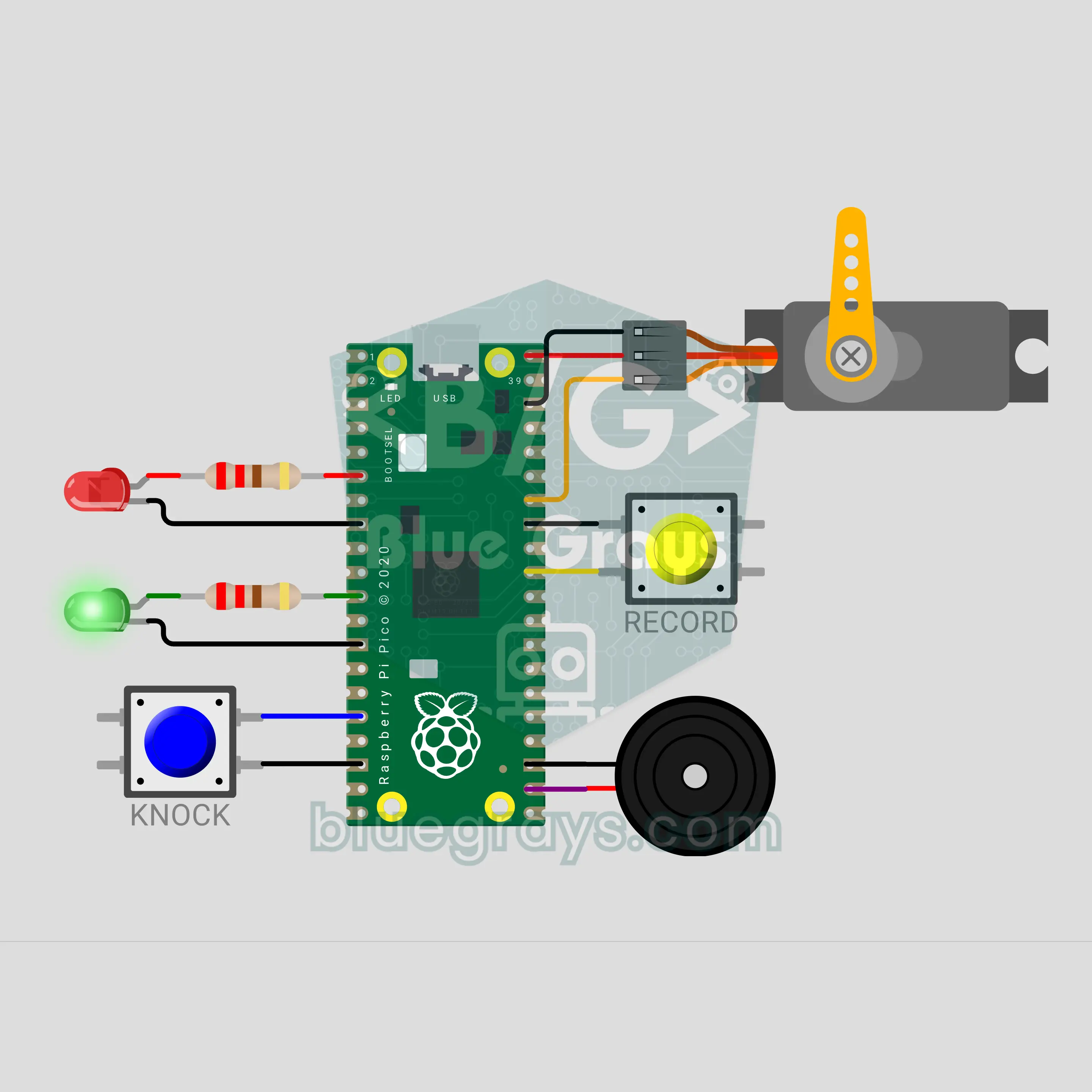
Raspberry Pi Pico Secret Knock Lock (SG90 Servo + 2 Buttons + 2 LEDs + Buzzer)
The password is a rhythm, not a number: knock the right pattern on the lid and the latch lifts! The Raspberry Pi Pico times every knock, scales each gap to the longest one and compares the result with the saved rhythm, so knocking fast or slow makes no difference. When it matches, an SG90 servo lifts the latch, a green LED lights up and a buzzer plays a "ta-da"; 3 wrong tries in a row make the lock wait 10 seconds. While it is open, hold RECORD to save your own rhythm.
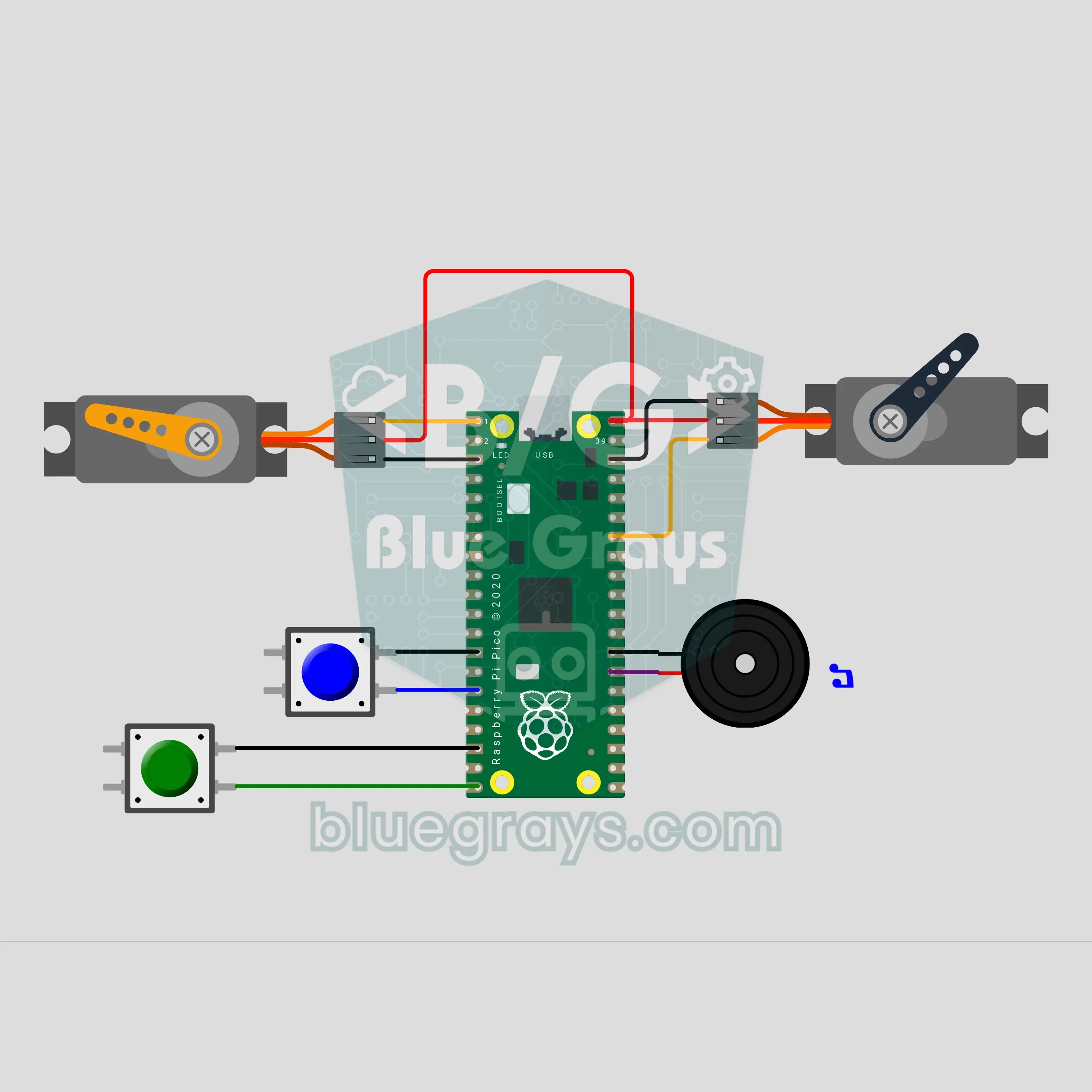
Raspberry Pi Pico Single-Hand Cuckoo Clock (2 SG90 Servos + 2 Buttons + Buzzer)
Grandma's cuckoo clock, rebuilt with cardboard and two servos! The Raspberry Pi Pico keeps the time itself; one SG90 servo turns a single hand across a half-circle dial, the other pops the bird out of its door as many times as the hour, and a buzzer plays a two-note call. There is one call on the half hour, and from 22:00 to 07:00 the bird comes out silently. Two buttons set the time; in DEMO mode an hour passes in 10 seconds.
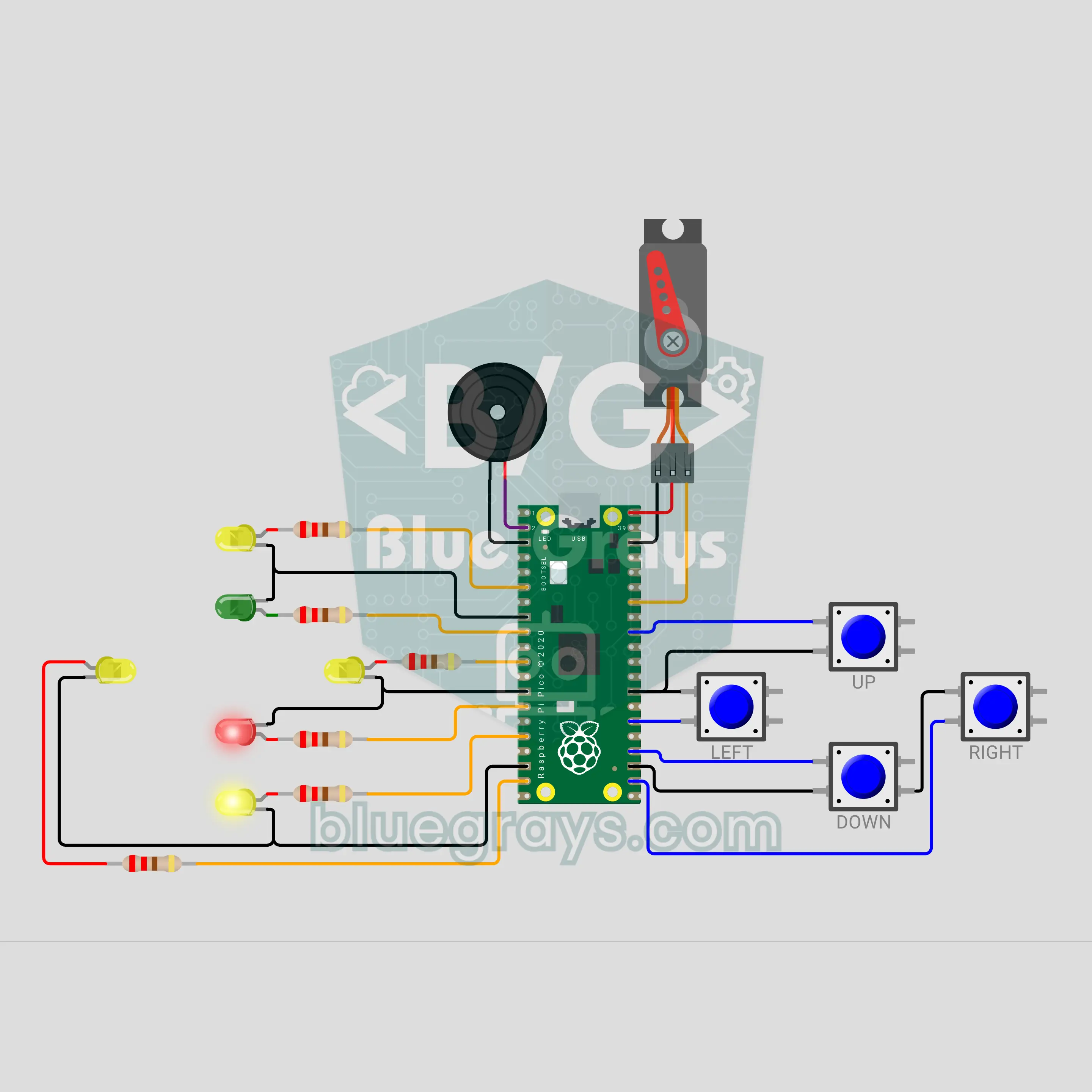
Raspberry Pi Pico Reverse Corner Brain Game (6 LEDs + 4 Buttons + Servo + Buzzer)
Green means press the same way, red means the opposite way, and a "boom" means don't press at all! A 20-second focus and reflex game on the Raspberry Pi Pico: one of 4 yellow LEDs in a plus shape shows the direction, the green or red LED in the middle shows the rule, and you answer with 4 buttons. The answer time shrinks with every hit and traps test your finger. The score climbs on a servo needle dial, from TURTLE to LIGHTNING.
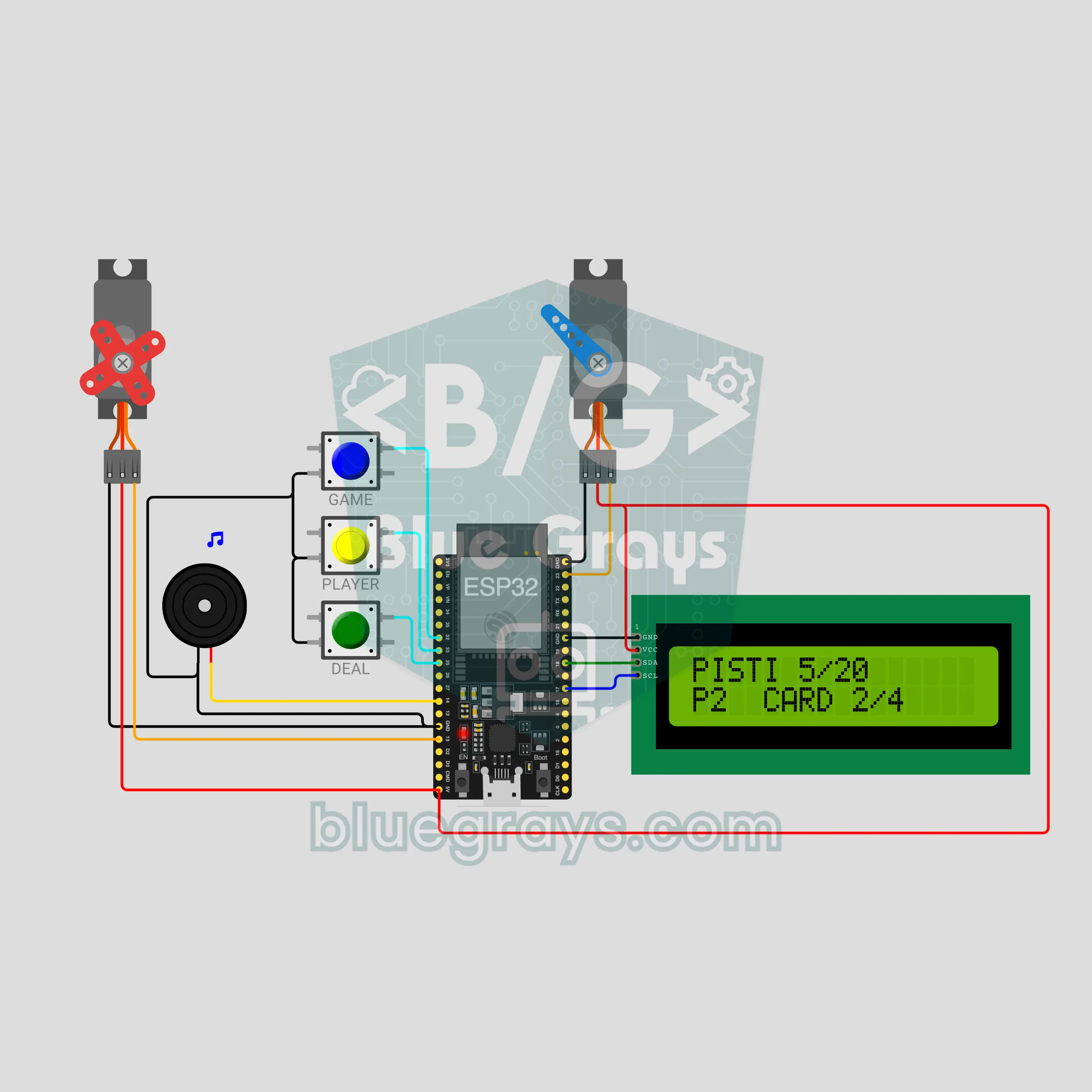
ESP32 Card Dealing Robot (2 Servos + I2C LCD + Buzzer)
Let a robot deal the cards on game night! A turntable servo turns to the next player, a pusher arm servo slides the top card off the deck, and the buzzer clicks for every card. It knows Pişti and Batak, two classic Turkish card games, plus a colour-matching card game with 7 cards each and one face-up card, for 2–4 players with a random first player and pause, cancel and speed control. The I2C LCD shows who gets which card and what is left in the deck.
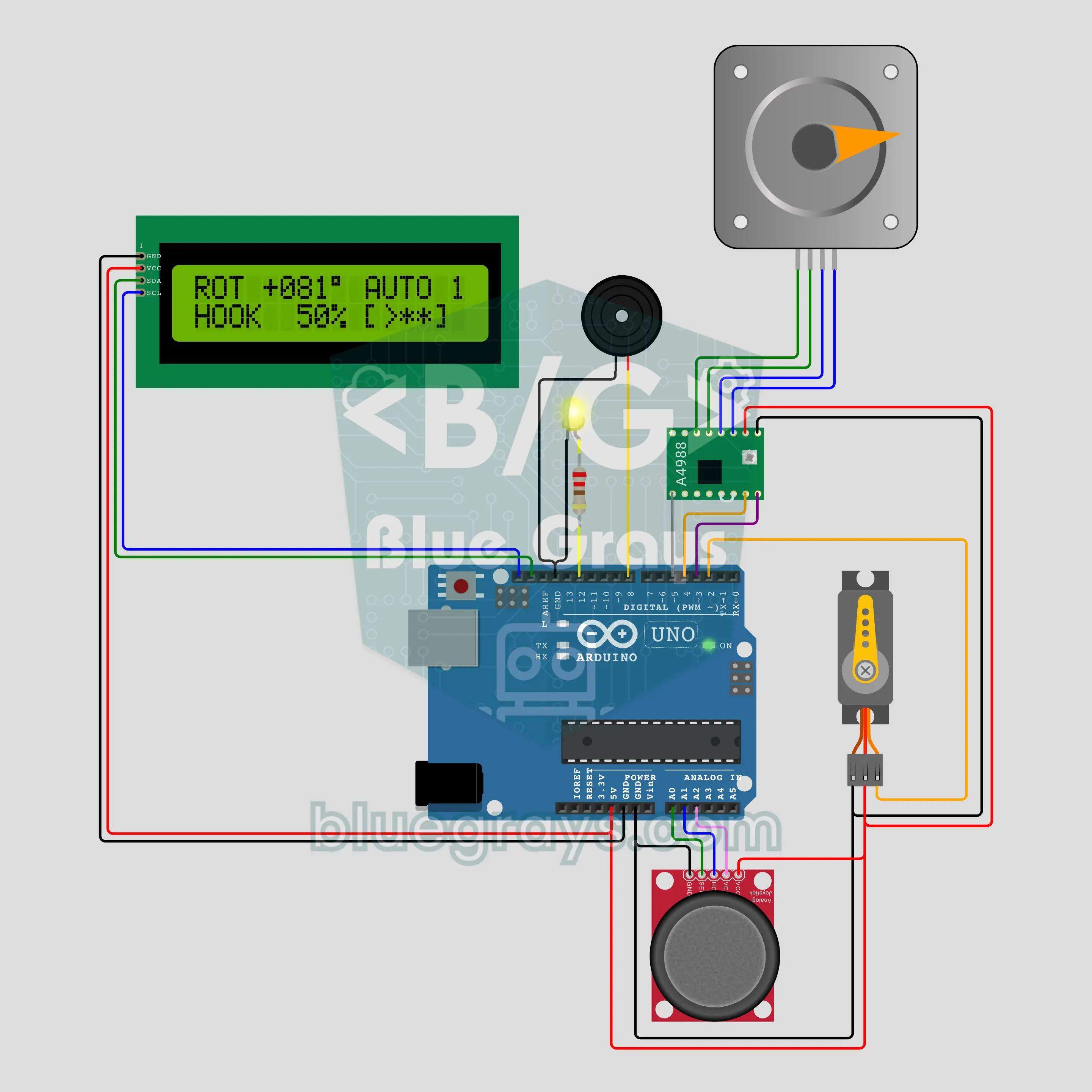
Arduino Tower Crane (NEMA 17 Stepper Motor + A4988 + Servo + Joystick + I2C LCD)
A desktop tower crane: a NEMA 17 stepper on an A4988 driver turns the tower on a speed ramp, an SG90 servo lowers and raises the hook, and a joystick is the operator lever. Rotation stops at ±170°; while the tower slews, a yellow beacon flashes and the buzzer goes "beep-beep". The joystick button saves 3 stops; a long press lets the crane carry the load alone, and a touch on the lever means STOP. The I2C LCD shows angle, hook depth and stops.
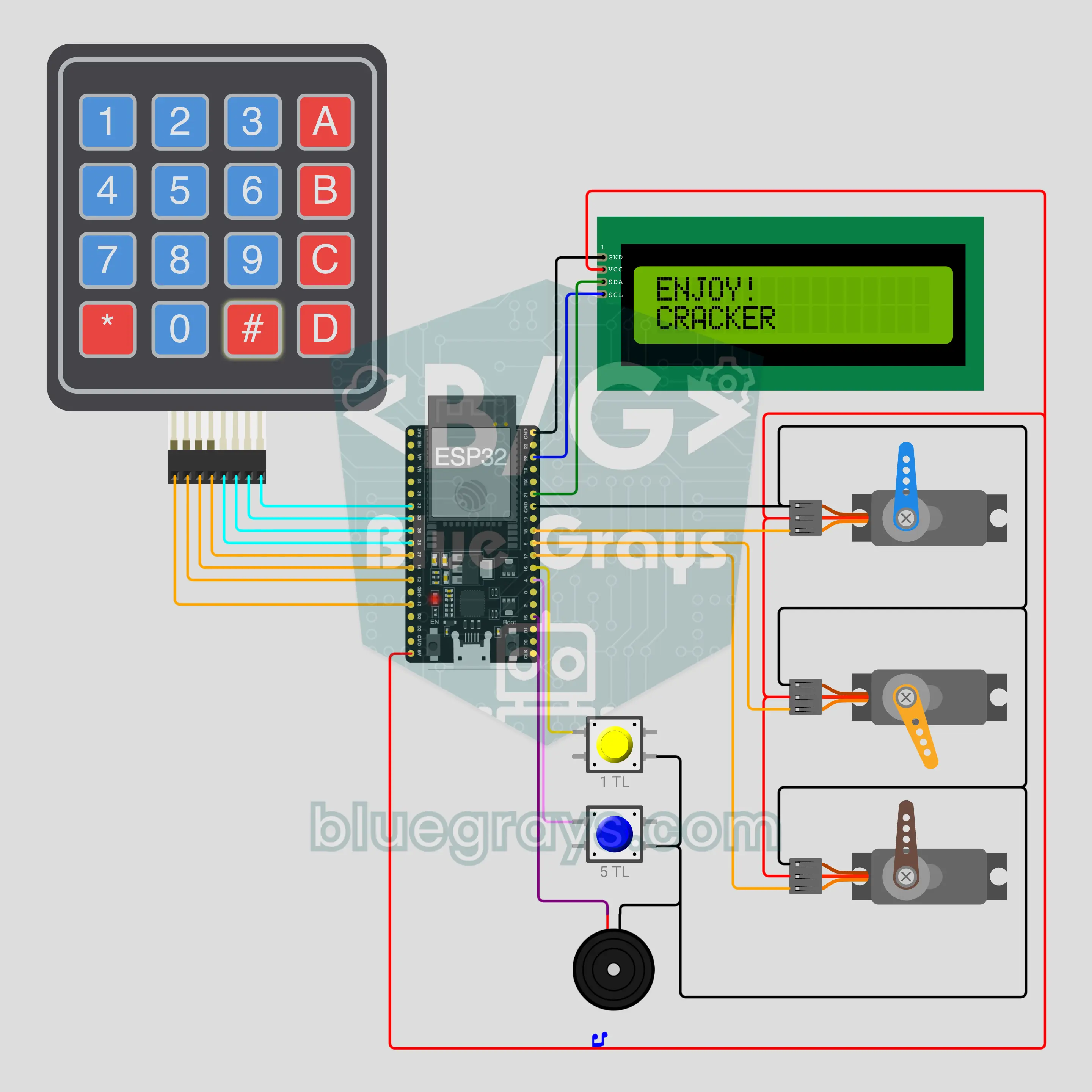
ESP32 Snack Vending Machine (Keypad + I2C LCD + 3 Servos + Buzzer)
A mini school canteen vending machine on your desk! The 1 and 5 lira buttons add credit, you pick a snack on the 4x4 keypad, and with enough credit that shelf's servo swings a pusher arm and drops it. Change comes in the fewest coins on the I2C LCD, with a jingle per coin. It counts in Turkish lira and is easy to switch to your own coins; a service code opens refill, sales report and prices.
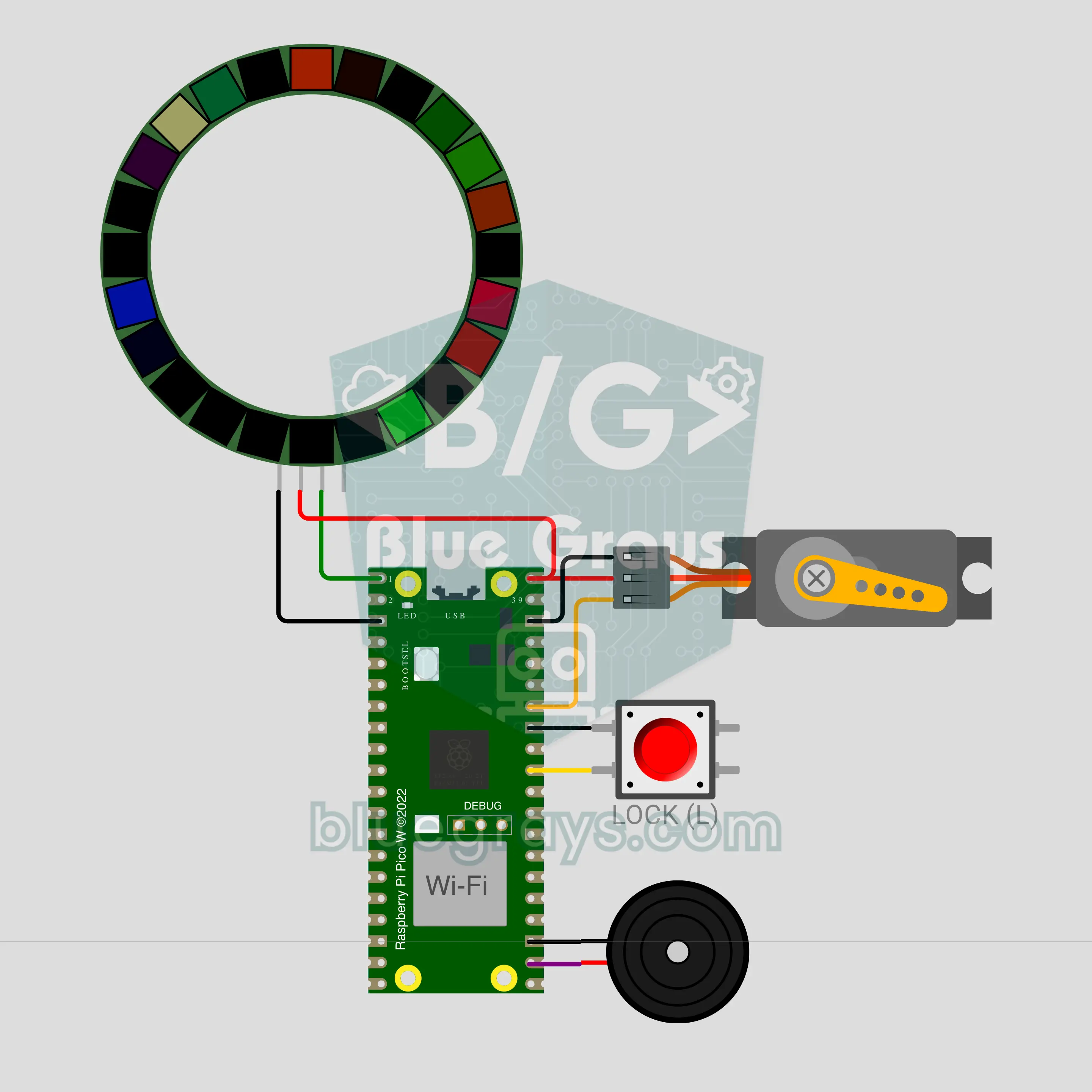
Raspberry Pi Pico W Remote-Unlock Gift Box (SG90 Servo + LED Ring + MQTT + Buzzer)
Lock the present in a box and keep the key on your phone! The Raspberry Pi Pico W holds the lid shut with an SG90 servo latch; when the right code arrives from any MQTT app on your phone, the box opens with a tune and fireworks burst across the 24-LED ring. Add a time lock if you like: the box gets the time from the internet, stays shut until midnight on New Year's Eve and counts down on the ring. Three wrong codes mean a 60-second lockout.
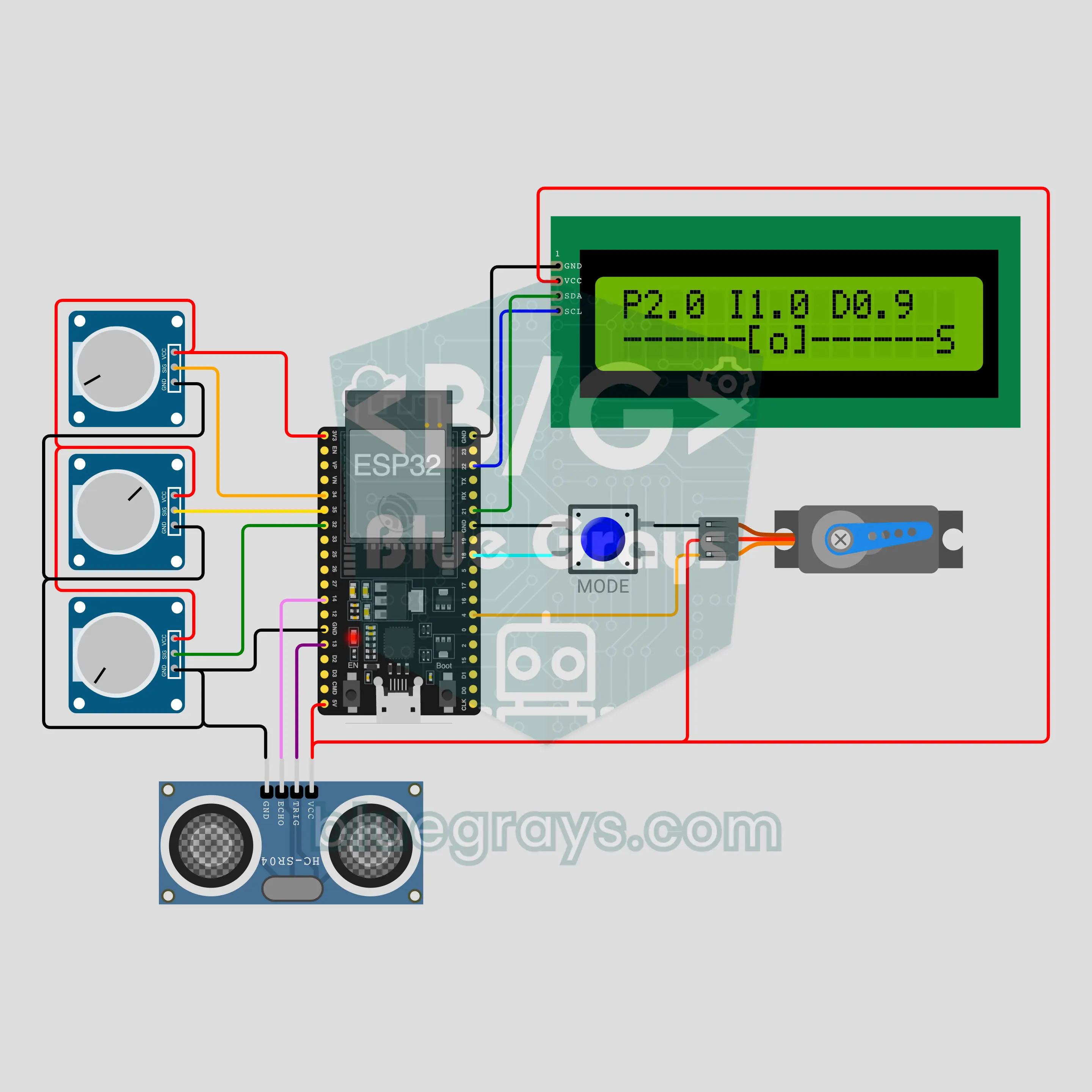
ESP32 PID Ball and Beam (HC-SR04 + Servo + I2C LCD + 3 Potentiometers)
The classic control engineering experiment on your desk: a servo tilts a beam and PID holds the ball on target. Three potentiometers change Kp, Ki and Kd live: with P alone the ball swings, D damps it and I cancels the beam's slight lean so the ball lands right on target. The I2C LCD shows the beam, ball and target, plus settling time and overshoot. In SIM mode a physics model rolls the ball; in REAL mode an HC-SR04 measures it.