
LED i przekaźnik przez Bluetooth na ESP32
Włączaj i wyłączaj diodę LED i przekaźnik z telefonu przez Bluetooth, bez internetu i Wi-Fi. Ten projekt to przewodnik krok po kroku po szablonie Bluetooth LED i przekaźnik w aplikacji, zbudowany na ESP32 i module przekaźnika 5 V. Przejdź do Warsztat › Urządzenia › Dodaj urządzenie › Bluetooth, wybierz LED i przekaźnik i wgraj kod przyciskiem Pobierz kod. Przycisk Skonfiguruj jako panel Bluetooth na tej stronie też otwiera kreator z tym szablonem.
Film
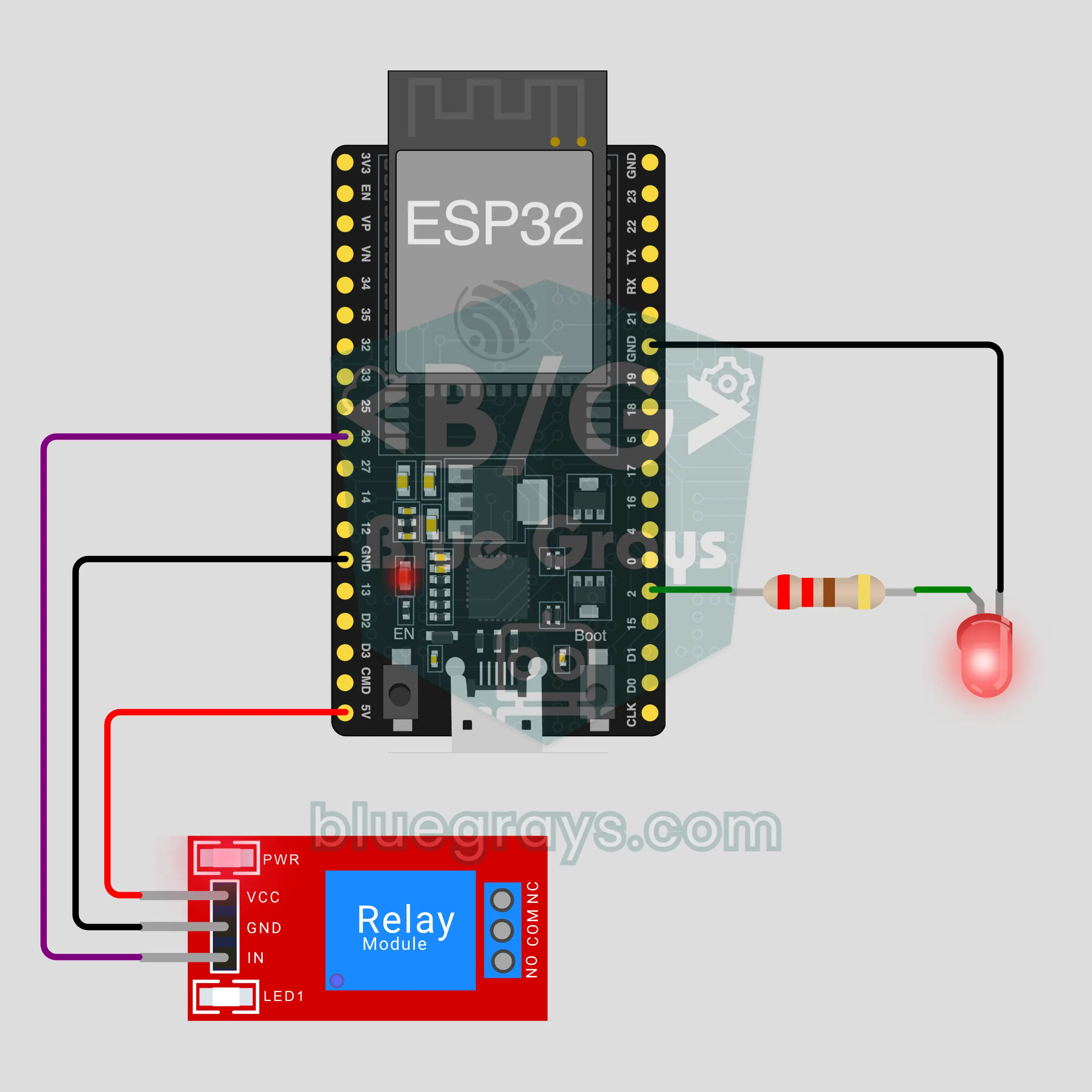
Schemat układu
Kod źródłowy
1// ┌───────────────────────────┐
2// │ BlueGrays · bluegrays.com │
3// │ Bluetooth · ESP32         │
4// │ BG-Lamba                  │
5// └───────────────────────────┘
6// LED and relay
7// Arduino IDE board: ESP32 Dev Module
8// the BLE library comes with the ESP32 board package, nothing extra to install
9
10#include <BLEDevice.h>
11#include <BLEServer.h>
12#include <BLE2902.h>
13
14const char BLE_NAME[] = "BG-Lamba";  // the board advertises with this name, the app finds it in the list by it
15
16// Pins: change them here if you wired differently
17const int LED_PIN = 2;
18const int RELAY_PIN = 26;
19const bool RELAY_ACTIVE_LOW = true;  // most relay modules switch on LOW
20
21void btWrite(const char *text);
22void onValue(const char *key, const char *value);
23void sendAll();
24void onLinkLost();
25
26// ── The app sends "key=value" lines; on "?" the board sends all its values ──
27char line[65];
28uint8_t lineLen = 0;
29unsigned long lastRxMs = 0;
30
31bool is(const char *a, const char *b) { return strcmp(a, b) == 0; }
32bool isOn(const char *v) { return v[0] == '1'; }
33
34void sendText(const char *key, const char *value) {
35  char out[72];
36  snprintf(out, sizeof(out), "%s=%s\n", key, value);
37  btWrite(out);
38}
39
40void sendInt(const char *key, long value) {
41  char text[12];
42  snprintf(text, sizeof(text), "%ld", value);
43  sendText(key, text);
44}
45
46void sendFloat(const char *key, float value) {
47  char text[16];
48  dtostrf(value, 1, 1, text);
49  sendText(key, text);
50}
51
52void handleLine(char *text) {
53  char *eq = strchr(text, '=');
54  if (eq == nullptr) {
55    if (text[strlen(text) - 1] == '?') {
56      btWrite("@v=1.0\n");  // the "@v" line tells the app the code version
57      sendAll();
58    }
59    return;
60  }
61  *eq = '\0';
62  onValue(text, eq + 1);
63}
64
65void feed(char c) {
66  lastRxMs = millis();
67  if (c == '\n' || c == '\r') {
68    if (lineLen == 0) return;
69    line[lineLen] = '\0';
70    lineLen = 0;
71    handleLine(line);
72  } else if (lineLen < sizeof(line) - 1) {
73    line[lineLen++] = c;
74  }
75}
76
77// ── Bluetooth (Nordic UART) ──
78#define UART_SERVICE "6E400001-B5A3-F393-E0A9-E50E24DCCA9E"
79#define UART_RX "6E400002-B5A3-F393-E0A9-E50E24DCCA9E"
80#define UART_TX "6E400003-B5A3-F393-E0A9-E50E24DCCA9E"
81
82BLECharacteristic *txChar = nullptr;
83volatile bool linked = false;
84volatile bool linkLost = false;
85// incoming bytes move from the Bluetooth task to loop() through a small ring buffer
86const int RX_SIZE = 256;
87volatile uint8_t rxBuf[RX_SIZE];
88volatile int rxHead = 0, rxTail = 0;
89
90class ServerEvents : public BLEServerCallbacks {
91  void onConnect(BLEServer *server) override { linked = true; }
92  void onDisconnect(BLEServer *server) override { linked = false; linkLost = true; }
93};
94
95class RxEvents : public BLECharacteristicCallbacks {
96  void onWrite(BLECharacteristic *c) override {
97    auto v = c->getValue();
98    for (size_t i = 0; i < v.length(); i++) {
99      int next = (rxHead + 1) % RX_SIZE;
100      if (next == rxTail) break;
101      rxBuf[rxHead] = (uint8_t)v[i];
102      rxHead = next;
103    }
104  }
105};
106
107// lines go out in 20-byte packets (works with every phone)
108void btWrite(const char *text) {
109  if (!linked || txChar == nullptr) return;
110  size_t n = strlen(text);
111  for (size_t i = 0; i < n; i += 20) {
112    size_t len = n - i < 20 ? n - i : 20;
113    txChar->setValue((uint8_t *)text + i, len);
114    txChar->notify();
115    delay(4);
116  }
117}
118
119void btBegin() {
120  BLEDevice::init(BLE_NAME);
121  BLEServer *server = BLEDevice::createServer();
122  server->setCallbacks(new ServerEvents());
123  BLEService *uart = server->createService(UART_SERVICE);
124  txChar = uart->createCharacteristic(UART_TX, BLECharacteristic::PROPERTY_NOTIFY);
125  txChar->addDescriptor(new BLE2902());
126  BLECharacteristic *rx = uart->createCharacteristic(UART_RX, BLECharacteristic::PROPERTY_WRITE | BLECharacteristic::PROPERTY_WRITE_NR);
127  rx->setCallbacks(new RxEvents());
128  uart->start();
129  BLEAdvertisementData adv;
130  adv.setFlags(0x06);
131  adv.setCompleteServices(BLEUUID(UART_SERVICE));
132  BLEAdvertisementData scan;
133  scan.setName(BLE_NAME);
134  BLEAdvertising *advertising = BLEDevice::getAdvertising();
135  advertising->setAdvertisementData(adv);
136  advertising->setScanResponseData(scan);
137  BLEDevice::startAdvertising();
138}
139
140void btPoll() {
141  while (rxTail != rxHead) {
142    char c = (char)rxBuf[rxTail];
143    rxTail = (rxTail + 1) % RX_SIZE;
144    feed(c);
145  }
146  if (linkLost) {
147    linkLost = false;
148    onLinkLost();
149    delay(100);
150    BLEDevice::startAdvertising();
151  }
152}
153
154// ── ESP32 ──
155bool ledOn = false, relayOn = false;
156
157void setRelay(bool on) {
158  if (RELAY_ACTIVE_LOW) {
159    if (on) { pinMode(RELAY_PIN, OUTPUT); digitalWrite(RELAY_PIN, LOW); }
160    else { pinMode(RELAY_PIN, INPUT); }  // off releases the pin: a 3.3 V HIGH is not enough to turn a 5 V module off
161  } else {
162    pinMode(RELAY_PIN, OUTPUT); digitalWrite(RELAY_PIN, on ? HIGH : LOW);
163  }
164}
165
166void apply() {
167  digitalWrite(LED_PIN, ledOn ? HIGH : LOW);
168  setRelay(relayOn);
169}
170
171void onValue(const char *key, const char *value) {
172  if (is(key, "led")) ledOn = isOn(value);
173  else if (is(key, "role")) relayOn = isOn(value);
174  apply();
175}
176
177void sendAll() {
178  sendInt("led", ledOn);
179  sendInt("role", relayOn);
180}
181
182void onLinkLost() {
183}
184
185void setup() {
186  Serial.begin(115200);
187  pinMode(LED_PIN, OUTPUT);
188  apply();
189  btBegin();
190  Serial.print(F("BlueGrays Bluetooth: "));
191  Serial.println(BLE_NAME);
192}
193
194void loop() {
195  btPoll();
196}
197FAQ
Czy działa z iPhonem?
Tak. Wbudowany w ESP32 Bluetooth Low Energy (BLE) rozmawia i z iPhonem, i z Androidem. iPhone nie łączy się z klasycznymi modułami Bluetooth, takimi jak HC-05 i HC-06, a ten projekt ich nie potrzebuje. Nie próbuj parować płytki w ustawieniach Bluetooth telefonu; płytki BLE mogą się tam nie pojawiać i to normalne. Połączenie nawiązuje aplikacja BlueGrays.
Czy mogę podłączyć do przekaźnika prawdziwą lampę?
Moduł przekaźnika może przełączać napięcie sieciowe (230 V), ale prąd z sieci może zabić. W tym projekcie do styków COM i NO przekaźnika nic nie jest podłączone; przekaźnik pokazuje, że działa, kliknięciem i diodą LED na module. Jeśli chcesz wypróbować obciążenie, zacznij od obwodu niskonapięciowego, np. z baterią albo zasilaczem 12 V. Jeśli przechodzisz na napięcie sieciowe, zrób to z kimś doświadczonym, nie zostawiaj odsłoniętych przewodów ani śrub i nie przekraczaj prądu podanego na module.
Dlaczego niebieska dioda LED na płytce zapala się razem z moją diodą?
W wielu płytkach ESP32 DevKit niebieska dioda LED na płytce też jest podłączona do GPIO2. Twoja dioda LED jest na tym samym pinie, więc obie migają razem; to nie jest usterka. To wręcz przydatne: jeśli przewód jest luźny, niebieska dioda i tak pokazuje, że polecenie dotarło do płytki. Jeśli tego nie chcesz, przenieś swoją diodę na inny pin (np. GPIO4) i zmień LED_PIN w kodzie.
Czy potrzebuję internetu albo Wi-Fi i jaki jest zasięg?
Nie. Telefon łączy się z płytką bezpośrednio przez Bluetooth, bez routera i serwera. W pomieszczeniach zasięg to zwykle około 10 metrów, a ściany go skracają. Płytka łączy się naraz z jednym telefonem; gdy ten telefon się rozłączy, płytka znowu zaczyna się rozgłaszać i może połączyć się inny telefon. Żeby sterować spoza domu, wybierz projekt, który korzysta z panelu Wi-Fi IoT w aplikacji.