
Projects using this component
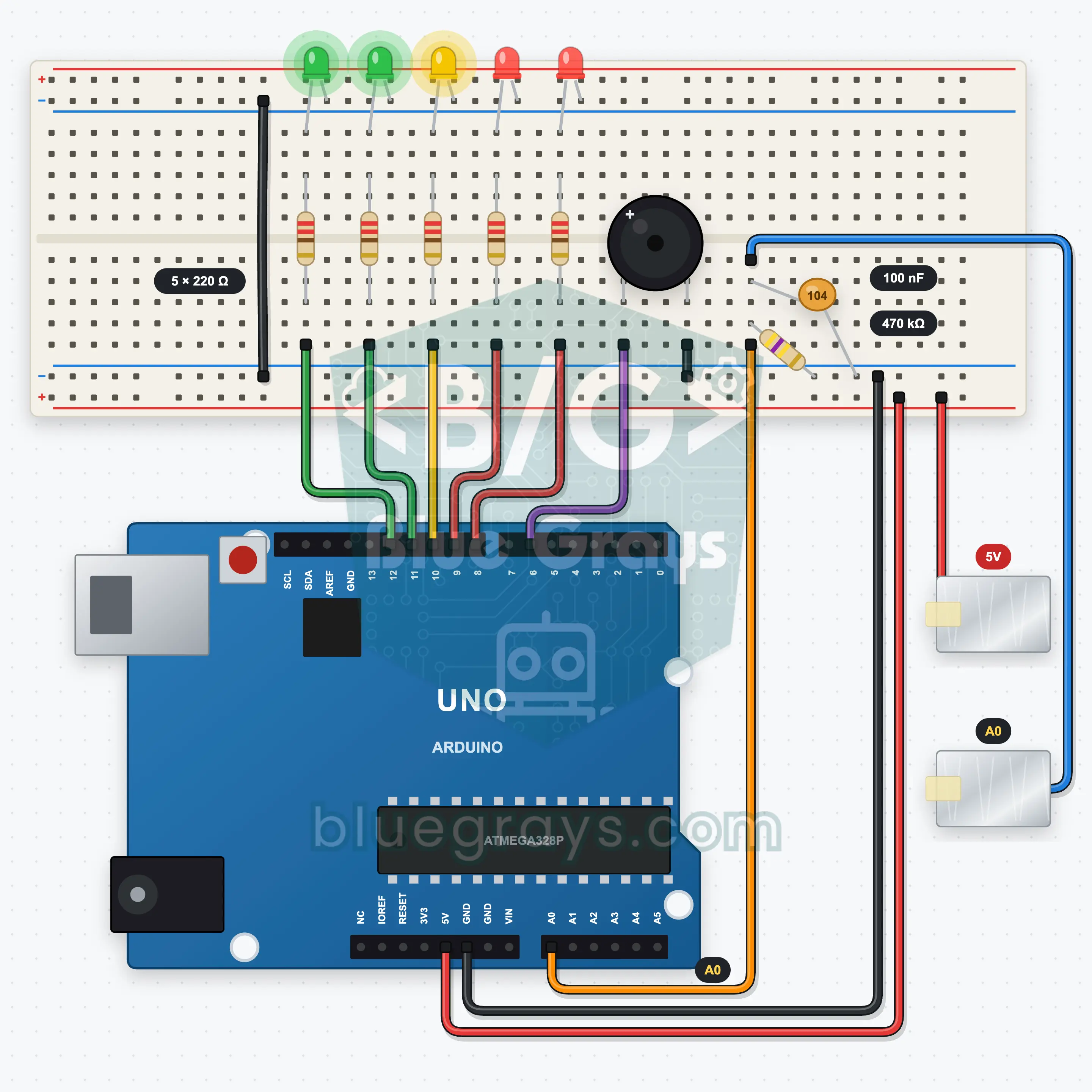
Arduino Excitement Meter: A Lie Detector Game You Play with Your Fingers (Voltage Divider + 5 LEDs + Buzzer)
A lie detector style party game: you put two fingers on two foil electrodes and the Arduino first measures your calm baseline. As excitement grows, skin resistance drops and the voltage divider output rises: the 5-LED bar fills, the buzzer climbs like a heart monitor and a sudden jump sets off a siren. A 100 nF capacitor steadies the reading, and the Serial Plotter shows it as a graph. Just for fun, not a real lie detector.
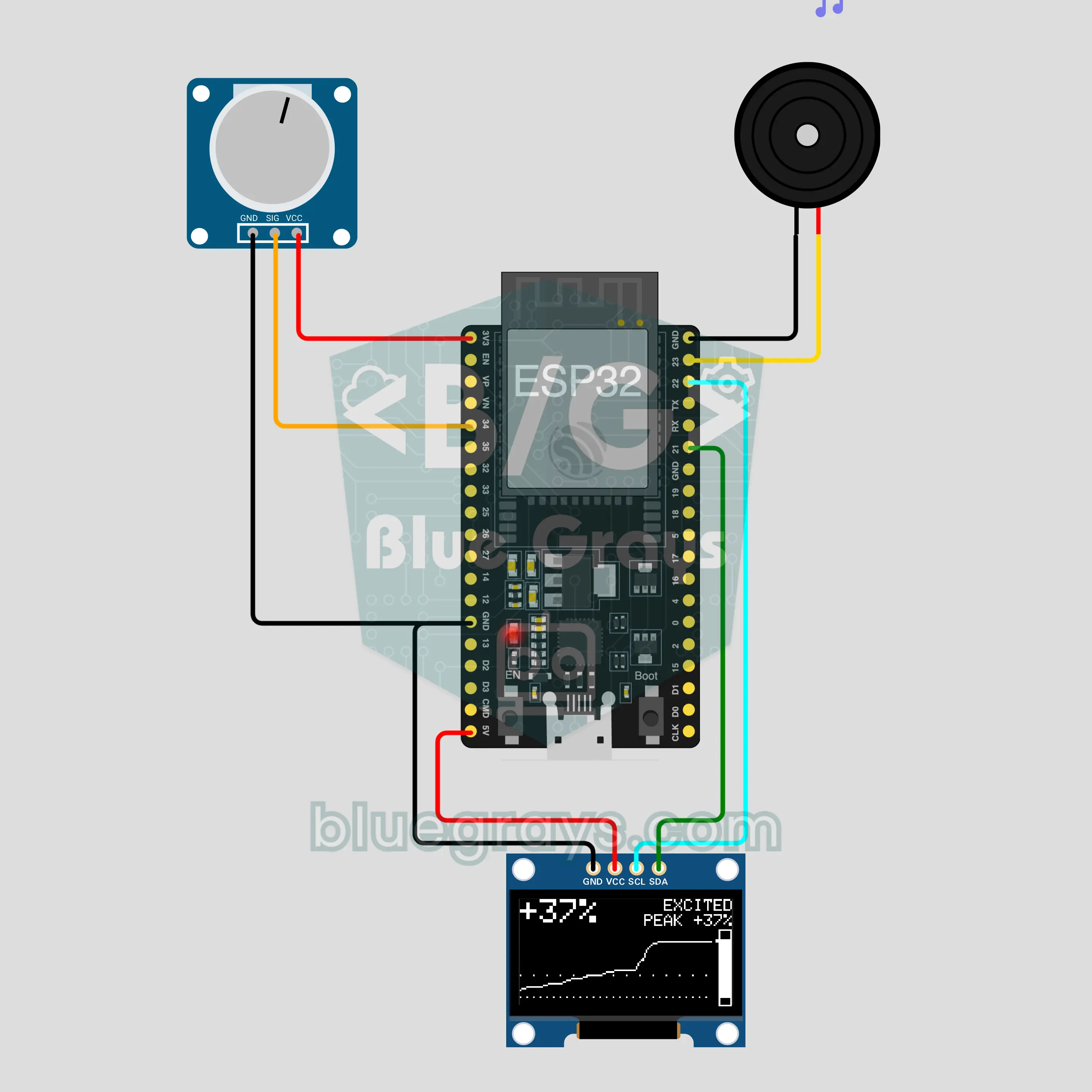
ESP32 Excitement Meter: Lie Detector Party Game with a Live OLED Graph (Voltage Divider + SSD1306 + Buzzer)
A lie detector style party game for your friends: you rest two fingers on foil electrodes and the ESP32 first measures your calm baseline. As the questions get harder, skin resistance drops and the voltage divider output rises: a live graph climbs on the OLED, the beeps get higher, and a sudden jump sets off a siren. At the end of the round your highest percentage and a record list of the last four players appear. Just for fun, not a real lie detector.