
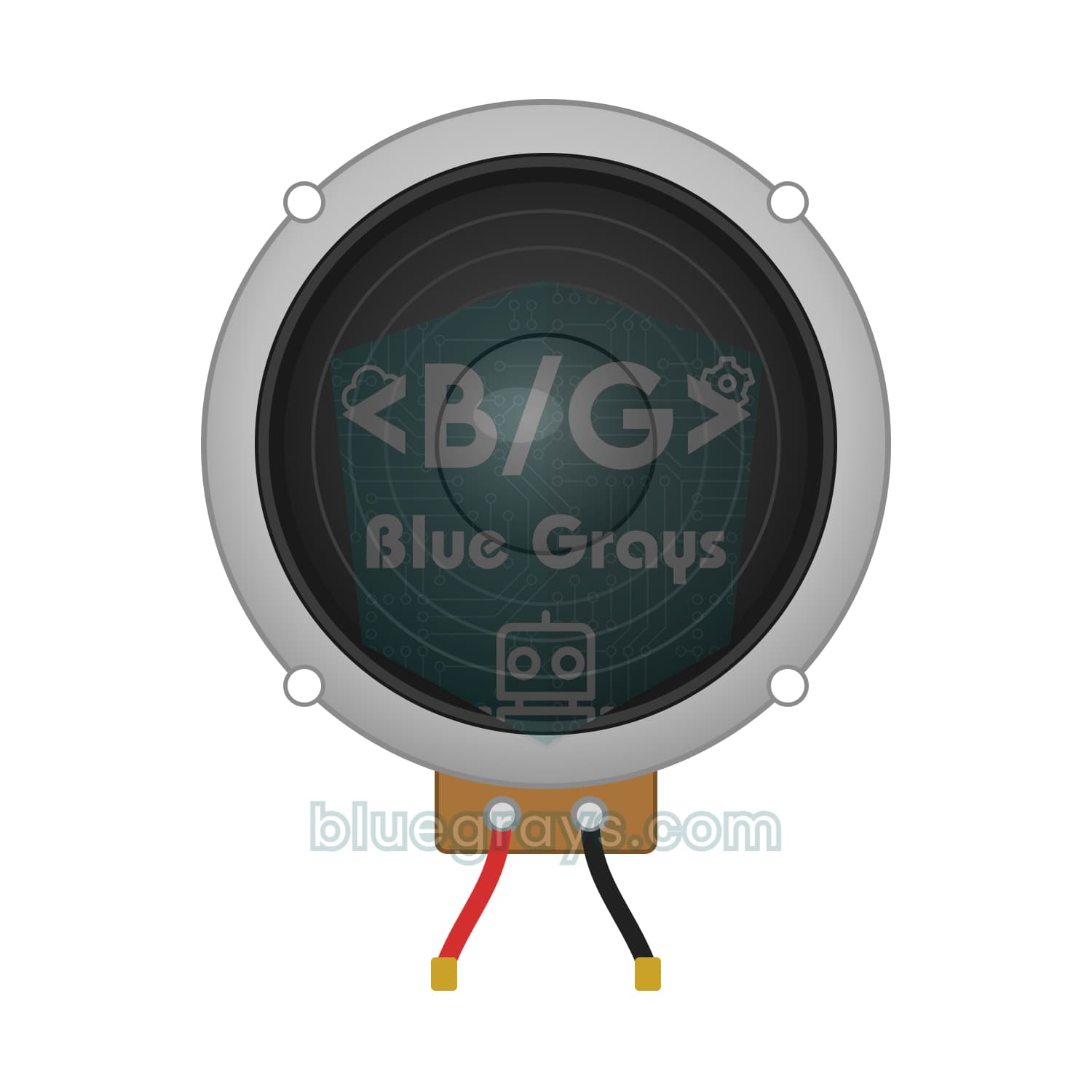
The Speaker (8 Ω, 0.5–3 W) is a small dynamic loudspeaker that turns an electrical signal into sound. Unlike a buzzer, which only beeps, it can play music, speech and MP3 files with a natural, wide-range sound. Its voice coil moves back and forth in the field of a permanent magnet and vibrates the cone. Models with a diameter of 28–57 mm are common in hobby projects; they have two terminals (+ and −) and an impedance of 8 Ω. A microcontroller pin cannot drive a speaker directly: an 8 Ω load draws far more current than the pin allows and can damage it. That is why it is connected through a DFPlayer Mini (drives up to 3 W directly), an amplifier such as the PAM8403 or MAX98357A, or a transistor with a series resistor. Sound is generated with tone() on the Arduino, with LEDC, the DAC or I2S on the ESP32 and with PWM on the Raspberry Pi Pico. Choose a speaker rated at or slightly above the amplifier's output power. It is used in MP3 players, doorbells, talking clocks, alarms, music boxes and hearing frequency tests.