
EL-86BeginnerPremiumTransistor circuits
Static Electricity Detector
A charge detector that works without touching. Rub a balloon or a plastic comb on your hair, move it toward and away from a short antenna wire, and the LED turns on and off by itself. The secret is three BC547s connected in a row: each amplifies the current of the one before it and the total gain reaches millions. So the current the balloon creates in the antenna, which even a meter can hardly see, is enough to light an LED. You try out static electricity and how gains multiply.
0.0(0)
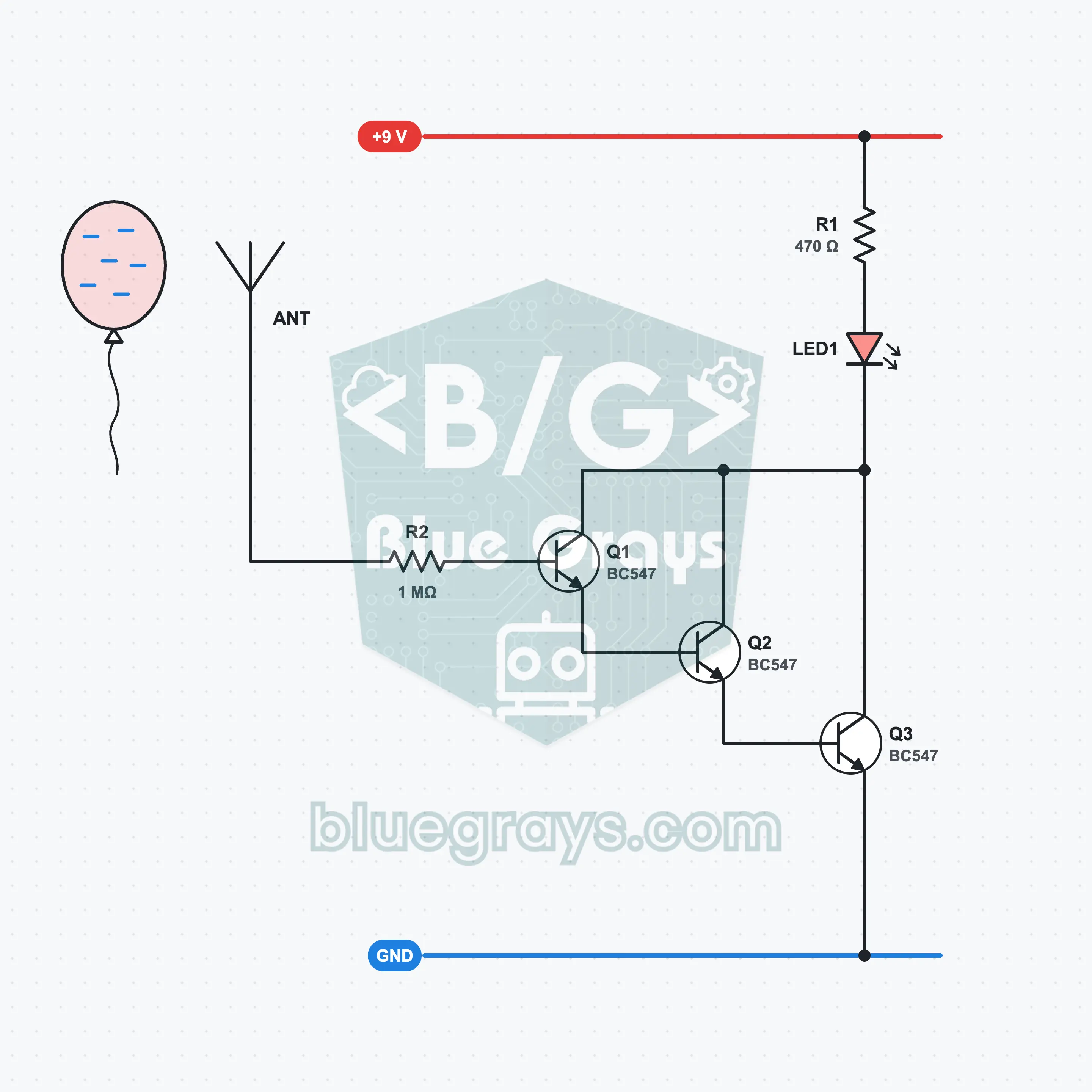
It is built with a 9 V battery, three BC547s, one LED, 470 Ω and 1 MΩ resistors and a 10 to 15 cm jumper wire as the antenna. The transistors are connected in a chain: the emitter of one goes to the base of the next, and the collectors are joined. The total gain is about 110 × 110 × 110, that is, at least 1.3 million. The base of the first transistor is deliberately left floating and connected only to the antenna; when a charged object moves near it, the nanoamp-level current that appears lights the LED. What you learn: static electricity, the electric field, multiplying gains, a floating base and the protective resistor.
Premium Content
This circuit's build steps, how-it-works guide and FAQ are open to Premium members.
- Build Steps
- How It Works
- Frequently Asked Questions